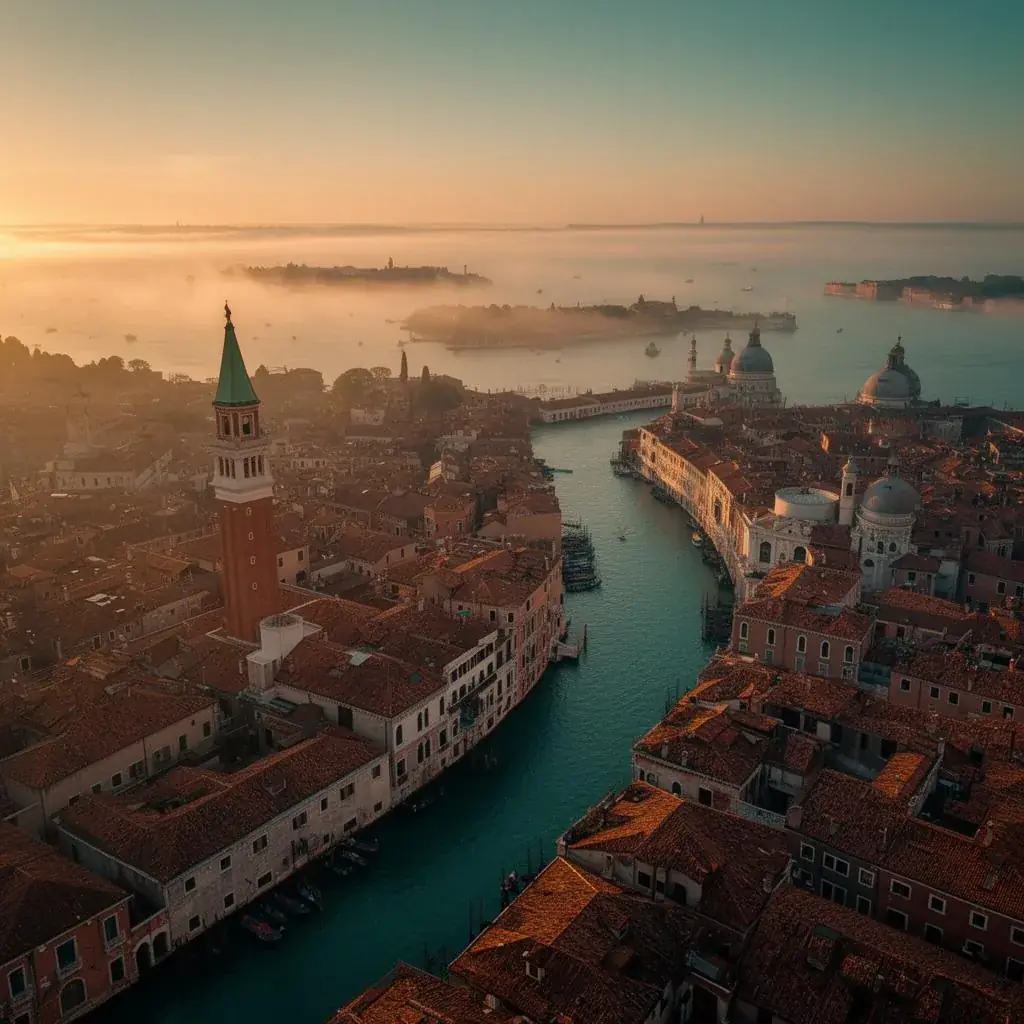
Venice, honestly.
Three walking itineraries for Venice — from a half-day stopover to a slow three-day stay. Written by a Santa Croce host who has watched the city for forty years. Plan less. Eat one good meal a day. Look up.
Choose your stay
Two days is the classic Venice trip: enough to walk the major sestieri, eat two good dinners, and feel the city wake up before the day-trippers arrive. Day one stays around the Grand Canal; day two goes to the islands.
Day 1
Santa Croce · Rialto · San Marco · sunset over the lagoon
- 10:00
Coffee in Santa Croce, then the Rialto market
Stay near your hotel. Have a coffee standing at any bar in Santa Croce or San Polo, then walk to the Mercato di Rialto. Open Tuesday–Saturday, 7am–noon.
- 12:00
Cross to San Marco via the Mercerie
Take the small streets, not the big tourist artery. Stop in any small church on the way — most are free, all are quiet.
- 13:00
Quick lunch standing at a bar
A tramezzino (small triangular sandwich) and a glass of white wine at any local bacaro near San Marco — usually €7–9 standing at the counter.
- 14:30
Doge's Palace + St Mark's Basilica
Book both online in advance. The Doge's Palace is €35 at the door in 2026 (€30 online if booked at least 30 days ahead), open 09:00–19:00 April–October and 09:00–18:00 November–March. St Mark's Basilica is ticketed too: €10 basic entry, up to €30 for the full ticket with the Pala d'Oro and the museum. Two hours for both, generously.
- 17:00
Vaporetto to Punta della Dogana for sunset
Take Line 1 or 2 across to Salute. Walk to the tip. Watch San Giorgio Maggiore turn gold.
- 20:00
Dinner at Osteria Leone Alato· We'd love to host you here
Vaporetto back to Piazzale Roma, two-minute walk. End the day where the locals do — on the Fondamenta dei Tolentini, with seafood pasta, candle-light, and a quiet Soave. Reserve in advance, especially on weekends.
Day 2
Burano · Murano · Cannaregio at dusk
- 09:30
Vaporetto Line 12 to Burano
Catch it at Fondamente Nove (north side of the city). About 45 minutes. Burano is the colourful fishing island — small, walkable, perfect for an hour and a half.
- 12:30
Lunch in Burano
Risotto di gò, the lagoon goby risotto, is the local specialty. Any small trattoria off the main square will serve a real version.
- 14:30
Vaporetto to Murano
Same Line 12 going back. Stop at Murano for the glass museum and a watch one furnace demonstration. Avoid the high-pressure 'free tour to factory' touts at the vaporetto stop.
- 17:00
Back to Cannaregio, walk the Fondamenta della Misericordia
The most local feeling stretch in Venice — long quiet canal, small bars, no tour groups. Have a spritz outside.
- 20:00
Dinner in Cannaregio or back in Santa Croce
Either eat in a small Cannaregio osteria, or walk back across the city to Santa Croce — Leone Alato is twenty minutes on foot from Cannaregio, and a perfectly quiet way to end your second night.
Everything else you actually need
Prices and times below are indicative for 2026 and can change from one season to the next — always check with the operator or the ticket office before you go.
Getting into the city
- Alilaguna water bus from Marco Polo airport: about 75–90 minutes to the main stops, roughly €15–17 one way. Scenic, but slow with luggage.
- ATVO / ACTV bus to Piazzale Roma: about 20–25 minutes, roughly €10 one way. Fastest and cheapest — and Piazzale Roma is two minutes from us.
- Private water taxi: 30 minutes door-to-door, usually €120–140 for the boat. Worth splitting between four people.
- From Treviso airport: ATVO coach to Piazzale Roma, about 70 minutes.
- Prices are indicative for 2026 and change — check the operator before you travel.
Vaporetto tickets
- A single ride is around €9.50 and is valid 75 minutes — expensive for one short hop.
- Travel passes: roughly €25 (24h), €35 (48h), €45 (72h). Worth it from about three rides a day, or if you plan the islands.
- Always validate the card at the machine before boarding. Inspectors do check, and fines are steep.
- The traghetto — a standing gondola ferry across the Grand Canal — costs a couple of euros and saves a long walk.
- Fares are ACTV's current published range and can change each season.
When to come
- Best: April–May and late September–October. Mild, long light, the city still breathes.
- July–August is hot, humid and crowded; the canals smell at low tide.
- November–January brings fog, acqua alta (high water) and the quietest, most Venetian version of the city.
- Within a day: before 10am and after 6pm the main streets empty out. Midday belongs to the day-trippers.
Venice is a walking city
- Wear flat, worn-in shoes. There are more than 400 bridges and almost none have a ramp or a lift.
- Suitcases with small wheels suffer on the steps — pack light or use a left-luggage office near the station.
- Getting lost is normal and often the best part. Follow the yellow signs for Ferrovia, Rialto, San Marco.
- Rough walking times: station to Rialto about 25 minutes, Rialto to San Marco about 15, station to San Marco about 40.
How a Venetian bill works
- At Osteria Leone Alato there is no coperto (cover charge). We apply a transparent 12% service charge instead.
- Why that matters: on a €40 dinner for two, 12% is about €4.50. A cover charge would usually add €6–8 before you eat anything.
- Our fish is sold as a whole fixed-price portion. We never price it per 100 grams.
- "Price per etto / per 100g" on a fish menu is the classic way a bill triples. Ask for the final price before you order.
- Tipping is not expected on top of service. Round up if you were happy.
Spending well
- Never sit down for coffee on Piazza San Marco unless you want to pay for the orchestra. Drink it standing at a bar for about €1.50.
- Eat away from the main route. In Santa Croce a comparable meal is often around 50% cheaper than near San Marco — rents there are three to four times higher and everything arrives via one more boat leg.
- Santa Croce is where Venice is supplied: the bridge from the mainland, the cargo boats and the station are all here, so ingredients land here first.
- Left luggage: KiPoint inside Santa Lucia station, or the deposito at Piazzale Roma — both a short walk from us.
- Tap water is safe and free. Refill at the public fountains.
Frequently asked
Hungry along the way?
Whichever itinerary you choose, the western edge of Santa Croce is two minutes from the train station and a quiet world away from the crowds. Reserve a table — and let the city slow down with us.
Looking for a seafood restaurant in Venice? See what we serve. Our seafood menu