I've been welcoming guests into the same small osteria in Santa Croce for almost forty years. In that time I have watched Venice change — slowly at first, then very quickly — and I have watched the way visitors eat change with it. There is nothing wrong with most restaurants in this city. But there is a difference between eating in Venice and eating Venice. Here are the seven signs I watch for, and I think you should too.
1. The menu is short and seasonal
A real Venetian kitchen cooks what it bought that morning. The menu is short, it changes with the season, and the seafood section reflects what was at Rialto today. Photos and translations into other languages are perfectly fine — a serious restaurant that welcomes travellers should make its food easy to understand and easy to choose. What you should be wary of is the opposite: a long menu with the same forty dishes available all year, regardless of how it is presented. That kind of menu does not come from a kitchen. It comes from a freezer.
2. There are Italians eating
Look through the door before you sit down. If you hear three tables of locals — older couples, a family, a group of friends speaking fast Veneto dialect — you are in the right place. Locals choose carefully. They will not pay €25 for bad spaghetti two streets from their home.
3. Fish is priced honestly per portion — not 'by the gram'
There was a time when whole fish in Venice were priced 'all'etto' (per 100g) because everything was bought whole at Rialto and weighed at the table. That tradition has aged badly. Today, 'priced by the gram' is one of the most common ways tourists are overcharged: the fish arrives, it is suddenly much heavier than expected, and the bill triples. A serious modern osteria gives you an honest, clearly stated price per portion — so you know what you are paying before the plate arrives. Transparent pricing is the new sign of trust.
4. The host can tell you what came in this morning
Ask the question quietly: 'cosa è arrivato stamattina?' If the answer is specific — 'today we have moeche, sea bass, a little turbot' — you've found a real kitchen. If the answer is vague or the server has to ask the kitchen and comes back with a memorised list, the fish is not coming from the market that day.
5. The location is a few minutes off the main tourist route
Restaurants in front of San Marco, on the Rialto bridge, or directly on Strada Nuova pay enormous rent. That rent comes out of your plate. The honest kitchens are five or ten minutes off the main route — in Santa Croce, in Cannaregio's quieter calli, in the deep Castello. The walk is part of the meal.
There is a practical reason this matters. Santa Croce sits at the entrance to Venice — the bridge from the mainland, the cargo boats, the train station are all here. Goods arrive in our sestiere first, before being loaded onto smaller boats and pushed deeper into the city. By the time the same fish, the same vegetables, the same bottles of wine reach a kitchen behind San Marco, they have paid for an extra round of transport, plus rent that can be three or four times higher. A serious San Marco restaurant is often 50% more expensive than the same meal in Santa Croce — and the food has not improved on the way.
6. The host or owner is in the room
In a real osteria, the person whose name is on the door is in the room. They greet you, they pour the first glass of wine, they care if your dinner is good because their grandmother's name is on the wall. In a tourist restaurant, the staff rotates every season and nobody knows what the kitchen is doing.
7. The bill is not shocking, and the cover charge is reasonable
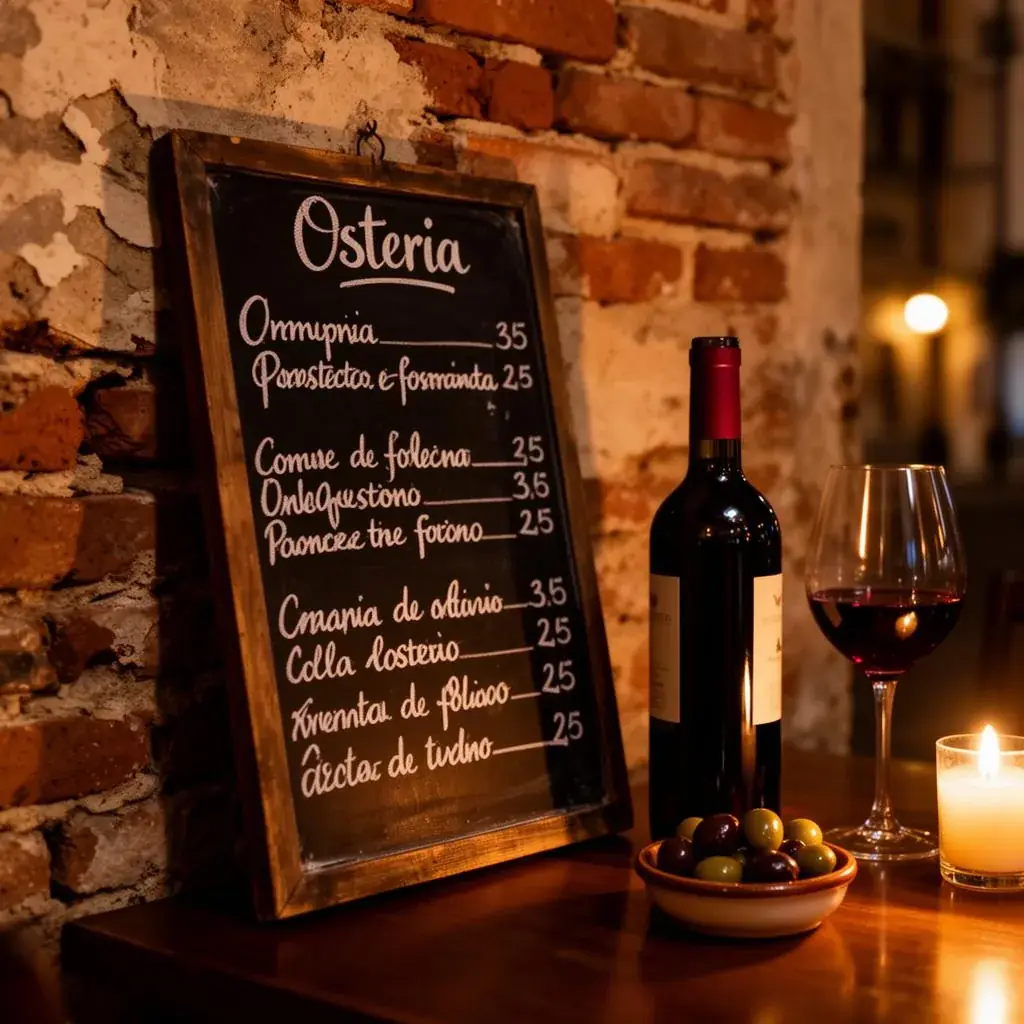
A serious dinner of antipasto, primo, secondo, half a litre of house wine and water should land somewhere between €40 and €65 a person in Venice. Coperto (cover charge) should be €2 to €4. If you see €6 coperto, €10 'service', and €40 spaghetti vongole, you are in the wrong place — but you can usually see all of this on the menu posted outside, before you sit down.
None of these signs are hard to read. You can stand at the door for thirty seconds and know. The Venetians have been eating well in this city for a thousand years; we have not stopped. You just need to know where to look.