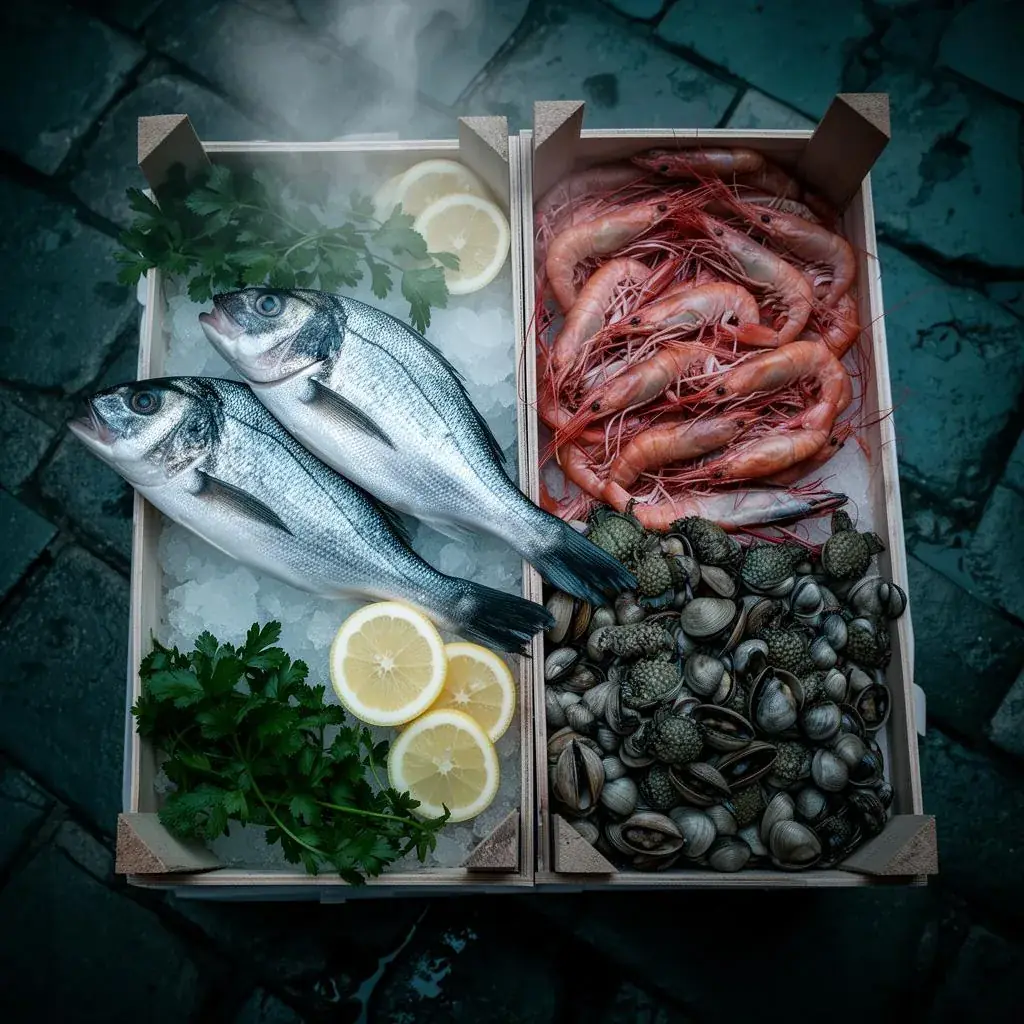
Every morning, before the city wakes, the wooden boats glide up the Grand Canal toward Rialto. By six o'clock the fishmongers are already calling out prices for branzino, gò, moeche, scampi and the small sweet shrimp of the Adriatic. Half an hour later, those same crates are on a kitchen counter in Santa Croce. This is how seafood is supposed to work in Venice — and yet most visitors never see it.
The Rialto market, in plain words
The Mercato di Rialto has fed Venice for nearly a thousand years. The fish hall — Pescaria — sits right on the Grand Canal under a stone arcade. It runs Tuesday through Saturday, roughly 7am to noon, and closes Sunday and Monday. That last detail matters: any restaurant claiming 'fresh fish today' on a Monday lunch is, at best, serving you Saturday's catch.
The market has its own rhythm. Spring is for moeche (soft-shell crab) and seppioline. Summer brings sardines, sea bass and the first scampi. Autumn is for canocie (mantis shrimp) and the return of the gò, the small lagoon goby that flavours the most Venetian risotto of all. Winter belongs to baccalà, eel, and the slow shellfish stews.
How to read a Venetian seafood menu
A real Venetian menu is short and changes with the season. A long menu with the same forty dishes available all year — regardless of whether it has photos or not — is a sign the kitchen is not buying at Rialto, but reheating from a freezer. Photos and translations into other languages are not the problem; a serious restaurant that welcomes travellers should make its food easy to understand. The problem is only when the menu never changes.
Look for these honest names: sarde in saor (sweet-and-sour sardines, the classic Venetian antipasto), bigoli in salsa (thick whole-wheat pasta with onion and anchovy), spaghetti alle vongole, risotto al nero di seppia, fritto misto. And one warning: be cautious of restaurants that price fish 'al grammo' — by the gram. It is one of the oldest tourist traps in the city. The fish arrives, it is suddenly much heavier than expected, and the bill triples. A serious modern osteria states an honest, fixed price per portion, so you know what you are paying before the plate arrives.
What we actually serve, and why
At Leone Alato we choose the fish ourselves at Rialto each morning the market is open, and we close the kitchen on what is not in season. That is why our menu shifts week to week. In April you'll find moeche fritte and the first sarde in saor. In November, a long-cooked baccalà mantecato and a thick zuppa di pesce that warms the whole sala.
The dish we are best known for is the spaghetti allo scoglio — vongole, cozze, scampi and gamberi tossed with a bright tomato base, parsley, a little chili and a slice of lemon. Nothing hidden, nothing frozen. It is the Venetian sea on a plate, and we have been making it the same way for almost forty years.
Three rules to eat seafood well in Venice
1. Eat fish Tuesday through Saturday. On Monday, choose pizza, pasta or meat — your stomach will thank you.
2. Ask what came in today. Any honest osteria has a list. If the answer is vague, leave.
3. Trust the small places. The kitchens that buy 20kg at Rialto in the morning are the ones serving 40 covers at night, not 200. Go where the locals queue at 7:30pm — not where the touts wave laminated menus at noon.
Seafood in Venice is not expensive when it is honest. It is expensive when it is dishonest — frozen, reheated, dressed up for tourists. Find a small kitchen, a host who buys his own fish, and a room with more Italian than English at the next table. You will eat, for once, the way Venice has eaten for centuries.