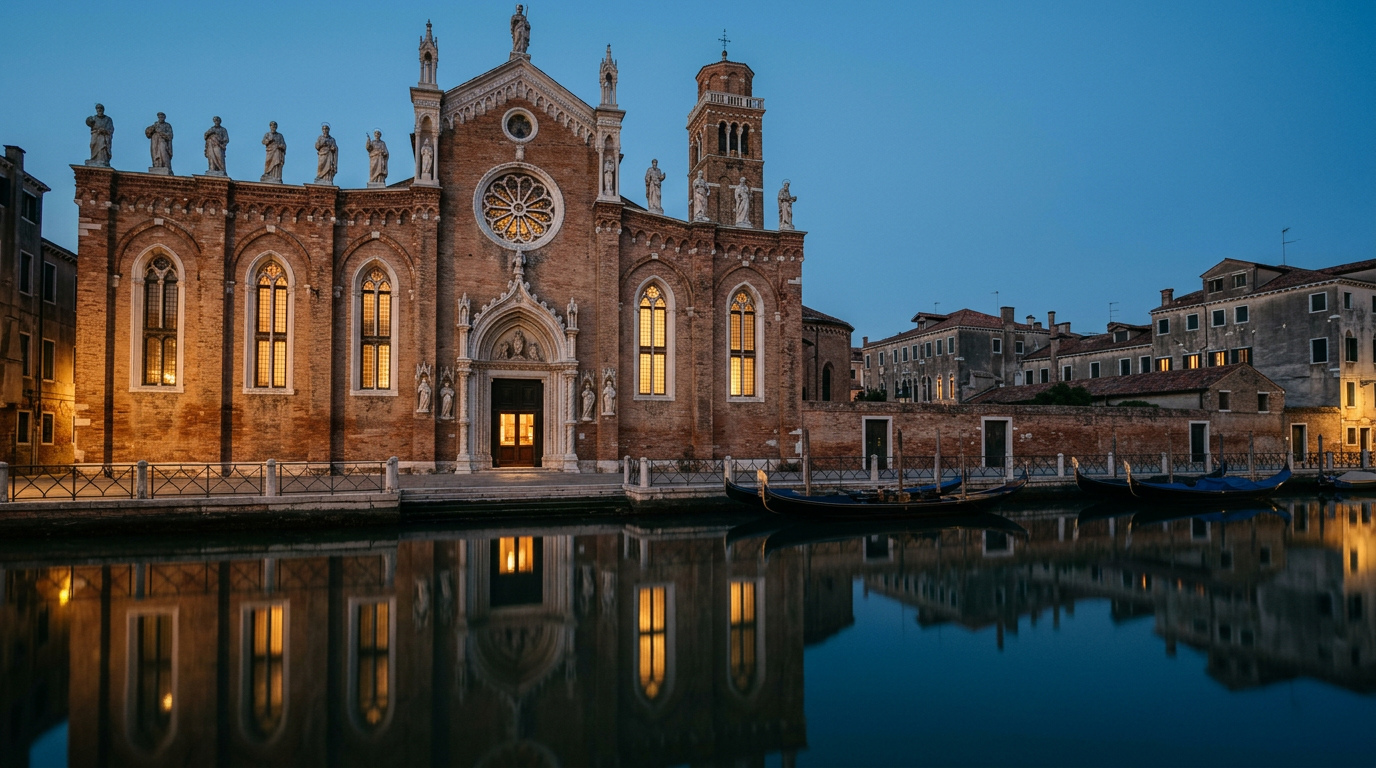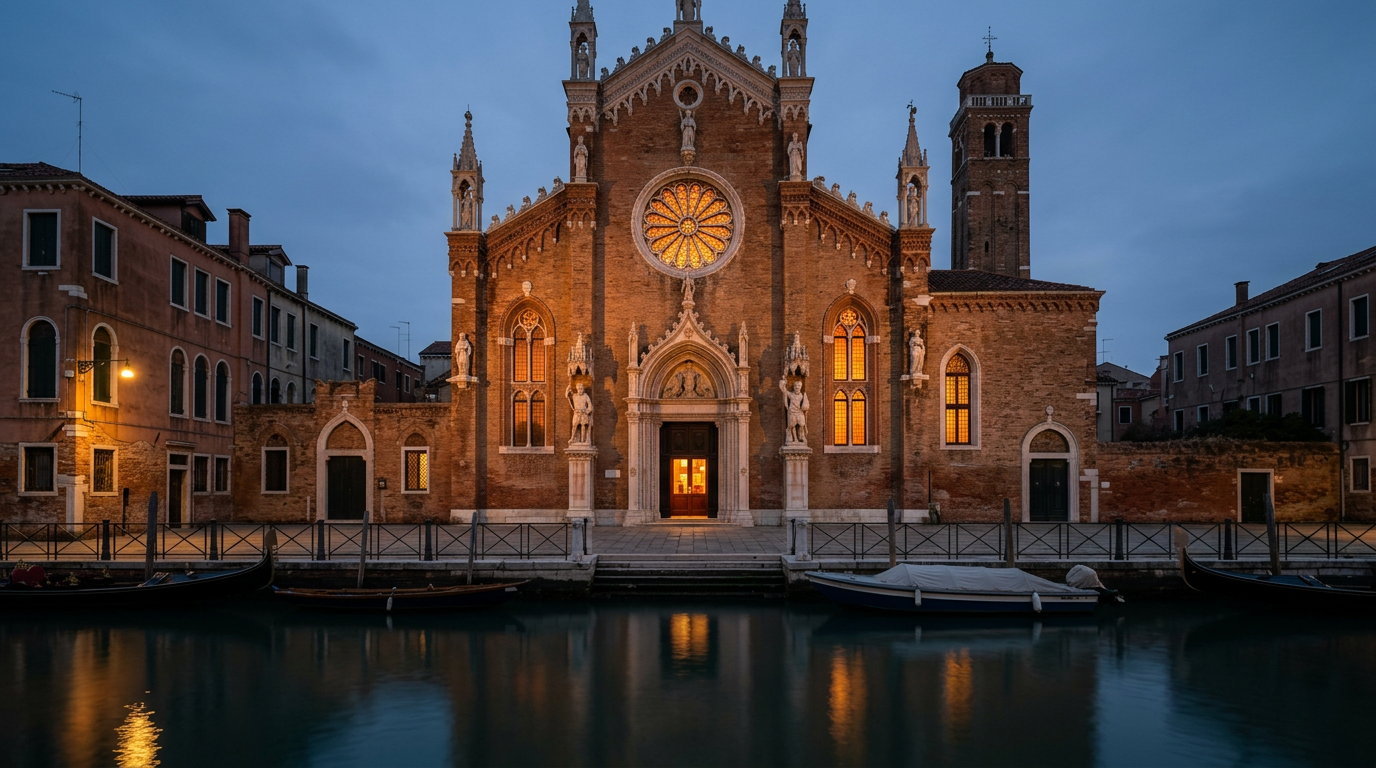
When we want to escape the crowded arteries of the city, we walk north, past the Ghetto, until the canals widen and the air feels saltier. Here, on the very edge of Venice facing the lagoon, stands the Madonna dell'Orto. This is not a church designed for the vanity of doges or the gaze of tourists; it is a neighborhood's heart, built of warm brick and Istrian stone. For us, this corner of Cannaregio represents the Venice that persists—quiet, slightly weathered, and deeply connected to its past. It was the parish church of Jacopo Tintoretto, the 'furious' painter who lived just a few steps away on the Fondamenta dei Mori. To stand before its Gothic facade is to understand the scale of Venetian devotion, far removed from the gold-leafed spectacle of San Marco.
The Fury of Tintoretto
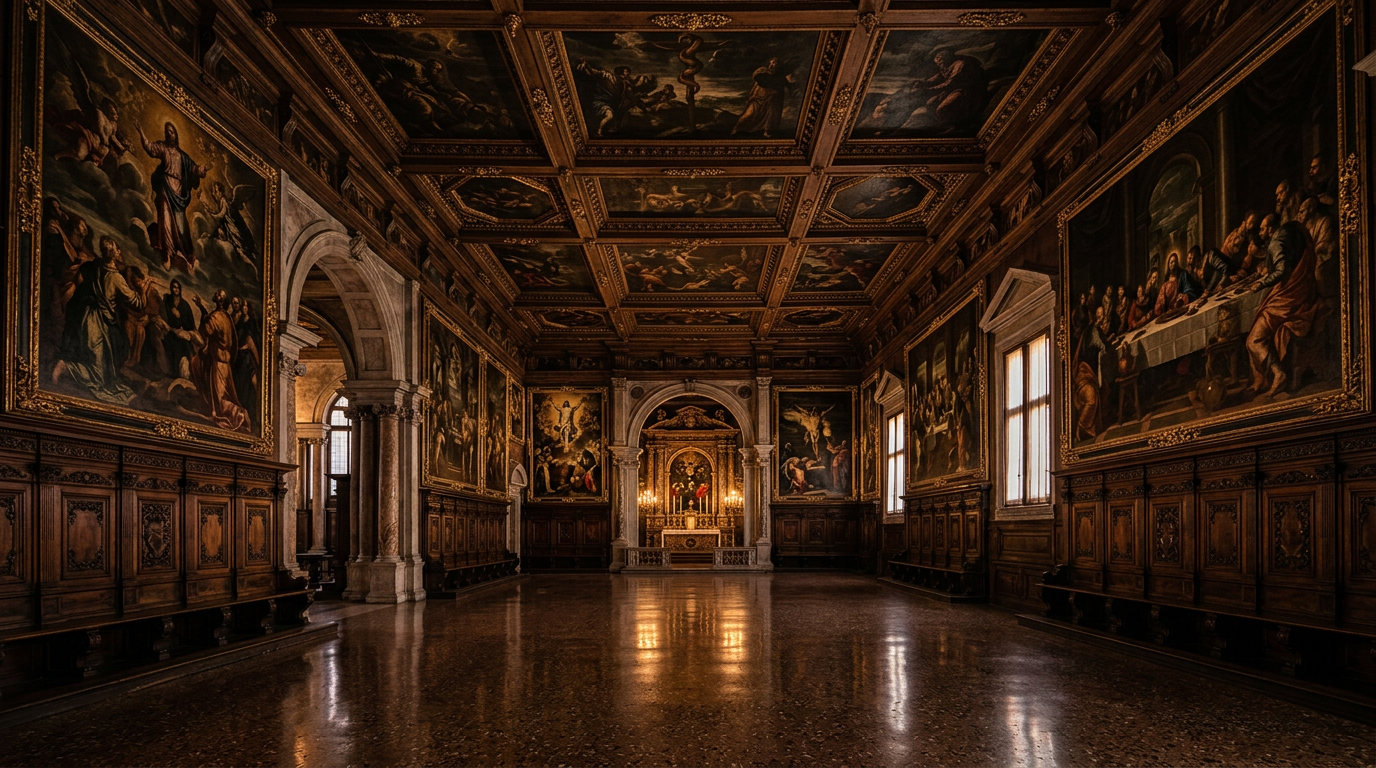
Inside the cool, high-ceilinged nave, your eyes will inevitably be drawn to the apse. Here, Tintoretto’s 'Last Judgement' and 'The Making of the Golden Calf' hang as monumental testimonies to his genius. These are not merely paintings; they are thunderous visions that seem to vibrate against the stone walls. At nearly fifteen meters high, they dominate the space, filled with the dramatic chiaroscuro and frantic energy that earned him the nickname 'Il Furioso'.
Beneath the floor of a small chapel to the right of the choir lies Tintoretto himself. Unlike the grand monument to Titian in the Frari, Tintoretto’s resting place is marked by a simple slab. There is a profound humility in it—resting within the walls that house his greatest creative triumphs, in the district where he spent his entire life.
A Walk Along the Fondamente
The route to the church is as significant as the destination. Walking along the Fondamenta della Misericordia and crossing into the quieter reaches of the Rio della Madonna dell'Orto, you see a side of Venice that feels lived-in. Boats are tied to rusted rings, and the laundry of local families hangs high above the water. It is a world of brick and silence.
If you continue past the church to the edge of the city, you reach the Fondamenta Nuove, looking out toward the cemetery island of San Michele. It is one of the few places where you can truly feel the horizon, a reminder that Venice is a city born of the water and defined by its limits.
Returning to Santa Croce
As the sun begins to set over the lagoon, the walk back through the labyrinthine calli of Cannaregio brings a different kind of peace. Crossing the bridges toward the quieter sestiere of Santa Croce allows the bustle of the day to fade. It is here, nestled near the Tolentini, that you can find a seat at Osteria Leone Alato.
After the visual intensity of Tintoretto’s canvases, the soft candlelight of our osteria offers a necessary contrast. Santa Croce remains the gateway to the city, yet it guards its tranquility fiercely, making it the perfect place to end a day spent in the northern reaches of the lagoon.
Cannaregio is a place of long shadows and deep history. When you leave the Madonna dell'Orto, take your time walking back towards the hub of the city, letting the weight of Tintoretto’s vision settle into your memory.