Whenever a friend visits Venice for the first time, we rarely send them straight to the Doge's Palace. Instead, we point them toward a quiet square in San Polo to witness what Jacopo Tintoretto did between 1564 and 1587. The Scuola Grande di San Rocco is not merely a gallery; it is a profound testament to one man’s obsession. For over two decades, Tintoretto poured his energy into these rooms, creating a cycle of canvases that redefined how light and drama could exist within the humid air of Venice. While the world looks to Rome for the Sistine Chapel, we know that here, in the shadows of San Rocco, lies an achievement that is every bit as monumental, yet far more intimate.
The Sala dell'Albergo and the Great Betrayal
The story of San Rocco begins with a bit of Venetian cunning. In 1564, the Confraternity held a competition to decorate the ceiling of the Sala dell’Albergo. While other artists like Veronese were busy sketches their proposals, Tintoretto secretly measured the space and installed a finished painting overnight. He didn't just win the commission; he claimed the building.
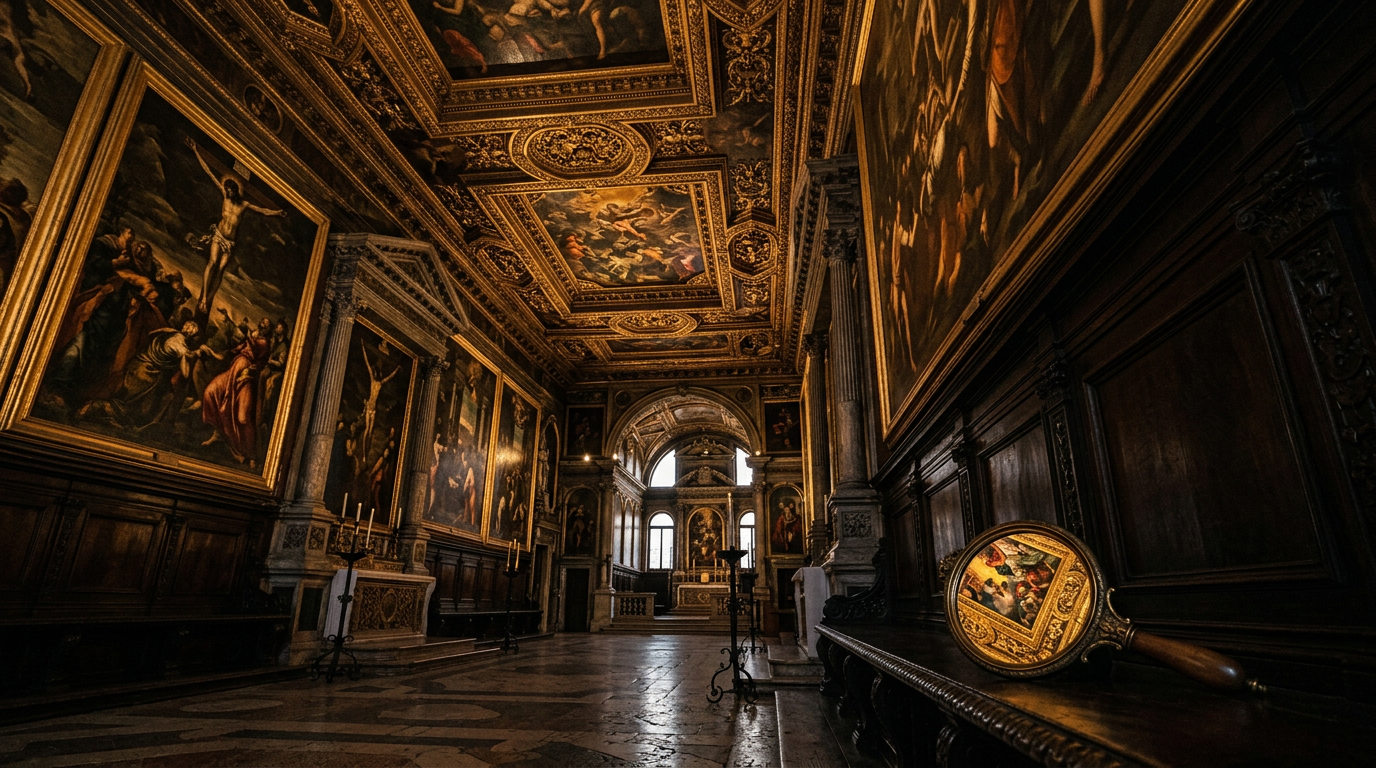
In this room, you will find the 'Crucifixion'. It is not just a painting; it is a cinematic landscape that spans over twelve meters. The sheer scale forces you to stand back, taking in the chaotic energy of the Roman soldiers and the stillness of the central figure. It is here that Tintoretto’s use of 'chiaroscuro'—the sharp contrast between light and dark—begins to tell the story of the city’s spiritual resilience.
Viewing the Ceiling: The Mirror Strategy
Climbing the grand staircase to the Sala Superiore can be overwhelming. There are dozens of massive canvases overhead, depicting scenes from the Old and New Testaments. Legend has it that the sheer volume of work here would have broken a lesser man, but Tintoretto worked with a frantic speed that contemporaries called 'Il Furioso'.
To save your neck from the strain of looking upward, the Scuola provides hand-held mirrors. We recommend finding a wooden bench, placing a mirror in your lap, and letting the ceiling come down to you. Seeing the 'Adoration of the Shepherds' or the 'Moses Striking the Rock' reflected just inches from your eyes allows you to appreciate the physical brushstrokes—the 'prestezza'—that Tintoretto used to stay ahead of his rivals.
A Quiet Retreat into Santa Croce
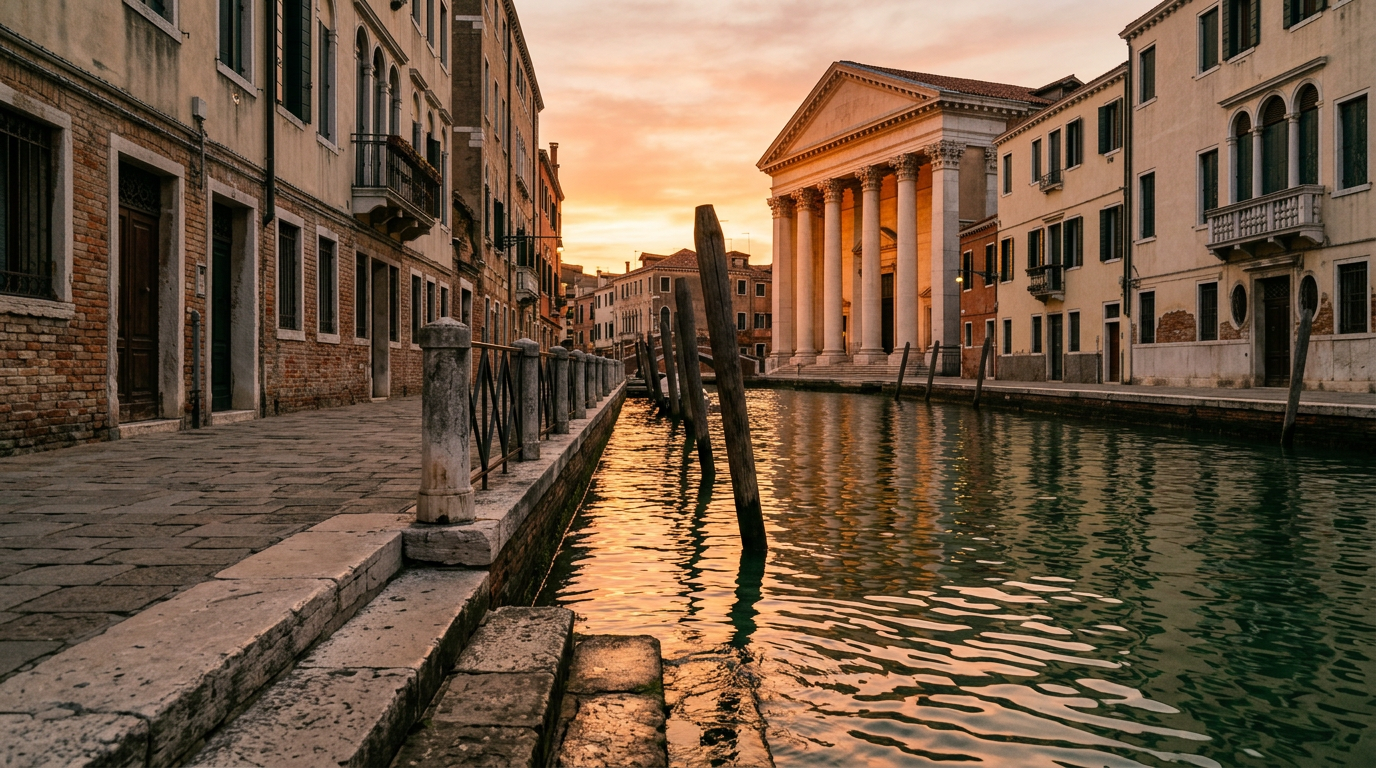
Once you step out from the heavy, gilded atmosphere of the Scuola, the brightness of the Campo San Rocco can be a shock to the system. The crowds often filter back toward the Rialto Bridge, but we suggest taking the opposite direction. A ten-minute walk through the winding calli will lead you away from the San Polo bustle and into the calmer sestiere of Santa Croce.
Santa Croce remains the most authentic gateway to the city, where the rhythm of daily Venetian life is still audible. At Osteria Leone Alato, located just past the Tolentini church, we keep the candles lit for those who have spent their day wandering the high reaches of Venetian art and need a moment of stillness before the evening ends.
To stand in the presence of Tintoretto's cycle is to understand the restless soul of Venice—a city that, even in the face of plague and decline, remained obsessed with the transformative power of light. After such intensity, a slow walk back through the shadowed alleys of Santa Croce is the only proper way to return to the present.