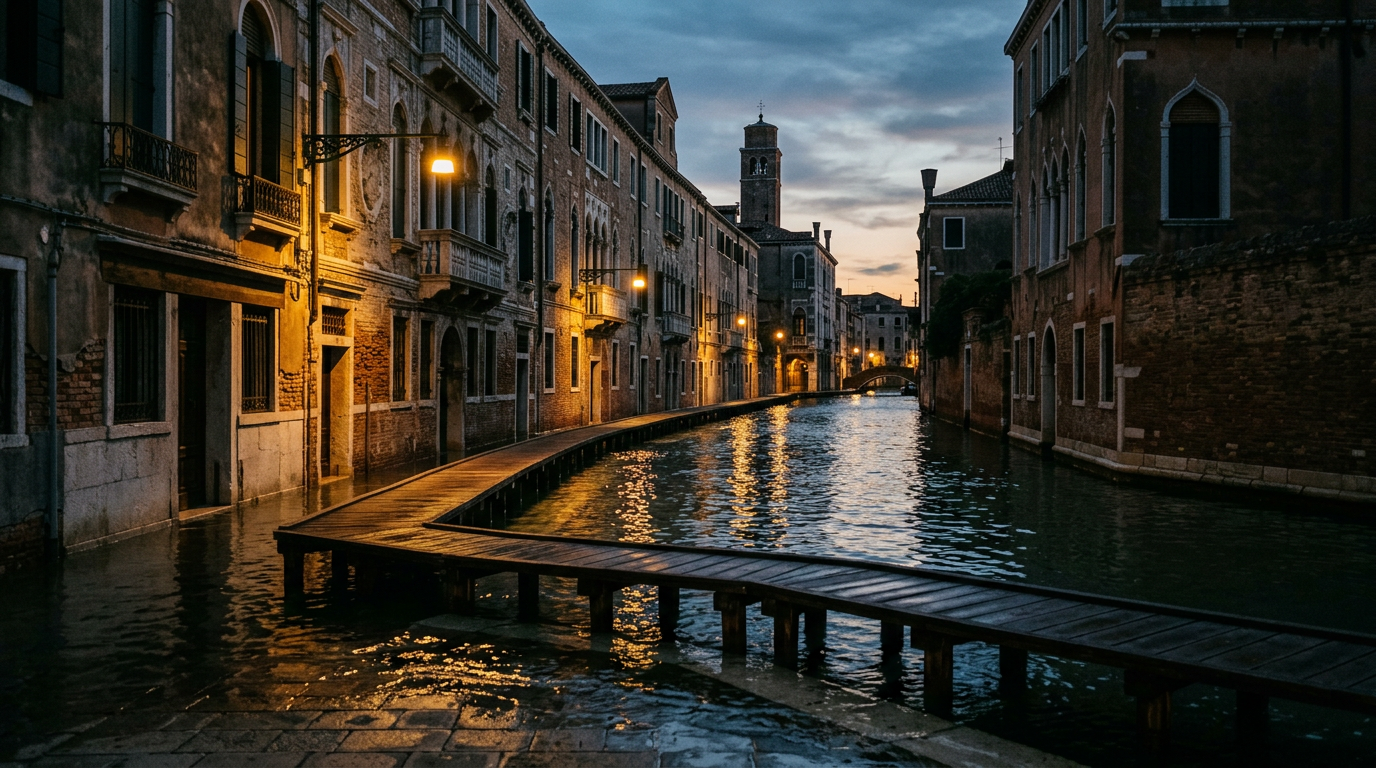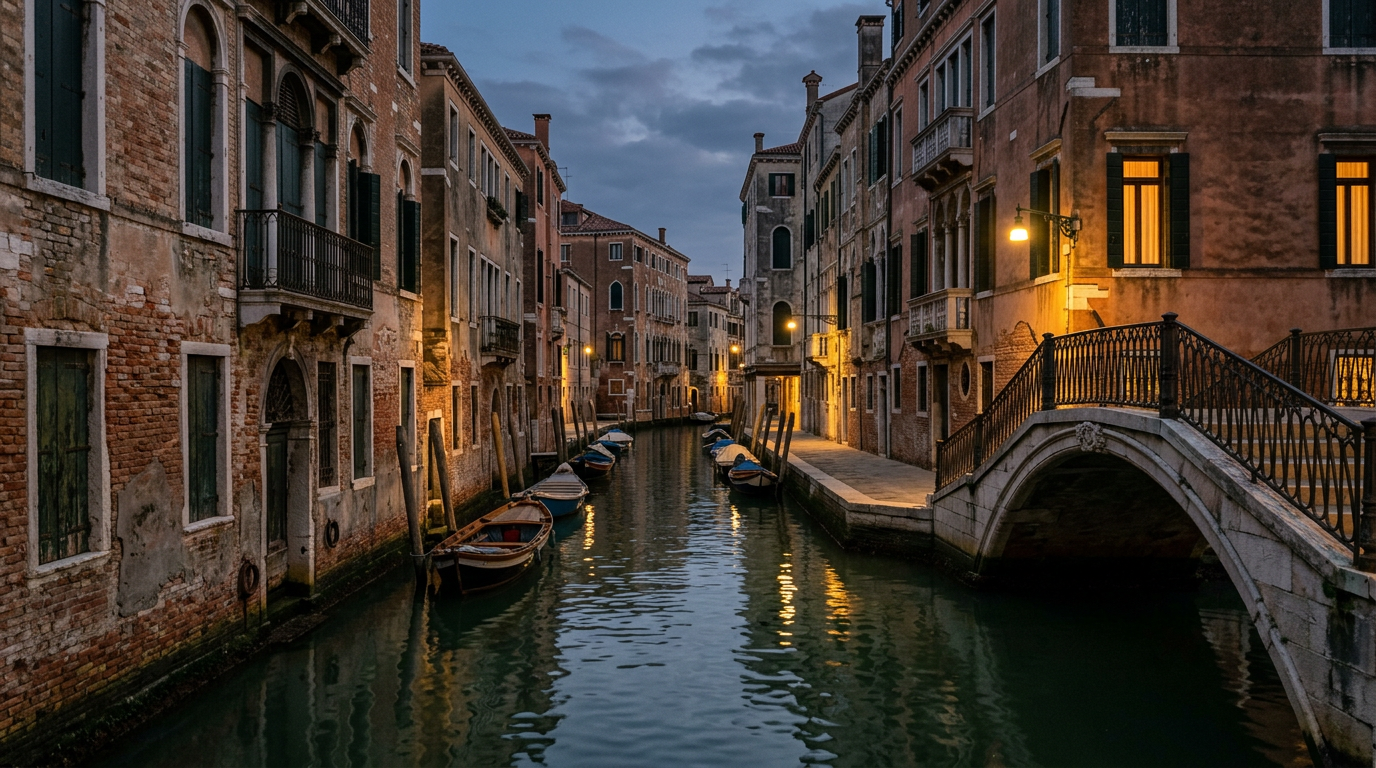
When you step off the train at Santa Lucia or cross the bridge from Piazzale Roma, the instinct of the crowd is to surge forward, drawn by the magnetic pull of San Marco. But we often wish they would pause. Here, in Santa Croce, the city begins with a different rhythm. It is the porch of Venice, the transitional space between the mainland and the lagoon, yet it remains the most residential and undisturbed of the six sestieri. In Santa Croce, you don't fight for space on the pavement; instead, you walk alongside locals carrying laundry or students sketching the Corinthian columns of the Tolentini. It is a neighborhood defined by deep shadows, wide campi, and the slow, rhythmic lap of the Rio Marin against ancient brickwork.
The Gateway and the Tolentini
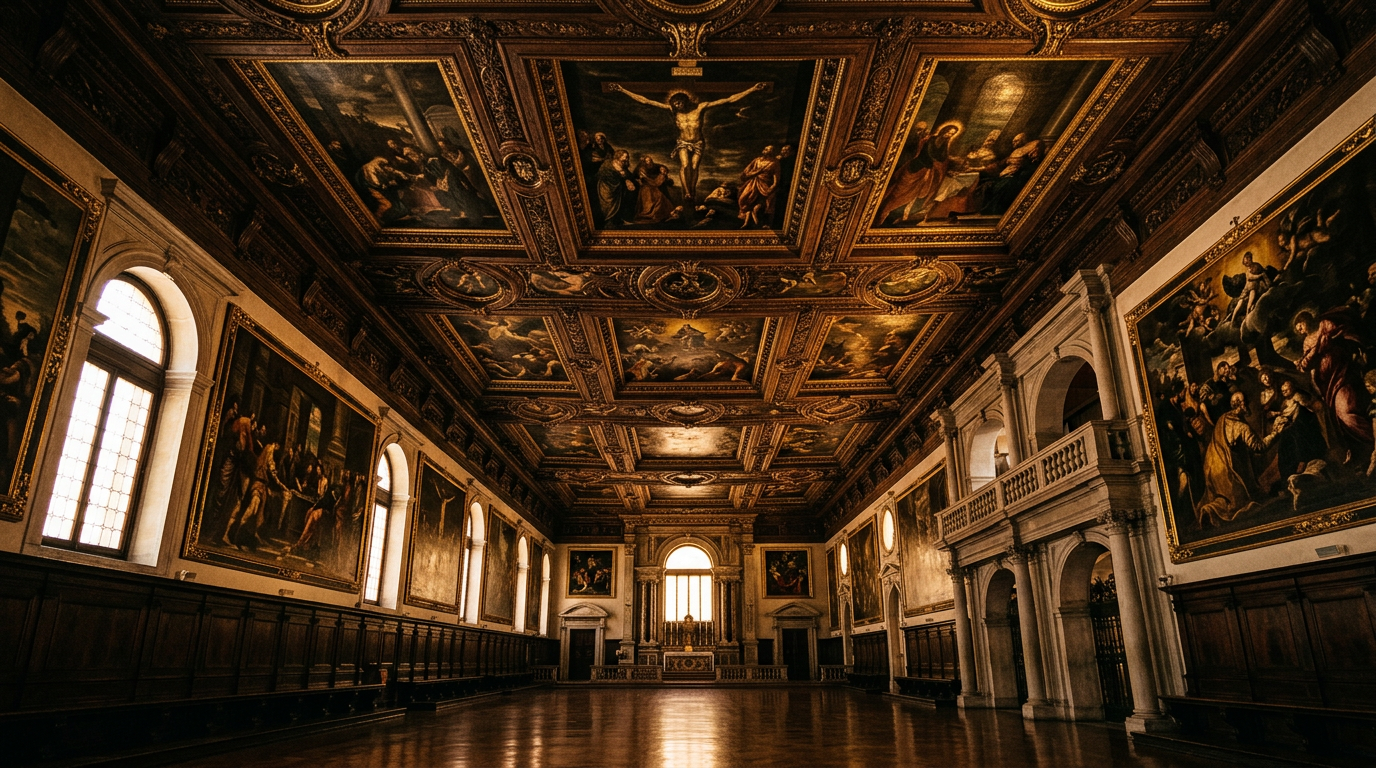
Most visitors pass the Church of San Nicola da Tolentino without a second glance, yet its massive Corinthian portico, designed by Andrea Tirali, is one of the few true temple fronts in the city. Inside, the architecture by Vincenzo Scamozzi offers a cool, intellectual rigor. Look up at the dome; it still bears the scars of an Austrian cannonball from the 1849 siege, a physical reminder of Venice’s long struggle for independence.
This area serves as the gateway to the city, yet it manages to retain a scholarly hush. The nearby IUAV university brings a steady stream of students and architects to the area, keeping the neighborhood vibrant and lived-in rather than preserved in amber for the benefit of tourists.
Walking the Rio Marin
Leaving the hubbub of the bus station behind, follow the Rio Marin towards the heart of the sestiere. This is, in our opinion, one of the most beautiful canals in the city. The fondamente (the walkways along the water) are narrow and lined with elegant palazzi whose gardens spill over high brick walls, scenting the air with jasmine in the spring.
Cross the Ponte de la Bergama and watch the heavy cargo boats navigate the tight bends. Unlike the Grand Canal, the traffic here is functional—deliveries of timber, furniture, and mail—reminding you that Venice is a working machine, not just a museum piece. It is a path that eventually leads you toward the border of San Polo, but the Santa Croce side always feels more intimate.
The Silence of Campo San Giacomo dell'Orio
The soul of Santa Croce resides in Campo San Giacomo dell'Orio. Dominated by its ancient church, which dates back to the 9th century, the square is a rare open space shaded by trees—a luxury in Venice. Here, the 'vecchi' (the elderly) sit on benches while children play football against the stone walls. It is the living room of the district.
The church itself is a marvel of layers. Its "ship's keel" wooden roof is a masterpiece of medieval carpentry, and the interior houses works by Lorenzo Lotto and Palma il Giovane. It lacks the golden opulence of the Basilica, but it possesses a grounding, terrestrial beauty that reflects the character of Santa Croce itself. After a long walk through these quiet calli, you can find us nearby at Osteria Leone Alato on the Fondamenta dei Tolentini, where the evening settles in peacefully.
Santa Croce provides the rare gift of space and silence in a city that often feels crowded. It is a place to slow your pace, look up at the stone lions, and remember that Venice is still, above all, a home.