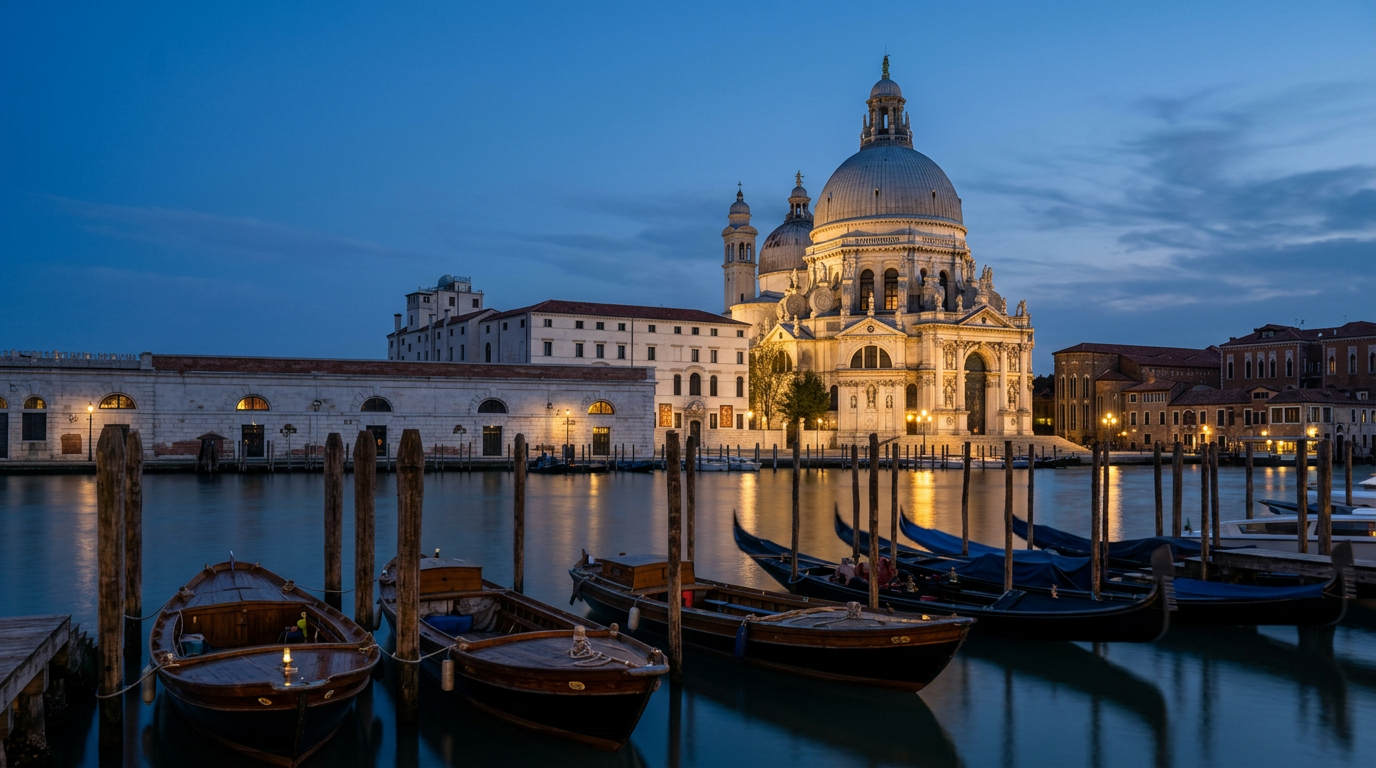
We often tell our guests that to understand Venice, one must understand our relationship with the water and the plagues that once threatened to swallow us whole. When the Black Death swept through the lagoons in 1630, claiming nearly a third of the population, the Republic made a solemn vow: should the city be spared, a magnificent temple would be raised to the Virgin Mary. The result is the Basilica di Santa Maria della Salute, which today sits proudly at the mouth of the Grand Canal. It is not merely a piece of architecture; it is a votive offering in white Istrian stone. Every time we cross the threshold of this octagonal giant, we are reminded of the resilience of our ancestors who carved beauty out of tragedy.
Longhena’s Octagonal Masterpiece
When Baldassare Longhena submitted his designs for the Salute, he was a young man of only 36. He proposed something radical for the 17th century: a central, octagonal plan that would serve as a crown for the city. Unlike the linear naves of San Marco or the Frari, the Salute forces your eyes upward and outward, following the curves of its massive dome and the famous 'orecchioni'—the great stone scrolls that support the structure.
To hold the weight of such a massive stone edifice on the marshy tip of Dorsoduro, over a million wooden piles were driven into the mud. It took over fifty years to complete, and Longhena sadly did not live to see the final consecration in 1687. Yet his vision remains the definitive silhouette of the Venetian skyline, marking the entrance from the Bacino di San Marco.
The Festa della Salute and the Pontoon Bridge
Every year on the 21st of November, the city undergoes a quiet transformation. This is the Festa della Salute, perhaps the most local and heartfelt of all Venetian holidays. A temporary bridge—a 'ponte votivo'—is constructed across the Grand Canal, stretching from Santa Maria del Giglio over to the steps of the Salute. This allows thousands of us to walk across the water to pay our respects.
During these days, the atmosphere is heavy with the scent of beeswax and the soft murmur of prayers. We buy large white candles from the stalls outside and light them inside the cold, cavernous interior of the church. It is a tradition that has remained largely unchanged for nearly four centuries, a moment where the modern city pauses to remember the 1630 deliverance.
A Walk to the Quiet of Santa Croce
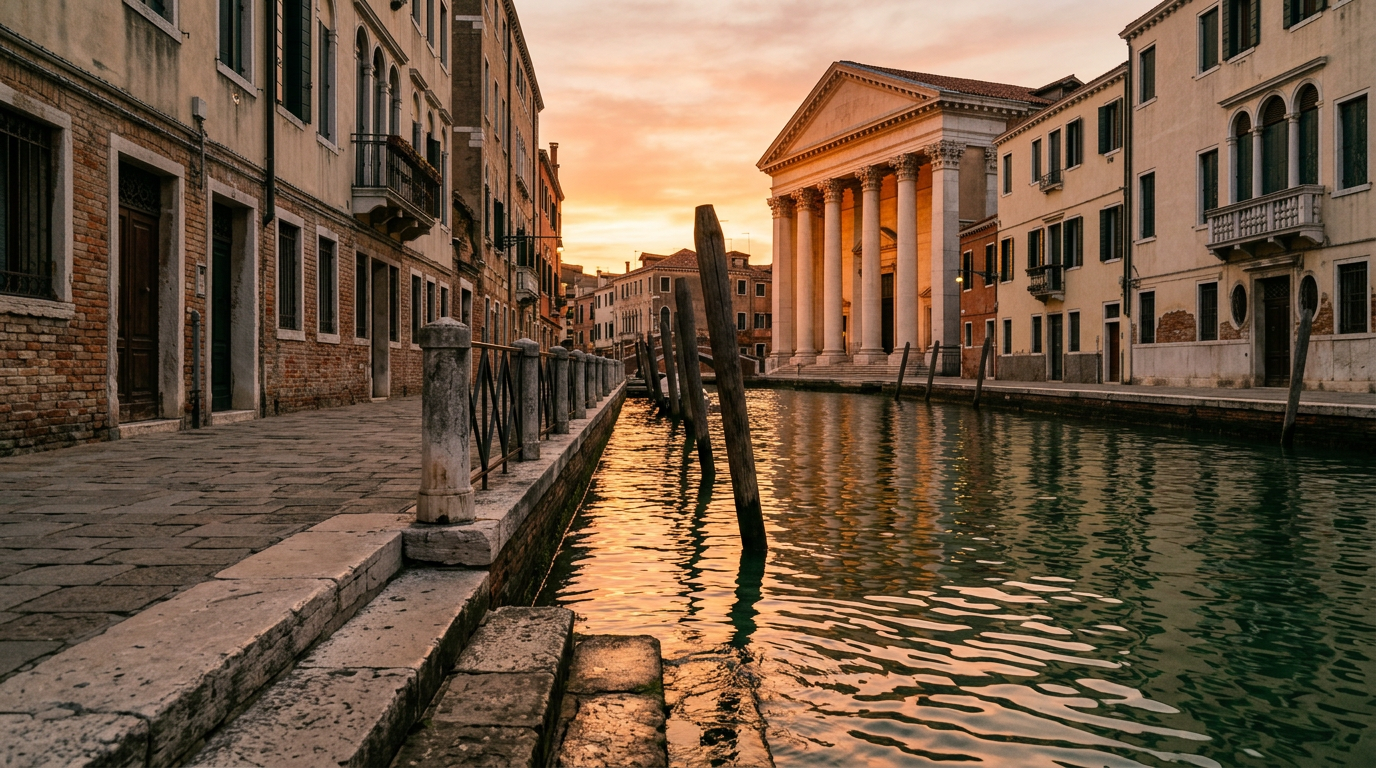
Once the sun sets and the crowds at the Salute begin to thin, many Venetians return to their own sestieri. While the areas around San Marco and the Salute can feel grand and imposing, the journey back toward the train station leads you into the more intimate corners of the city. Crossing the Accademia bridge and heading toward the sestiere of Santa Croce, the scale of the city changes from the monumental to the domestic.
At the end of such a day, we welcome you to join us at Osteria Leone Alato on the Fondamenta dei Tolentini. It is a quiet corner of Santa Croce where the candlelight reflects the same stillness you find in the ancient churches, offering a space to sit and contemplate the layers of history you have walked through.
The Salute remains Venice's most striking silhouette, a beacon of recovery that stands fast while the tides of history move around it. It is a church built for the city, by the city, in its darkest hour.