If you have ever sat down at a linen-covered table in Venice, from the quiet corners of Santa Croce to the bustling calli of San Polo, you have probably noticed a small line on your bill called the 'coperto'. For many visitors it feels like a hidden tax — and on a small meal it often is. The coperto is a fixed per-person charge that has nothing to do with what you actually order, so the lighter you eat, the more it weighs on your bill. At our osteria on the Fondamenta dei Tolentini we made a different choice: no coperto at all, just a single, clearly stated 12% service fee. In this guide we explain where the coperto comes from, where it can quietly become a trap, and how a proportional service fee is, for most diners, the more honest modern model.
Where the Coperto Comes From
Historically the coperto, literally 'cover', dates back to the Middle Ages. Travellers would stop at inns carrying their own bread and cheese, and innkeepers — who still had to pay for the roof, the table, the cutlery and the firewood — began charging a small fee for 'covering' the guest. Today it survives in Italy as a fixed per-person amount, typically 2 to 4 euros, that pays for bread, the table setting, and the laundering of linens.
There is nothing dishonest about a coperto in itself, and many serious restaurants still use it. But it is a flat charge that ignores how much you actually order, which is exactly where it can start to feel unfair to travellers who only want a glass of wine and a plate of cicchetti.
Where the Coperto Becomes a Trap
Imagine two friends sitting down in Venice for a light dinner of spritz, a shared plate of sarde in saor and a single primo. The bill comes to 40 euros. With a typical 3 to 4 euro coperto per person, that is another 6 to 8 euros on top — almost a 20% surcharge before anyone has poured a second glass. The smaller the meal, the heavier the coperto weighs.
The trap is not the existence of the coperto, but the way it disconnects what you pay from what you ordered. Combine it with a tourist-area menu that never changes from January to August, and a small lunch can quietly cost as much as a serious meal in a quieter sestiere. Always check the menu — by Italian law the coperto must be printed there — before you sit down.
Our Choice: No Coperto, Just 12% Service
At Osteria Leone Alato we decided not to use a coperto at all. Instead we apply a single 12% service fee, clearly stated on our multilingual menu in Italian, English and Chinese. The difference is more than philosophical. On the same 40-euro bill for two, our service fee is roughly 4 to 5 euros — meaningfully less than the 6 to 8 euros a per-head coperto would have added.
A proportional service fee scales with what you actually eat and drink. Two people sharing a light plate pay a small amount; a table of six on a long evening pays more, fairly. Nothing is hidden, nothing is per-head, nothing punishes you for ordering modestly. We think that is the honest modern model for a Venetian osteria, and we are happy to put it in writing on every menu.
The Real Warning Signs in Venice
If you want to avoid genuine tourist traps in Venice, look past the coperto and watch for the things that actually inflate your bill. The clearest red flag is seafood priced 'al grammo' — by the gram. A fish that looks reasonable on the menu can arrive heavier than expected and turn an 18-euro plate into an 80-euro one. Honest restaurants quote a clear per-portion price for the whole fish before it reaches your table; we do.
The second warning sign is a long, identical menu that never changes — the same dozens of dishes in January and August, regardless of what the Rialto market actually has that morning. Real Venetian cooking follows the lagoon’s seasons. And remember the geography: Santa Croce is the entry point of the city, where the bridge, the cargo boats and the train station all arrive. By the time the same fish reaches a kitchen behind San Marco it has paid for an extra leg of transport and rents three to four times higher, which is why a comparable meal there typically costs about 50% more — purely because of rent and logistics, not because the food is better.
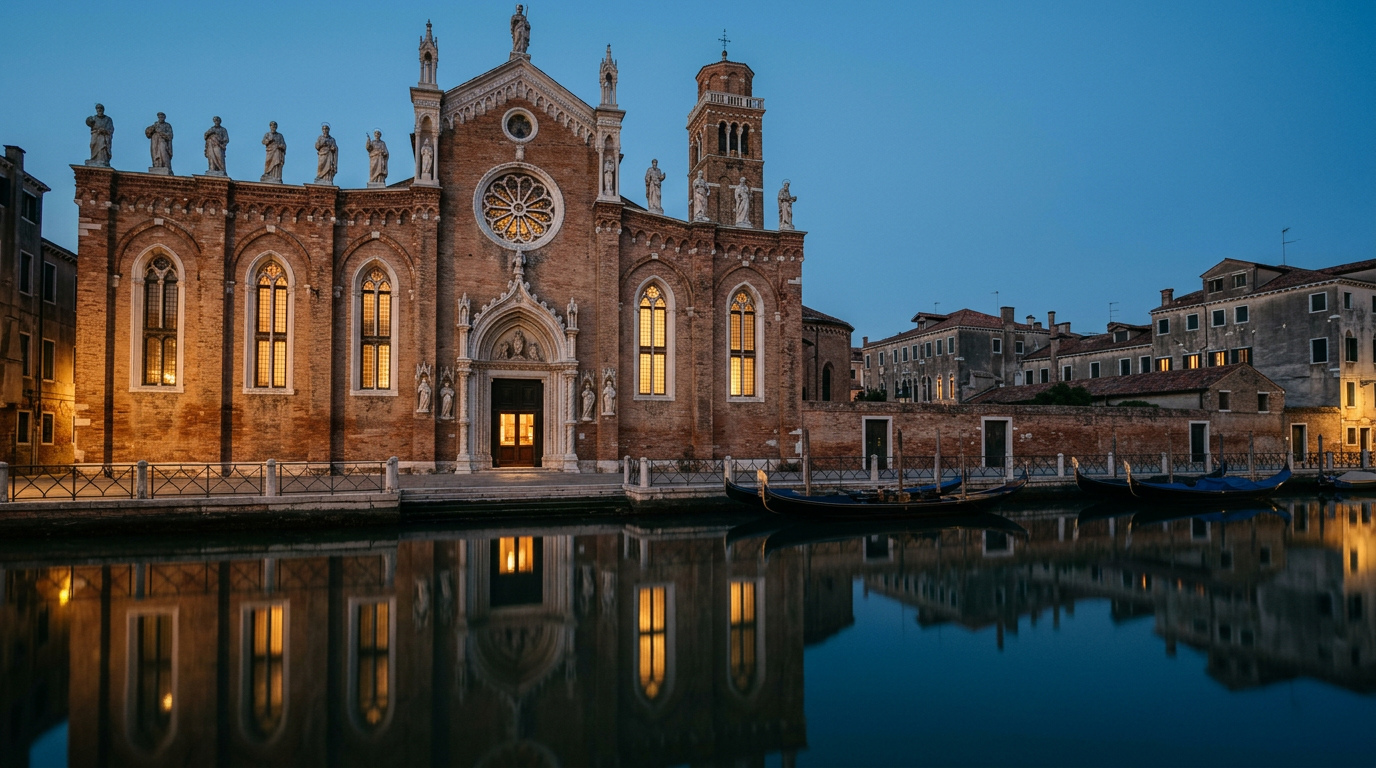
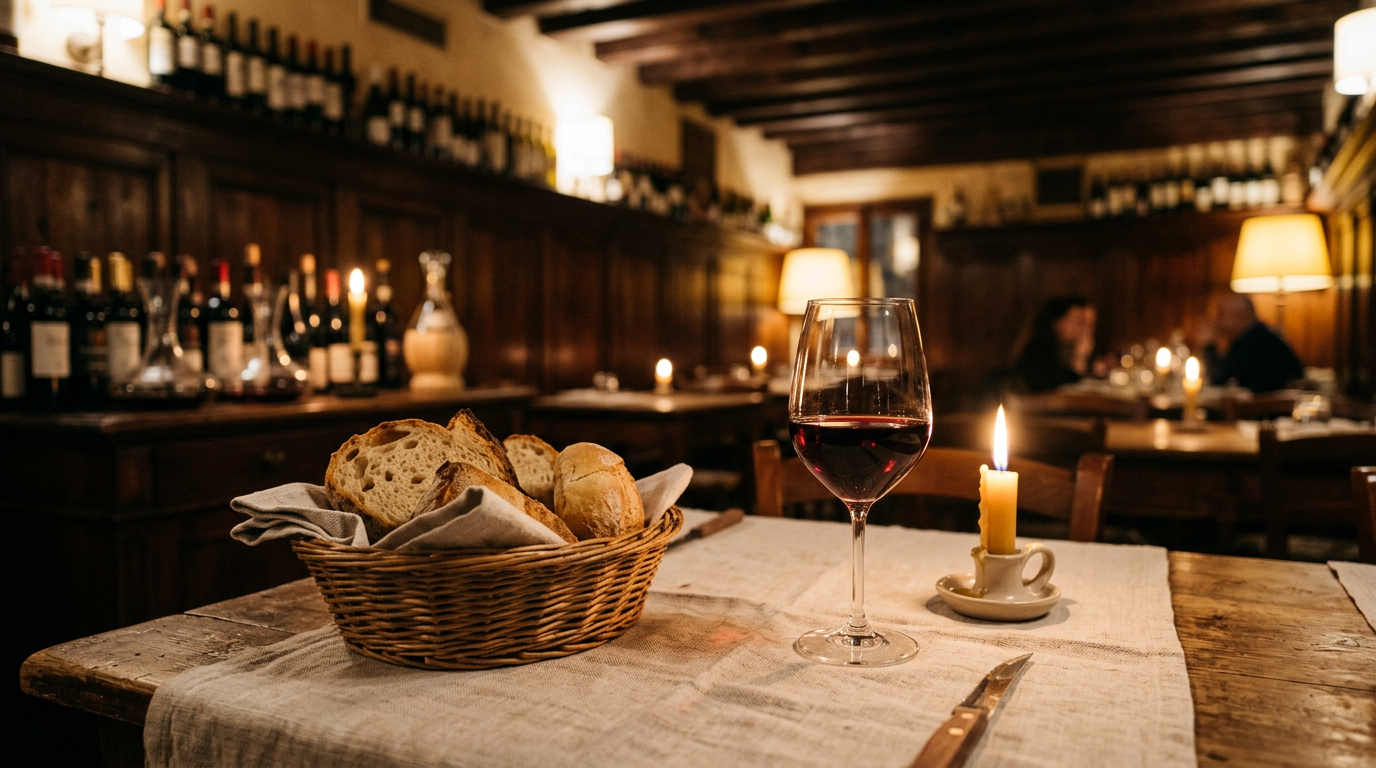
A coperto is not, on its own, a tourist trap — but on a small bill it can quietly become one. We chose a transparent 12% service fee instead, printed on every menu, so what you pay always reflects what you ordered. Walk a few minutes from the crowds to the Fondamenta dei Tolentini and you will find honest pricing, seasonal seafood from Rialto, and a candle-lit table waiting for you.