When you walk through Venice, you feel a sense of history that is alive, breathing in the stones and reflecting in the water. And everywhere you look, you will see him: the winged lion. He is on columns, flags, and doorways, the silent guardian of our city. For us, he is not just a decoration or a relic of the past. He is the symbol of St. Mark the Evangelist, our patron saint, and the very soul of Venice. Understanding the lion is the first step to understanding the city beyond the polished surface that visitors often see. It’s a story we love to tell, a story of prophecy, power, and a uniquely Venetian pride.
The Legend: How the Lion Came to the Lagoon
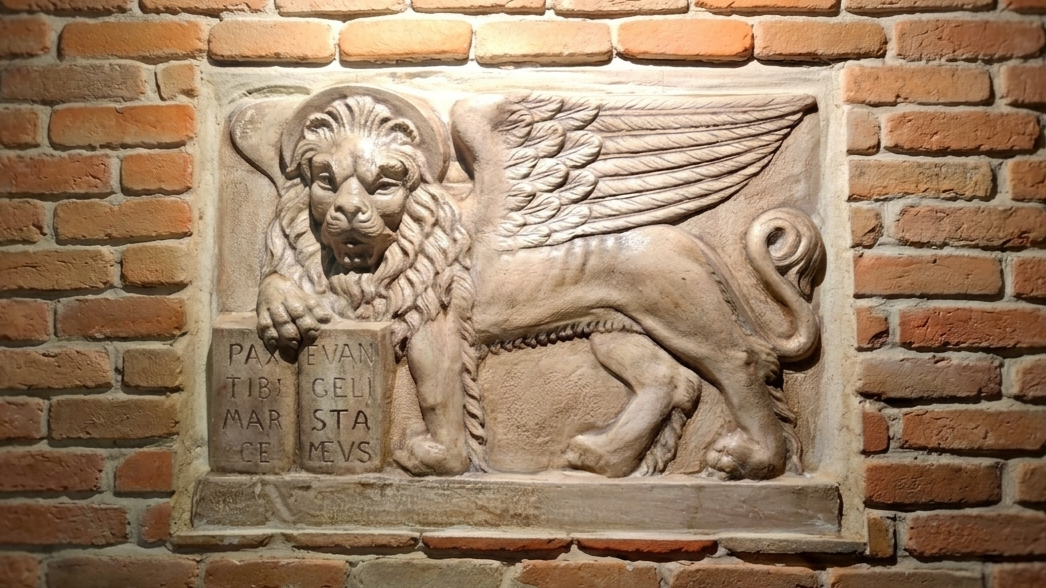
Our story begins not in Venice, but with St. Mark himself. The legend, which every Venetian child knows, tells us that while traveling, the Evangelist took shelter from a storm in a fisherman’s hut on the islands of our lagoon. In a dream, an angel in the form of a winged lion appeared and greeted him with the words, *“Pax tibi, Marce, evangelista meus. Hic requiescet corpus tuum.”* — “Peace be with you, Mark, my evangelist. Here your body will rest.”
Centuries later, in 828, two Venetian merchants fulfilled this prophecy. They daringly rescued the relics of St. Mark from Alexandria and brought them here, to Venice. The city, which was then a rising power, had found its patron saint and its enduring symbol. The winged lion became the emblem of the Venetian Republic, a sign of its strength, piety, and divine blessing.
An Open or Closed Book: Reading the Signs
When you see the lion, look closely at the book he holds. It's a detail that tells a story. If the book is open, it displays the Latin phrase of welcome. This signifies a time of peace, the preferred state of the Republic, a city built on diplomacy and trade. When the book is closed, however, and the lion also holds a sword, it represents a state of war. It was a clear message from the Republic: we value peace, but we are always prepared to defend ourselves. You will mostly see the open book today, a fitting symbol for the city that welcomes the world.
This kind of subtle language, of knowing what to look for, is the key to Venice. It is the difference between a real Venetian osteria and a place designed for tourists. You learn to spot the signs — not a picture on a menu, as some say, because we have multilingual menus with photos to welcome our guests. The real sign is a menu that never changes, offering the same few dishes year-round regardless of season. A kitchen that truly cooks for Venetians follows the market, as our chef does every morning at the Rialto.
Where to Find the Lion
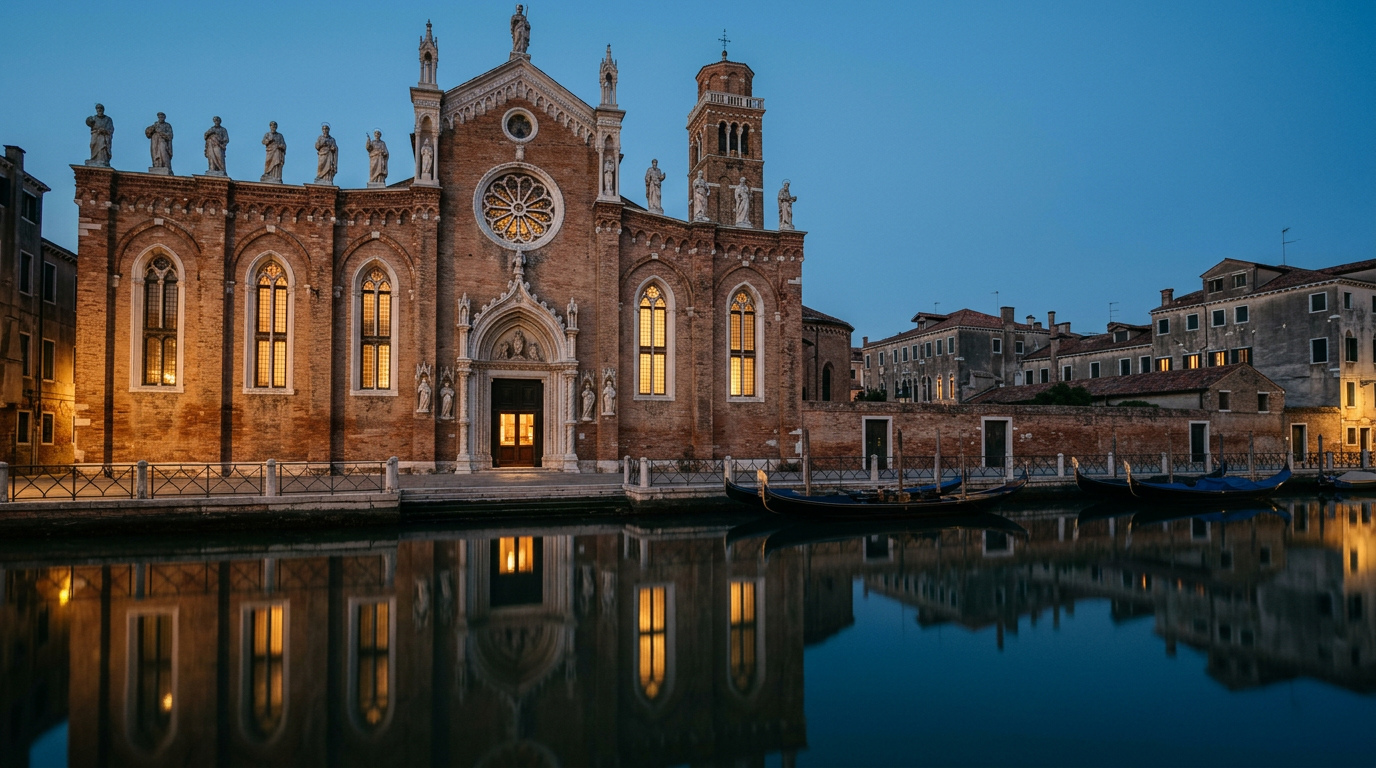
The two most famous lions guard Piazza San Marco. One stands majestically atop a granite column, a bronze statue that has looked over the city for centuries. The other is the golden lion on the blue face of the Clock Tower. But don't stop there. You will find a magnificent example carved onto the façade of the Scuola Grande di San Marco in Campo Santi Giovanni e Paolo.
But our favourite lions are the smaller ones, the ones you discover by chance. As you walk from the Piazzale Roma into the heart of our *sestiere*, Santa Croce, look for them above doors or on cornerstones. Here on the Fondamenta dei Tolentini, far from the crowds, you feel the city’s true pulse. It is this part of Venice we are proud to call home, where our own Osteria Leone Alato — the Winged Lion — awaits to welcome you. Our name is our promise: to honour the traditions and the authentic spirit this symbol represents.
So as you wander our calli and campi, we invite you to look for the lions. Each one is a link in a chain of history stretching back over a thousand years. It’s a symbol of who we are, a proud and resilient city with a story to tell. And we believe the best stories are always shared over a good meal and a glass of wine.