When the wind blows from the south—the warm, heavy Scirocco—we in Venice begin to watch the tide tables. Acqua alta is a seasonal reality here, typically occurring between October and March. It is not the constant flood that sensationalist headlines suggest, but rather a temporary pulse of the lagoon. We see the water rise, sit for a few hours, and then retreat. For those visiting us in Santa Croce, understanding this rhythm is the difference between a ruined pair of shoes and a fascinating glimpse into how this city has survived for a millennium. We don't view it as a catastrophe; we view it as a logistical challenge that requires specific local knowledge to navigate.
The Warning System and the Sirens
Long before the water reaches the marble steps of the churches, the city alerts us. You will hear a series of whistles—a distinct, electronic siren that echoes across the sestieri. Each tone indicates a different predicted height. One flat tone means 110cm, while four rising tones indicate a severe tide of 140cm or more. These measurements are relative to the 'zero' point at Punta della Dogana, not the actual depth of the water on the ground.
For the modern traveller, the 'Hi!Tide Venice' app is indispensable. It provides real-time data from the Centro Maree. Most tides only affect the lowest points of the city, like Piazza San Marco. In our sestiere of Santa Croce, which sits slightly higher, many of our fondamente remain dry even when the square is submerged.
MOSE and the Changing Tide
Since 2020, the landscape of acqua alta has changed significantly due to MOSE (Modulo Sperimentale Elettromeccanico). These are the yellow rows of mobile barriers at the three lagoon inlets: Lido, Malamocco, and Chioggia. When a tide of 110cm or higher is forecast, the barriers are raised, effectively detaching the lagoon from the Adriatic Sea.
However, MOSE is not an invisible shield that operates every day. It is an expensive operation reserved for significant events. This means you will still see 'minor' flooding. If the tide is predicted at 100cm, the barriers stay down, and the lower parts of the city will still experience several inches of water. It is a controlled system, but the ancient relationship between the stone and the salt water remains.
Navigating the Passerelle
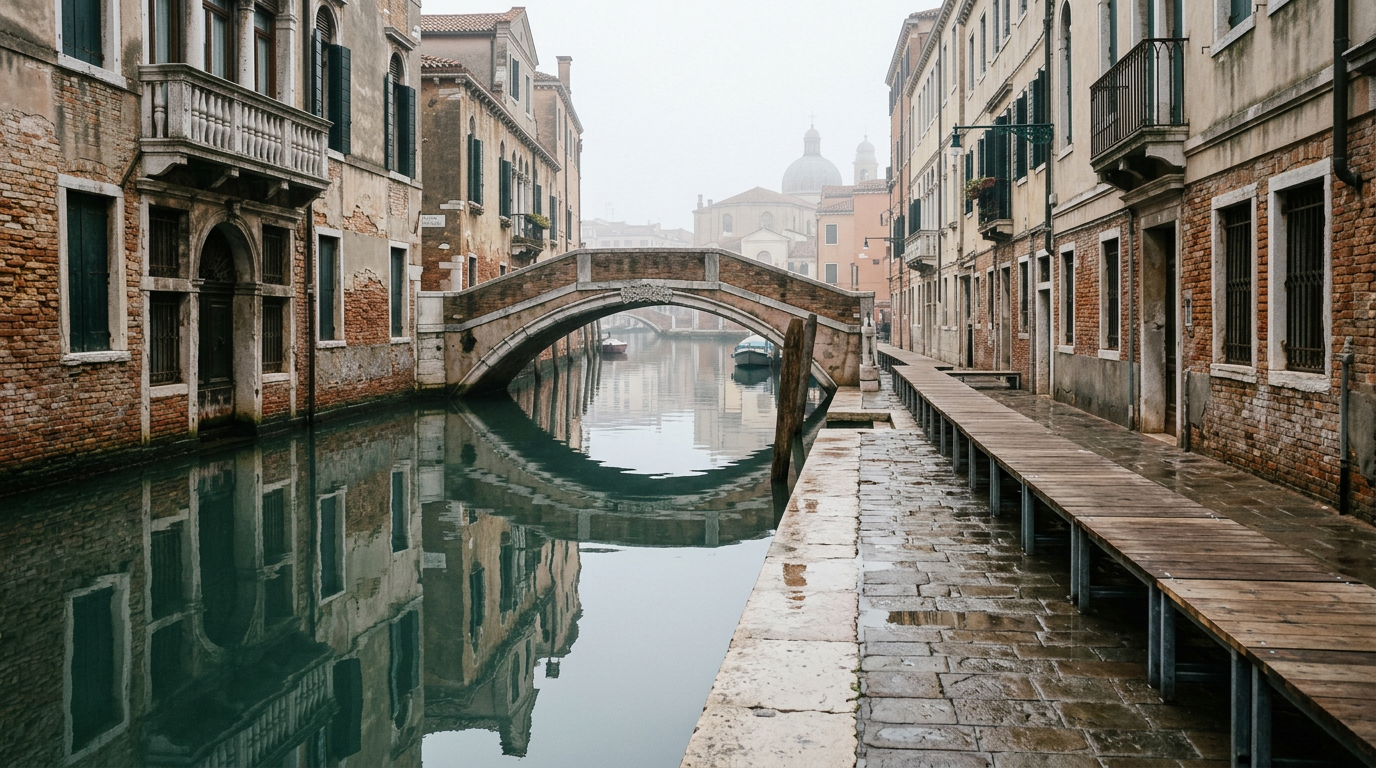
When the water does rise, the city workers—the 'netturbini'—quickly deploy the passerelle. These are elevated wooden walkways stored in various corners of the city. They follow specific arterial routes, allowing you to walk from the Ferrovia (train station) through Santa Croce towards the Rialto without getting wet.
If you find yourself caught without boots, stay on these paths. Do not attempt to wade through the water barefoot; the lagoon water is not clean, and the submerged stones can be incredibly slick. If the tide is exceptionally high, you can purchase 'Goldon'—disposable over-shoe boots—at local hardware stores. They aren't fashionable, but they are effective. After the tide passes, we invite you to retreat to the warmth of Osteria Leone Alato on the Fondamenta dei Tolentini, where the streets stay firm and the evening remains calm.
Acqua alta is not a disaster, but a rhythm. It requires patience and a pair of boots, but it also reveals a version of the city that few others get to see.