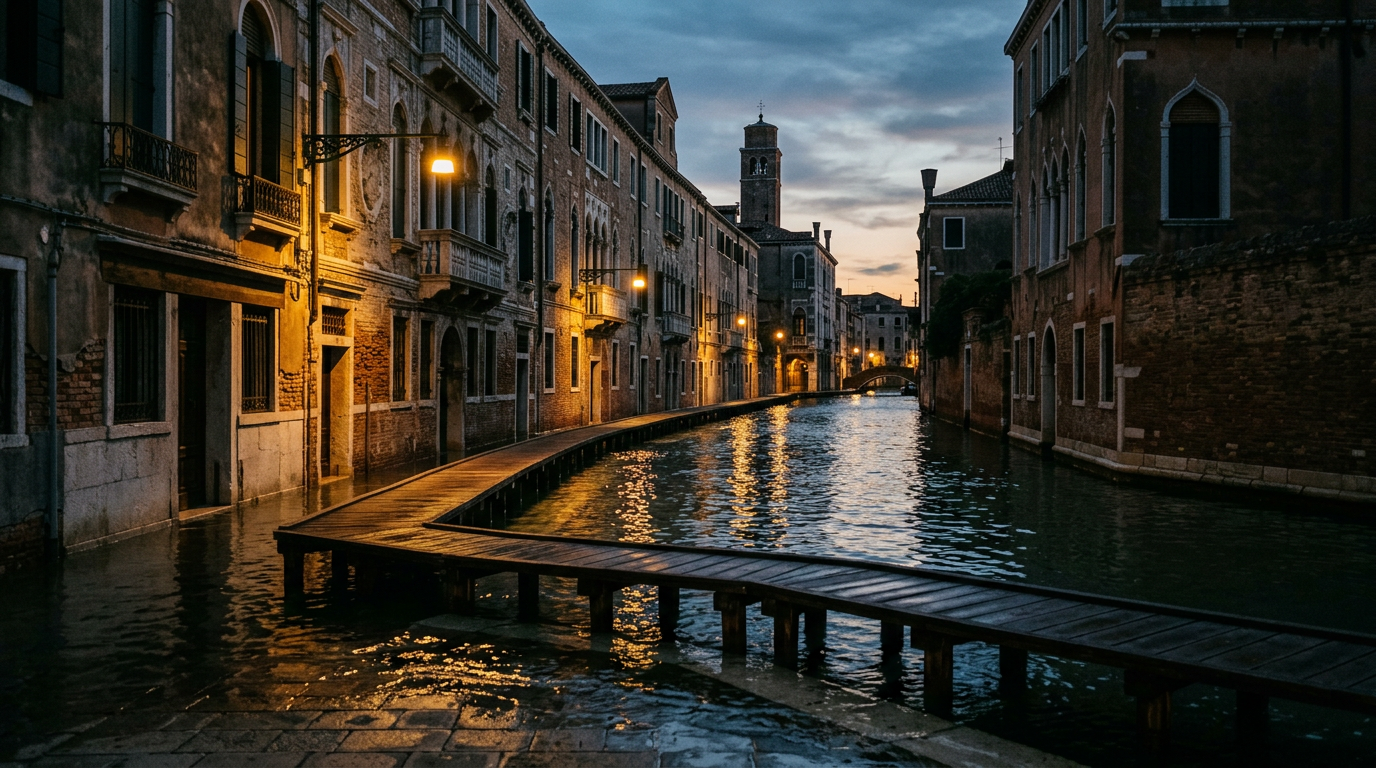
There is a specific sound that defines arrival in Venice: the rhythmic thud-thud of rolling suitcases against the stone steps of the Scalzi Bridge. We hear it from across the water, a constant pulse of newcomers. Most travellers, blinking in the sudden light of the Canal Grande, instinctively follow the flow of the crowd, turning left toward the frenzy of Rialto. But we suggest a different rhythm. When you exit the Stazione Santa Lucia, the city asks for a moment of pause. Look not toward the signs for San Marco, but across the water toward the green copper dome of San Simeone Piccolo. This is the threshold of Santa Croce, our home, and the gateway to a Venice that still breathes at its own pace.
Crossing the Ponte degli Scalzi
The Scalzi Bridge, or the 'Bridge of the Barefoot,' is your first physical encounter with the city's verticality. It is steep, and it is crowded, but it is the necessary crossing into the quiet side of the canal. Once you reach the peak, look down: the Vaporetto lines 1 and 2 churn the water below, and the gondolas wait in their ranks. Instead of rushing, take a breath. The air here smells of salt and ancient dampness.
Once you descend into the sestiere of Santa Croce, the roar of the station begins to fade. If you have heavy luggage, there are official porters available, but most hotels in this area are a manageable walk. The key is to avoid the narrowest calli immediately; stay along the wider foundations until you have found your bearings.
The Sanctuary of San Simeone Piccolo
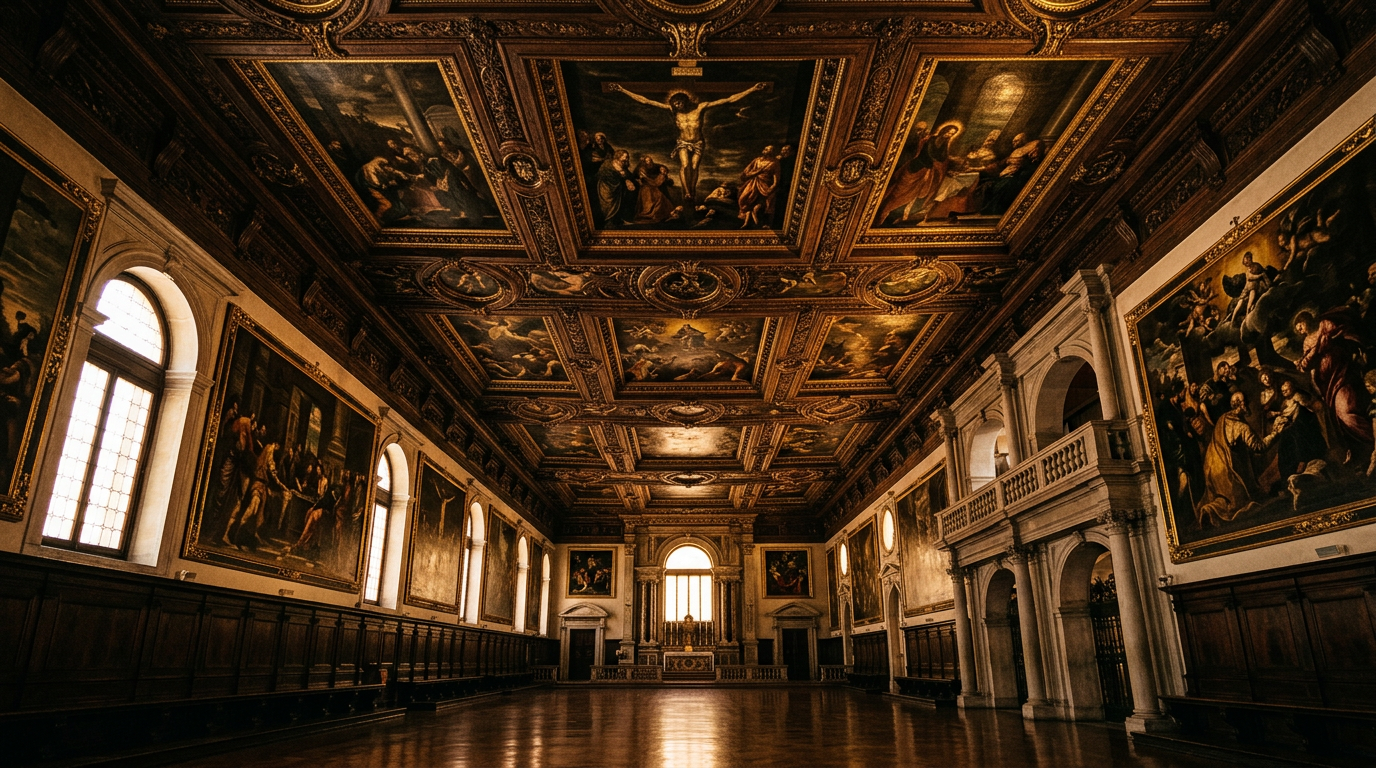
Directly opposite the station stands the church of San Simeone Piccolo. Its neoclassical porch and vast dome are the first things you see, yet few visitors ever step inside. It is one of the last churches in Venice to regularly celebrate the Tridentine Mass in Latin. Its crypt is a labyrinth of tombs, a quiet, somber space that immediately grounds you in the history of this place.
Walking past San Simeone towards the Giardini della Costituzione, you will find the crowds thinning. This is the 'entry point' of Venice, where the cargo boats unload and the city's logistical heart beats. Yet, because it lacks the 'destination' labels of the Accademia or San Marco, it remains remarkably peaceful.
Navigating the Fondamenta dei Tolentini
Follow the curve of the water away from the station and toward the church of San Nicola da Tolentino. Designed by Vincenzo Scamozzi, its massive Corinthian columns stand as a sentinel at the edge of the Santa Croce district. This area is home to the IUAV university, giving it a lived-in, intellectual energy rather than a purely touristic one.
As you settle into your first afternoon, you will notice that Santa Croce doesn't demand anything of you. There are no queues here, only laundry hanging between windows and the occasional boat delivery. After you have dropped your bags and washed away the dust of the train, a short walk back toward the Fondamenta dei Tolentini will lead you to our door at Osteria Leone Alato, a perfect spot for a calm, candle-lit dinner to mark your arrival.
As the night falls, Santa Croce reveals its true character—a quiet, residential rhythm that feels worlds away from the arrival platforms of Santa Lucia. We hope your first hour here is not one of transit, but of true arrival.