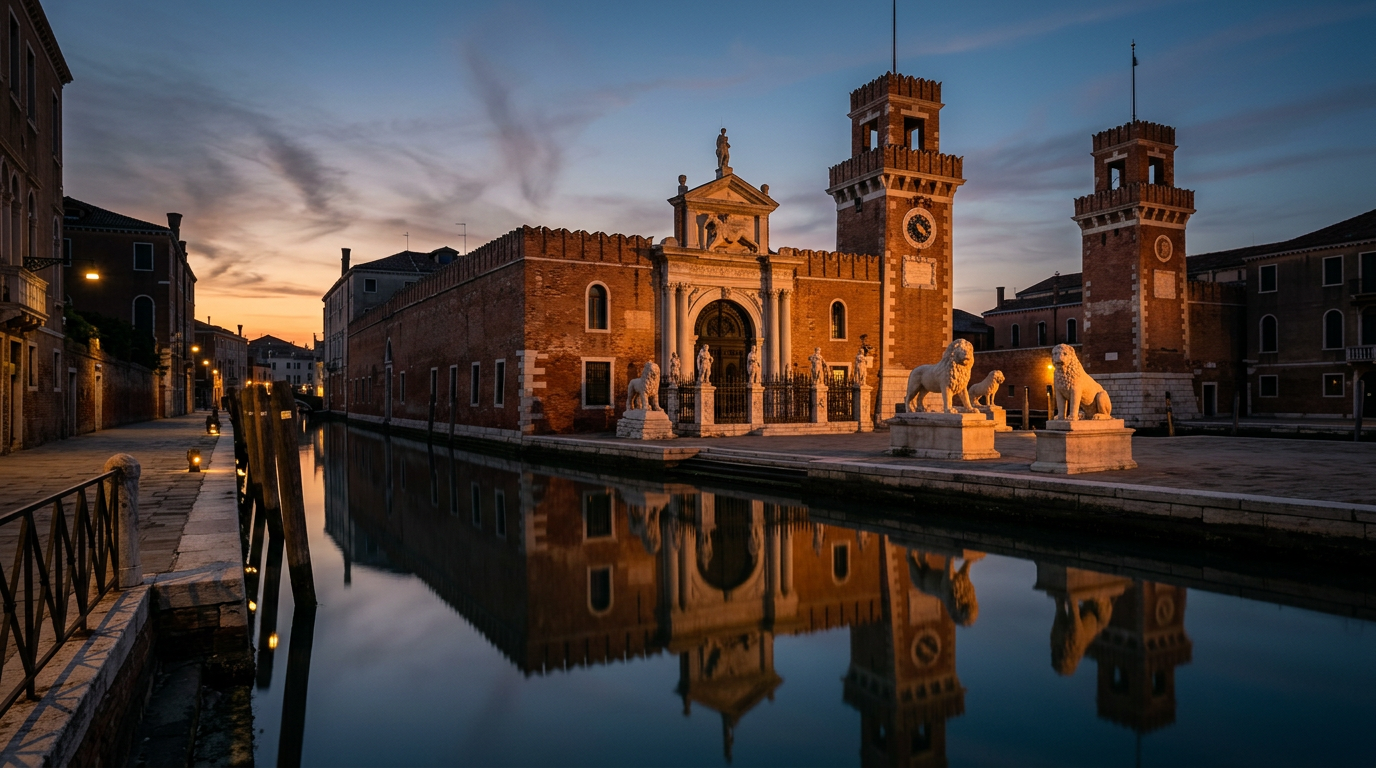
When we walk past the twin towers of the Arsenale in Castello, we are not just looking at a gate; we are standing at the threshold of the world’s first industrial complex. Long before the factories of the north or the assembly lines of Detroit, Venice had perfected the art of mass production. It was here, within these high, crenelated walls, that the Republic’s power was hammered out in oak and hemp. For centuries, this was a forbidden city—a place of state secrets where the 'Arsenalotti' workers formed a dedicated, hereditary workforce. Today, while much of it remains a military zone or a stage for the Biennale, the sheer scale of the shipyards continues to tell the story of how a small lagoon city-state managed to command the Mediterranean.
The Assembly Line of the 14th Century
The efficiency of the Arsenale was legendary across Europe. At its peak in the 16th century, the shipyard employed roughly 16,000 people and could produce a fully equipped war galley in a single day. This was achieved through a revolutionary system of standardized parts and a flow-based assembly line. Hulls were floated along a canal, stopping at different 'stations' where specialized teams would install masts, rigging, and armaments.
This level of organization required absolute secrecy. The Republic treated the layout of the Arsenale and the design of its ships as the highest state secrets. Theft of timber or the unauthorized disclosure of naval blueprints carried severe penalties, including exile or death. It was this industrial discipline that allowed Venice to maintain its naval supremacy for half a millennium.
Dante’s Boiling Pitch
The Arsenale’s influence reached far beyond the lagoon, even finding its way into the immortal lines of Dante Alighieri’s 'Divine Comedy'. In Canto XXI of the Inferno, Dante compares the thick, bubbling pitch of the eighth circle of Hell to the boiling vats used in the Venetian shipyards to caulk the seams of damaged vessels.
When you stand near the Porta Magna today, it is easy to imagine the sensory assault Dante described: the heavy smell of resin, the constant rhythmic clanging of hammers, and the sheer density of human labor. It was a place of fire and steam, a stark contrast to the quiet, reflective Venice we often seek today.
Walking the Walls: What to See Today
While much of the interior is reserved for the Italian Navy or the Art and Architecture Biennales, the public can still appreciate the monumental Porta Magna. Built in 1460, it was the first Renaissance structure in Venice, flanked by four ancient lions brought as spoils of war from Greece. The largest, the Piraeus Lion, still bears mysterious runic inscriptions carved by Viking mercenaries centuries ago.
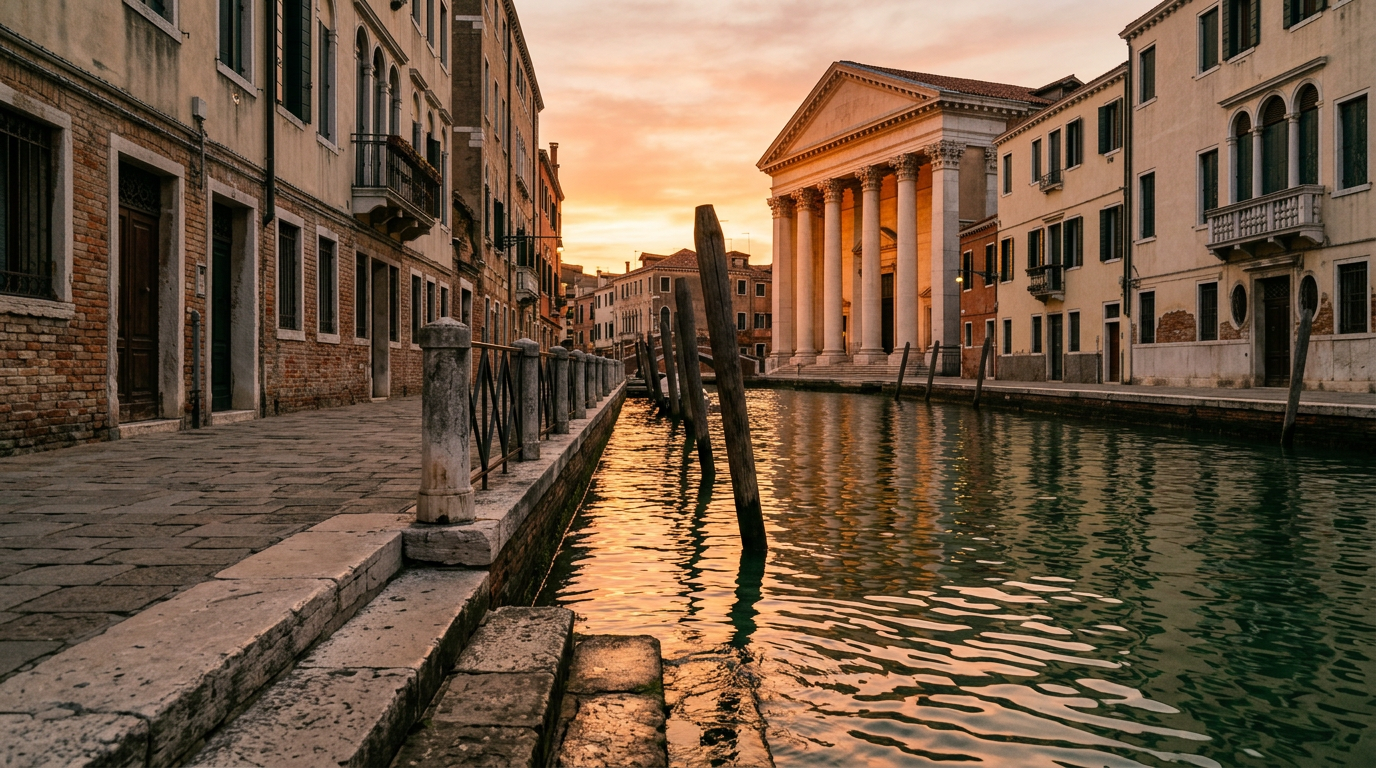
For those seeking a quieter perspective, a walk along the Fondamente Nuove toward the eastern tip of Castello offers views of the vast brick walls that enclose this secret city. After a long afternoon exploring the industrial scale of the East, we often find ourselves retreating to the other side of the city. Santa Croce, where we are located, offers a much-needed calm away from the grand monuments, perfect for a slow evening on the Fondamenta dei Tolentini.
The Arsenale remains the silent heartbeat of the lagoon, a place where the logic of the modern world was first forged in wood and pitch. To walk its perimeter is to touch the very skeleton of the Republic.