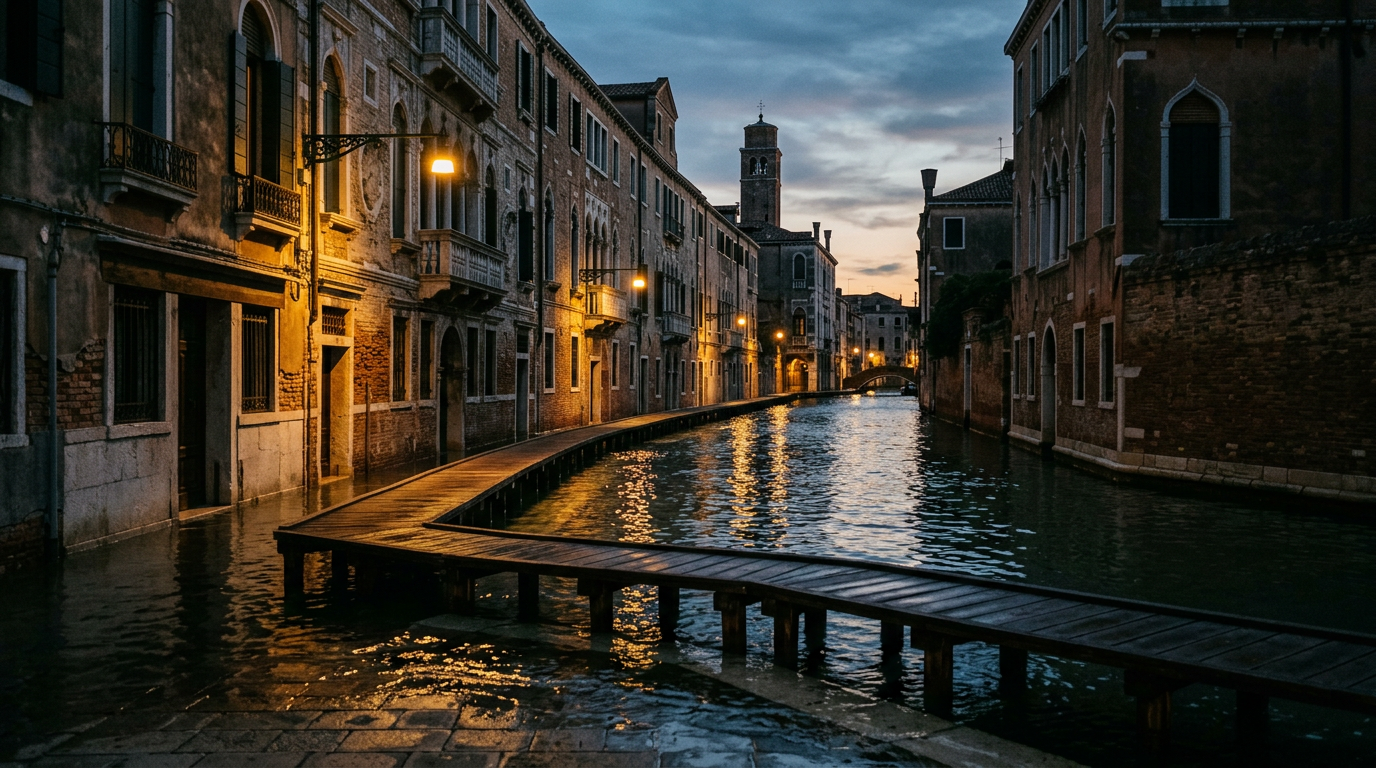
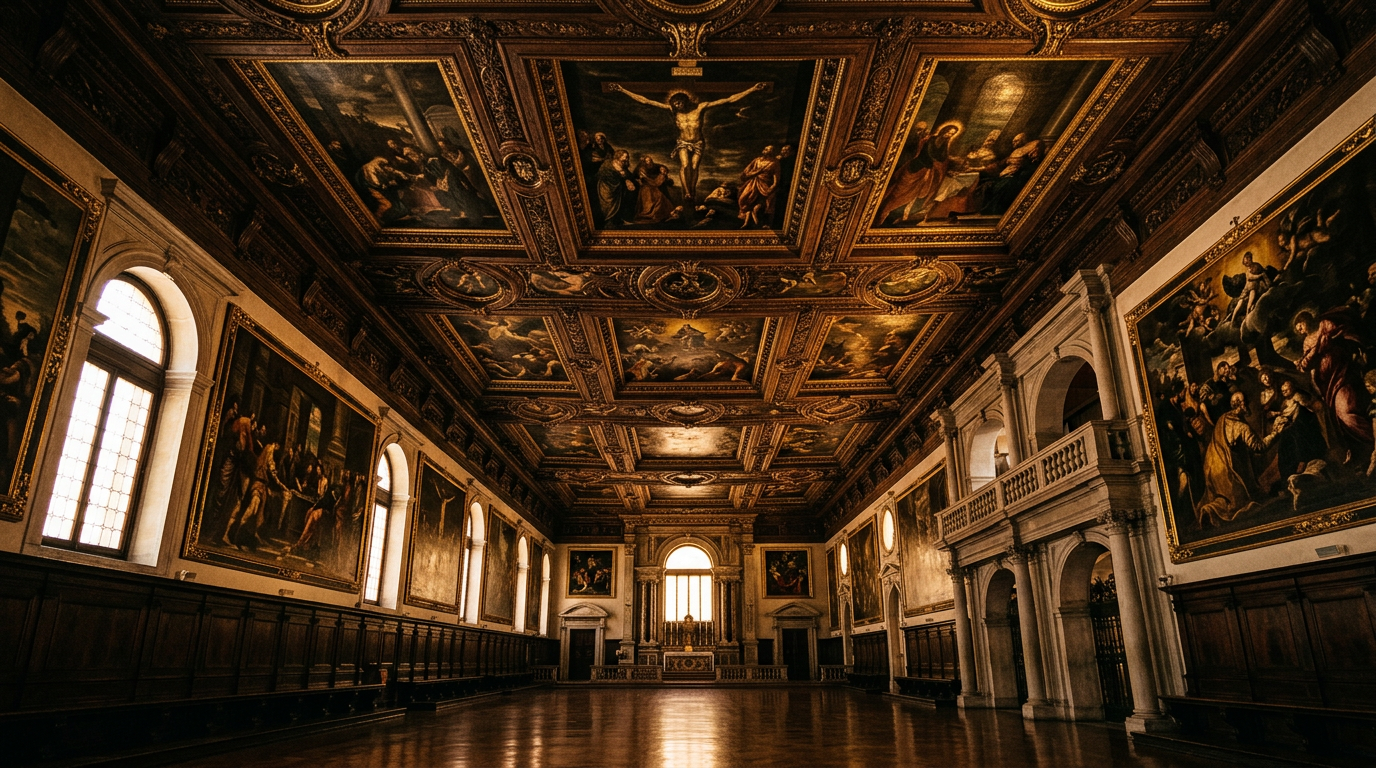
We often tell our guests that to understand the spirit of Venice, one must walk to the Campo dei Frari. While the golden mosaics of San Marco represent the city’s state power, the Basilica di Santa Maria Gloriosa dei Frari is its beating heart of brick and stone. As you approach the massive Gothic facade in the sestiere of San Polo, the scale alone tells you this is no ordinary parish church. It is a pantheon. Built by the Franciscans over the course of a century, it serves as a silent witness to the genius of the men who shaped the Venetian Renaissance. Here, the air feels different—thick with the scent of old wood and the lingering presence of masters who changed the course of art history forever.
Titian’s Radiance and the High Altar
Standing at the threshold of the nave, your eyes are immediately drawn to the high altar, where Titian’s 'Assunta' (Assumption of the Virgin) seems to hover in a glow of celestial light. When it was unveiled in 1518, it shocked the city with its vibrant reds and dynamic movement; today, it remains one of the most powerful compositions in Western art. The painting acts as a visual anchor for the entire soaring space.
Not far from his masterpiece lies the master himself. Titian is buried in the south aisle, beneath a grand 19th-century monument. It is a rare honor; while many doges rest within these walls—including Francesco Foscari, whose tomb marks the transition from Gothic to Renaissance—Titian is the only artist accorded such a monumental resting place within the Frari.
The Quiet Masterpieces: Bellini and Donatello provincial
Beyond the central nave, the Frari holds treasures that require a slower pace. In the Pesaro Chapel, Titian’s 'Pesaro Madonna' breaks all traditional rules of symmetry, while the Sacristy hides Giovanni Bellini’s 1488 Triptych. This 'Madonna and Child with Saints' is widely considered one of the most beautiful paintings in the world, housed in its original gilded frame that acts as a window into a divine, golden atmosphere.
In the Chapel of the Florentines, a different kind of mastery awaits. Donatello’s wooden statue of St. John the Baptist is a startling work of realism. Unlike the idealized figures of the high Renaissance, this St. John is gaunt, weathered, and intensely human. It is the only work by the Florentine master in Venice, and its presence serves as a bridge between the artistic traditions of the two great city-states.
A Threshold to Santa Croce
The Frari is a place that demands hours, not minutes. The sheer volume of monuments—from Canova’s pyramid to the intricately carved choir stalls—can leave one feeling overwhelmed by the density of Venetian history. It is the kind of experience that requires a quiet decompression afterward, away from the tour groups that cluster around the Frari's entrance.
Just a short walk across the border into the Santa Croce sestiere, the atmosphere shifts. As the entry point of the city, Santa Croce is where Venice begins for many, yet it retains a residential stillness that Rialto lost long ago. After an afternoon immersed in the Frari’s grandeur, we invite you to find your way to our tables at Osteria Leone Alato along the Fondamenta dei Tolentini for a quiet evening.
Leaving the Frari is always a slow process; the eyes need time to adjust to the world outside the frame. As the evening shadows lengthen across the red bricks of San Polo, the weight of Venetian history feels both immense and infinitely precious.