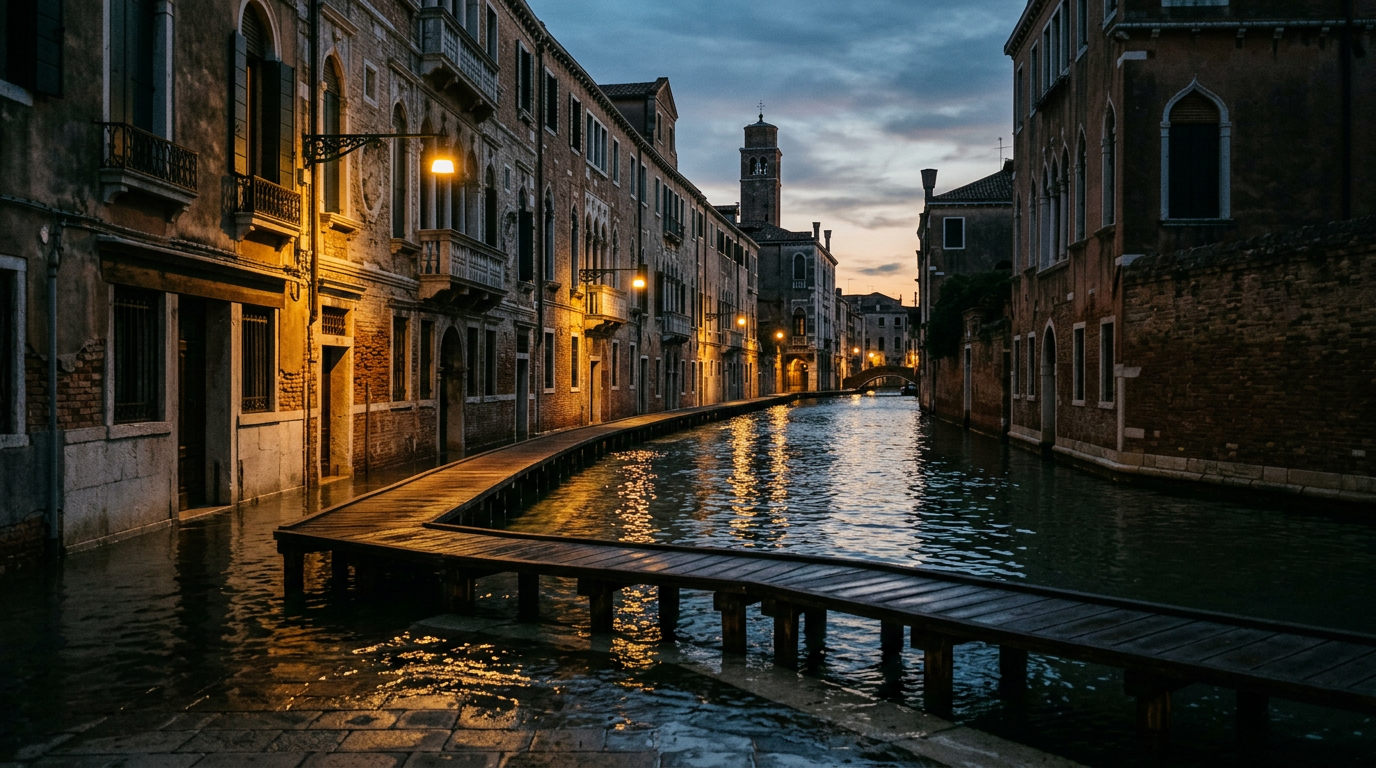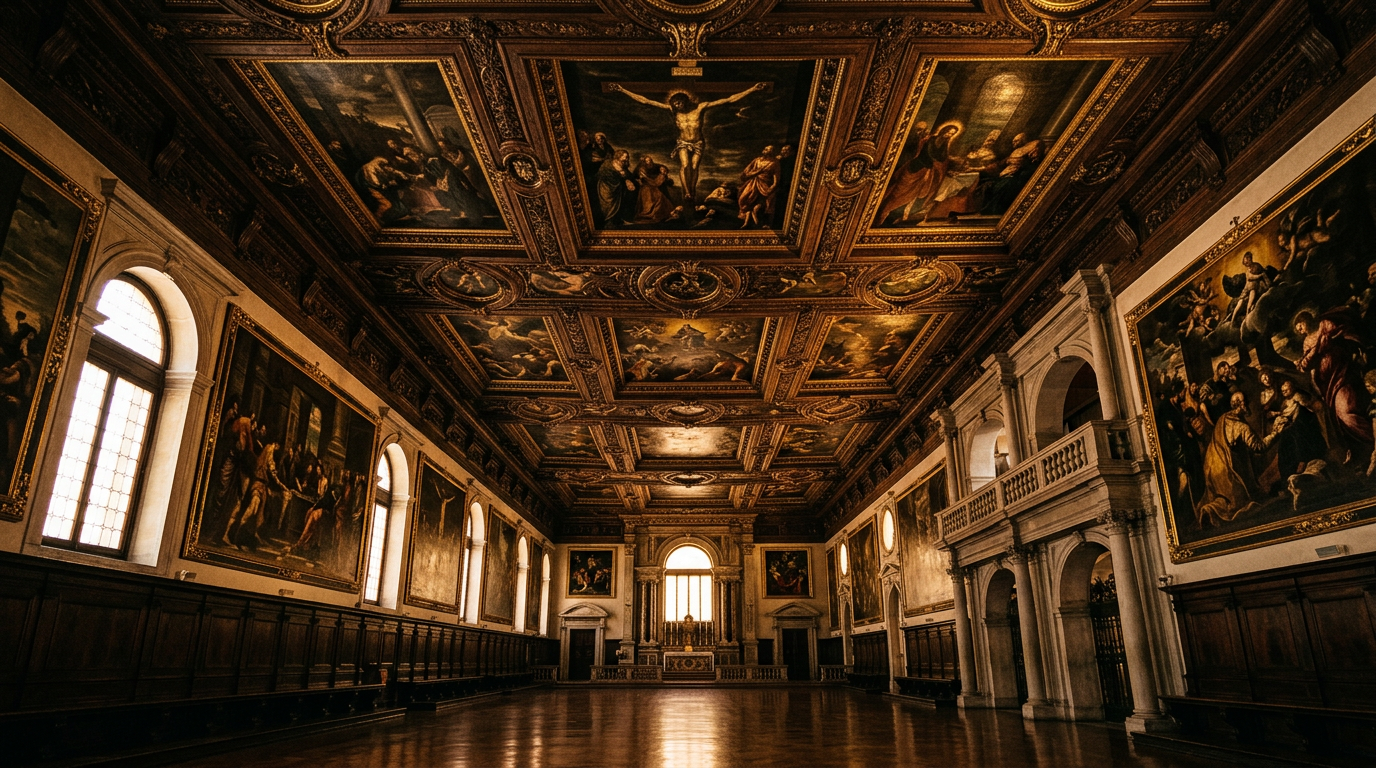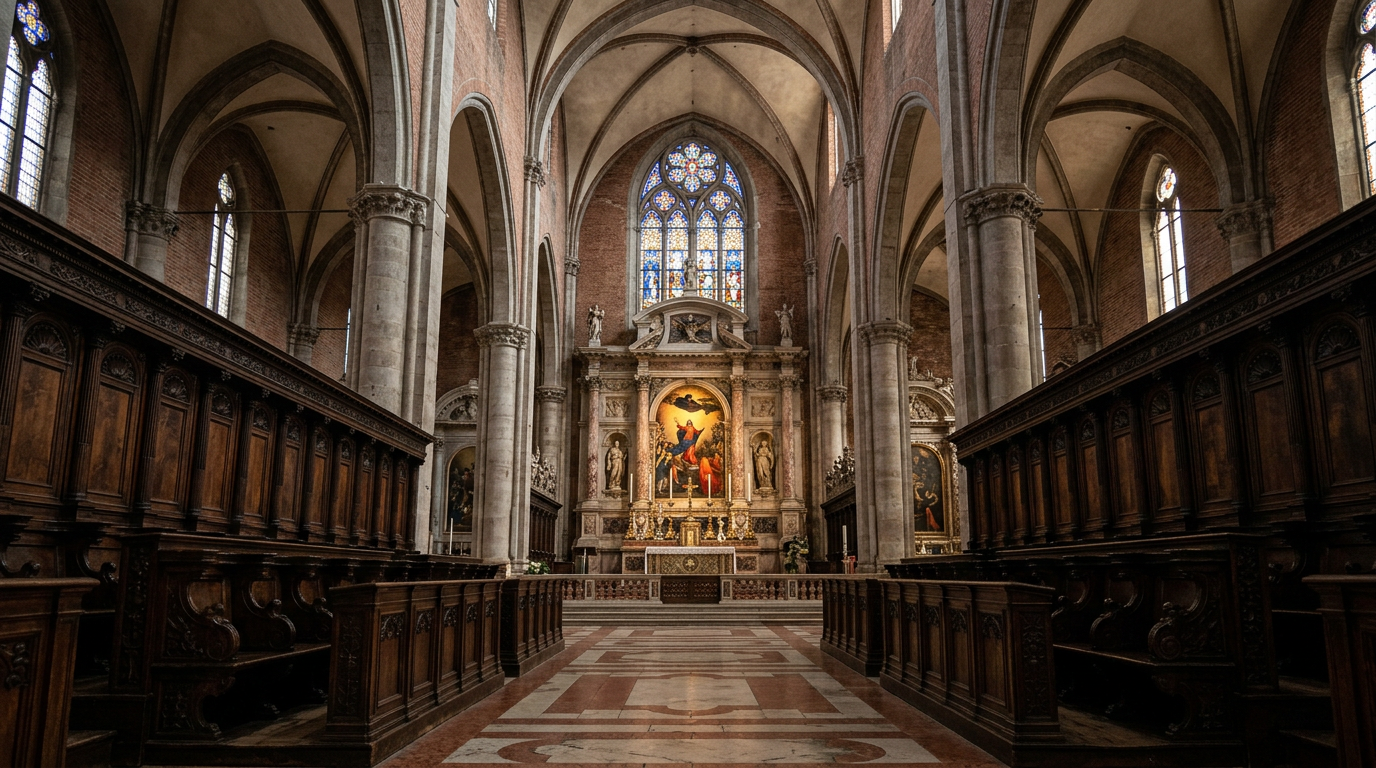
When we walk through the quiet campo of San Polo towards the towering brick facade of the Basilica dei Frari, we are entering more than just a church. This is the pantheon of Venice, a Franciscan monument that holds the weight of centuries within its soaring Gothic arches. Unlike the golden mosaics of San Marco, the Frari offers a different kind of grandeur—one of vast space, cooling stone, and some of the most profound art ever conceived by the human hand. It is a place where we often go to escape the midday heat, finding ourselves standing before Titian’s vibrant 'Assunta' as it glows like a fire at the end of the long, dark nave. To understand the Venetian spirit, one must spend time here, amongst the tombs of Doges and the silent prayers of history.
Titian’s Radiance and Final Rest
The primary draw of the Frari is undoubtedly Titian’s 'Assumption of the Virgin' (Assunta), positioned above the high altar. When it was unveiled in 1518, it changed the course of Venetian painting forever. The sheer scale and the explosive use of red and gold create a sense of movement that seems to pull the viewer upward into the light of the apse. It is a cinematic experience centuries before cinema existed.
Across the nave lies the artist himself. Titian died during the plague of 1576 and was one of the few granted a burial within a church during such a desperate time. His monument is a massive 19th-century tribute, but we find the real connection to him in his 'Pesaro Altarpiece' on the left wall, where he broke all traditional rules of symmetry to create a living, breathing scene of devotion.
Donatello and the Florentine Touch
In the chapel to the right of the high altar stands a work that feels startlingly modern despite its age. Donatello’s wooden statue of St. John the Baptist is a masterpiece of raw emotion. Created for the Florentine community in Venice in the 1430s, this is not a glorified saint but a gaunt, weathered man of the desert. The detail of the carved wood, showing every vein and muscle, stands in stark contrast to the opulence of the surrounding marble tombs.
It serves as a reminder that Venice was always a crossroads. Even a Florentine master like Donatello left his mark here, contributing to the rich layer of textures—wood, stone, and canvas—that make the Frari an exhaustive gallery of the Italian Renaissance.
The Quiet Grace of Bellini in the Sacristy
If Titian provides the drama, Giovanni Bellini provides the peace. We always encourage visitors to walk into the Sacristy, where the 'Frari Triptych' (Madonna and Child with Saints) resides in its original 1488 frame. The light in this smaller room is softer, and Bellini’s use of color is subtle and luminous. It is widely considered one of the most perfect paintings in the city.
The Frari is a vast space, and after hours spent wandering from the tomb of Canova to the choir stalls—the only original ones remaining in Venice—it is natural to seek a moment of reflection. The Basilica sits on the edge of San Polo, and a short walk across the border into Santa Croce brings you to the Fondamenta dei Tolentini. It is here, at Osteria Leone Alato, that the scale of the city returns to something intimate and personal, a perfect place to settle after the overwhelming beauty of the Frari.
The Frari is not a place for a quick glance; it is a space that demands you stay until the shadows grow long against the brickwork. It is the spiritual and artistic heart of the San Polo district, reminding us why Venice remains a pilgrimage site for the soul as much as for the eye.