We often watch them from our windows: the travelers who step off the trains at Santa Lucia or cross the bridge from Piazzale Roma, heads down, rushing toward the well-trodden paths of San Marco. They miss one of the city's most honest stretches of water just a few hundred meters away. The Fondamenta dei Tolentini is where the frantic energy of arrival suddenly dissolves into the slow, rhythmic lap of the canal against the stone. In Santa Croce, we live in the gateway to Venice, yet this fondamenta feels like a secret kept by the residents and the students of the nearby university. It is a place of wide skies, grand facades, and the lingering shadow of the 16th century, offering a breath of air to those who know to turn right instead of left.
The Church of San Nicola da Tolentino
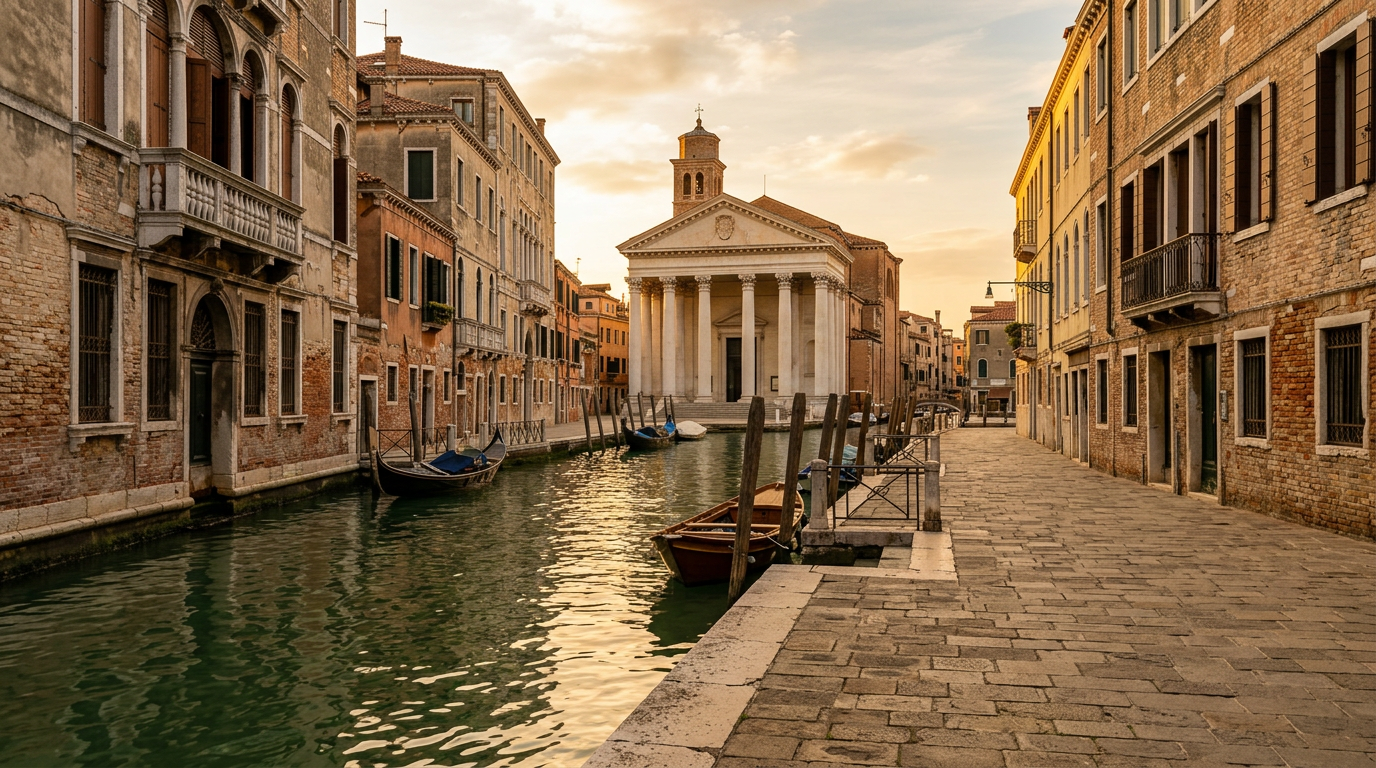
The fondamenta is dominated by the imposing presence of San Nicola da Tolentino. Designed by Vincenzo Scamozzi in the late 16th century, its massive Corinthian portico—added much later by Andrea Tirali—gives it the look of a Roman temple rather than a typical Venetian parish church. It stands as a stoic guardian of the canal, its stone weathered by centuries of salt and humidity.
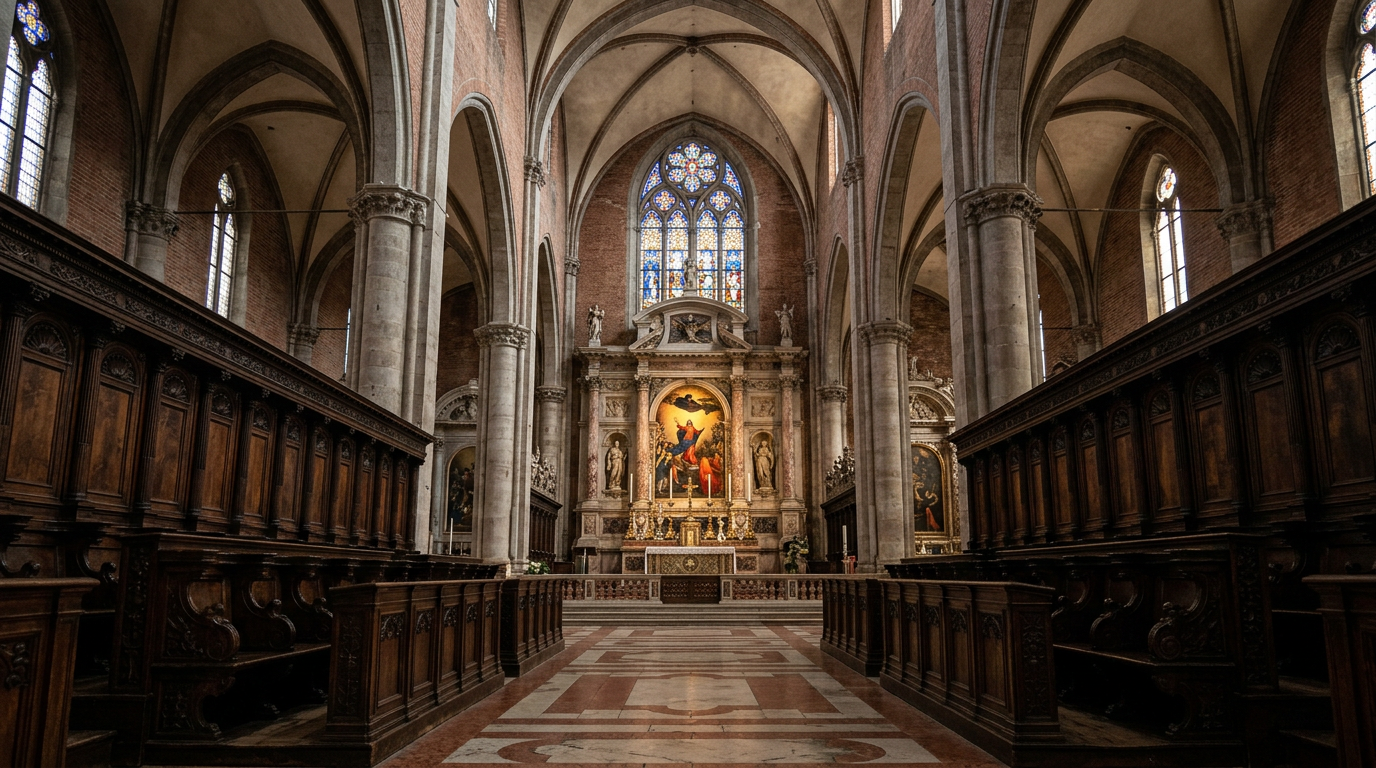
Inside, the church holds a quiet drama. We often encourage visitors to look for the 'bomb' embedded in the facade, a relic from the 1849 Austrian siege. It is a reminder that even in this peaceful corner, history has left its physical marks. The interior houses works by Palma il Giovane and Padovanino, resting in a silence that is rare to find near the city's transport hubs.
The Gateway of Carlo Scarpa and the IUAV
Adjacent to the church lies the entrance to the IUAV, Venice's prestigious school of architecture. The entrance court is a masterpiece by Carlo Scarpa, completed posthumously. Scarpa took a fallen 16th-century stone portal and laid it horizontally, creating a dialogue between the ancient and the modern that defines the Venetian spirit of preservation.
On weekday afternoons, the fondamenta hums with the soft energy of students leaning over the canal walls or discussing projects under the porticoes. It is a living neighborhood, not a museum display. The presence of the university ensures that Santa Croce remains anchored in the present, even as it sits surrounded by the weight of the past.
Golden Hour on the Water
There is a specific moment in the late afternoon, especially during the autumn months, when the light hits the Fondamenta dei Tolentini at a precise angle. The water reflects the warm ochre and sienna of the buildings, and the entire stretch is bathed in a soft, golden glow. It is the best time for a walk toward the Campo San Rocco or the Frari.
As the day fades, the locals reclaim the fondamenta. You might see a cargo boat delivering goods for the next day, or a lone rower navigating a sandolo toward the Grand Canal. It is here, nestled along this quiet water, that you will find Osteria Leone Alato—a place to rest and reflect on the day's discoveries as the candles are lit and the city settles into the night.
When the sun begins to dip behind the terracotta roofs, the Fondamenta dei Tolentini transforms into a theatre of light and shadow, reminding us why we chose this corner of Venice as our home. We invite you to stay a while, far from the frantic pace of the Rialto, and discover the quiet rhythm of our neighborhood.