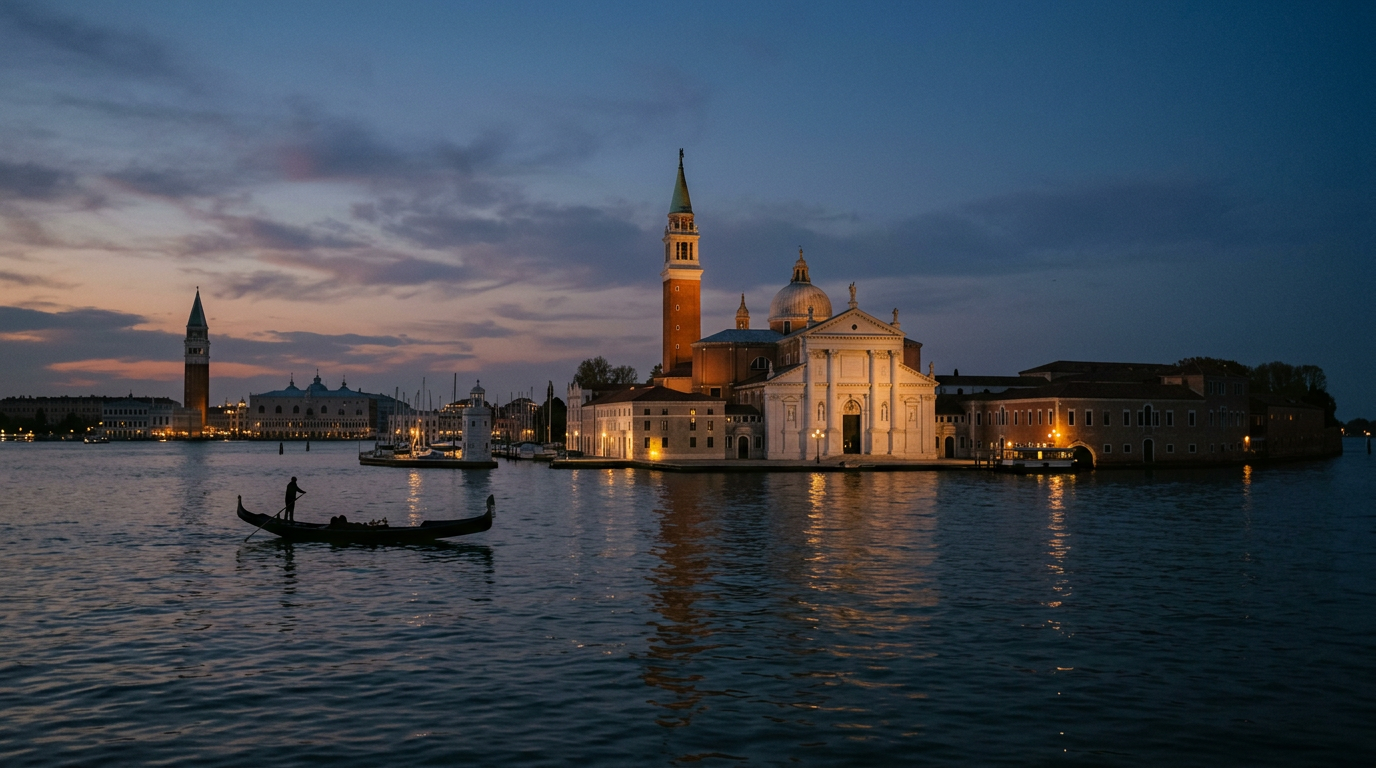
When we look out from the Riva degli Schiavoni, our eyes are naturally drawn across the water to the startling white silhouette of San Giorgio Maggiore. It stands there, isolated on its own island, like a marble ship anchored in the basin. For us Venetians, this church is more than just a landmark; it is the definitive statement of Andrea Palladio’s genius. While the crowds shoulder their way through the Piazza behind you, a short vaporetto ride across the Canal della Grazia transports you into a world of Benedictine silence and architectural perfection that feels entirely removed from the city’s frantic pace. It is a place where light and stone perform a daily ritual, reflecting the shifting moods of the lagoon.
Palladio’s Geometry of Light
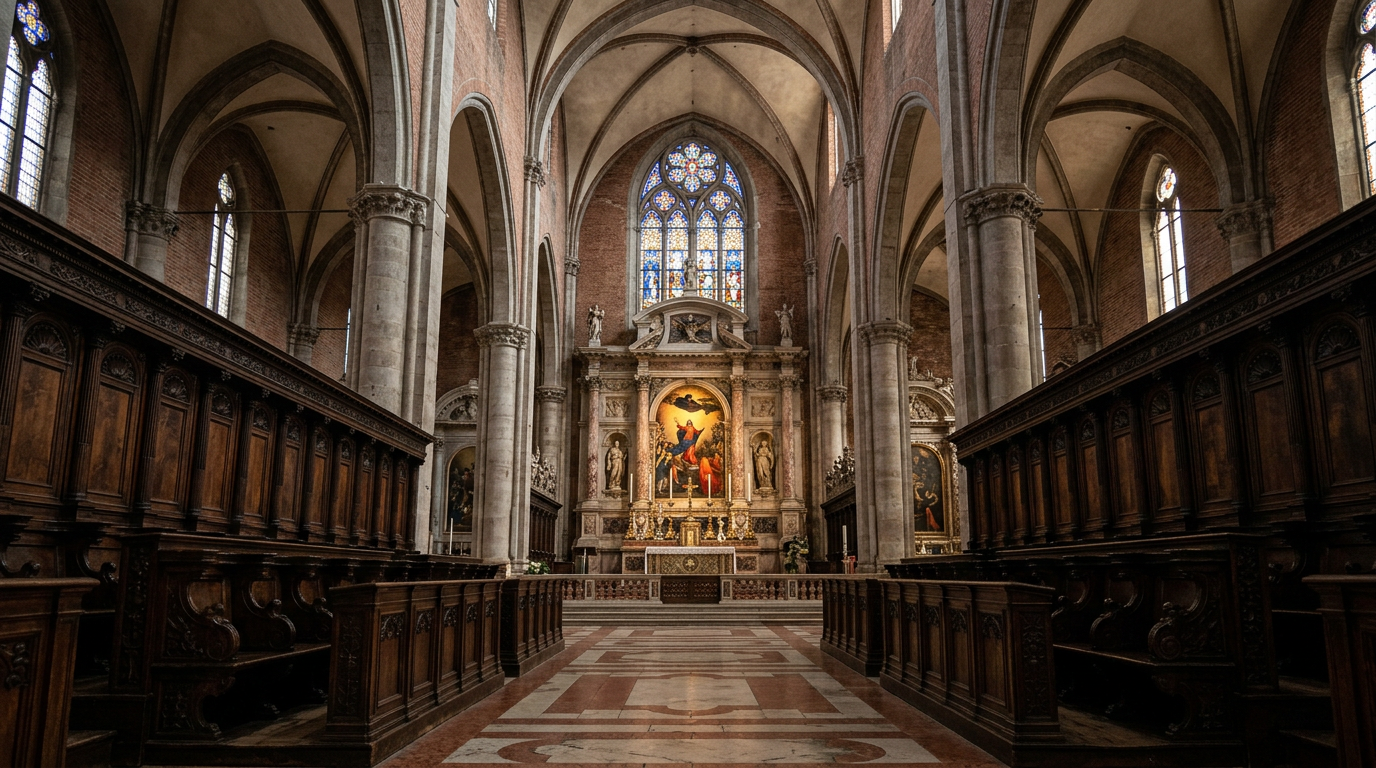
Completed after his death, the façade of San Giorgio Maggiore is a masterclass in Classical order. Palladio used brilliant white Istrian stone to create a temple front that seems to float upon the blue water. Inside, the space is surprisingly luminous; unlike the golden, dim interiors of San Marco, San Giorgio is flooded with clear, natural light that emphasizes its vast proportions and cold, elegant lines.
The design reflects a Renaissance obsession with harmony and perspective. Walking down the central nave, one feels the transition from the bustling maritime power of the lagoon to a space of intellectual and spiritual rigour. It remains one of the most significant examples of Renaissance architecture in the world, standing unchanged since the late 16th century.
Tintoretto’s Final Vision
Deep within the presbytery hang two of Jacopo Tintoretto’s most profound works: 'The Fall of Manna' and his final 'Last Supper'. This is not the static, frontal composition of Da Vinci; Tintoretto’s version is dark, diagonal, and swirling with supernatural smoke and translucent angels. It is a haunting, theatrical masterpiece that captures the Counter-Reformation spirit.
To see these canvases in the very location they were commissioned for is a rare privilege in a city where so much art has been moved to museums. The scale of the works and the way they interact with Palladio’s choir stalls create an atmosphere of intense drama that contrasts sharply with the white stillness of the nave.
The Campanile: Venice’s Best Viewpoint
While the crowds wait in long lines for the bell tower in San Marco, the Campanile of San Giorgio Maggiore offers what we consider the superior vista. A modern lift takes you to the top, revealing a 360-degree panorama that includes the Giudecca, the Lido, and the intricate red-tiled puzzle of the city's roofs.
From here, you can truly understand the geography of Venice. You see the Doge's Palace not as a single building, but as the ceremonial gateway to a vast maritime empire. On clear days, the snow-capped Dolomites rise in the distance, providing a jagged white backdrop to the Campanile of San Marco across the water. It is the only place where you can see the city and its lagoon in perfect, silent relationship.
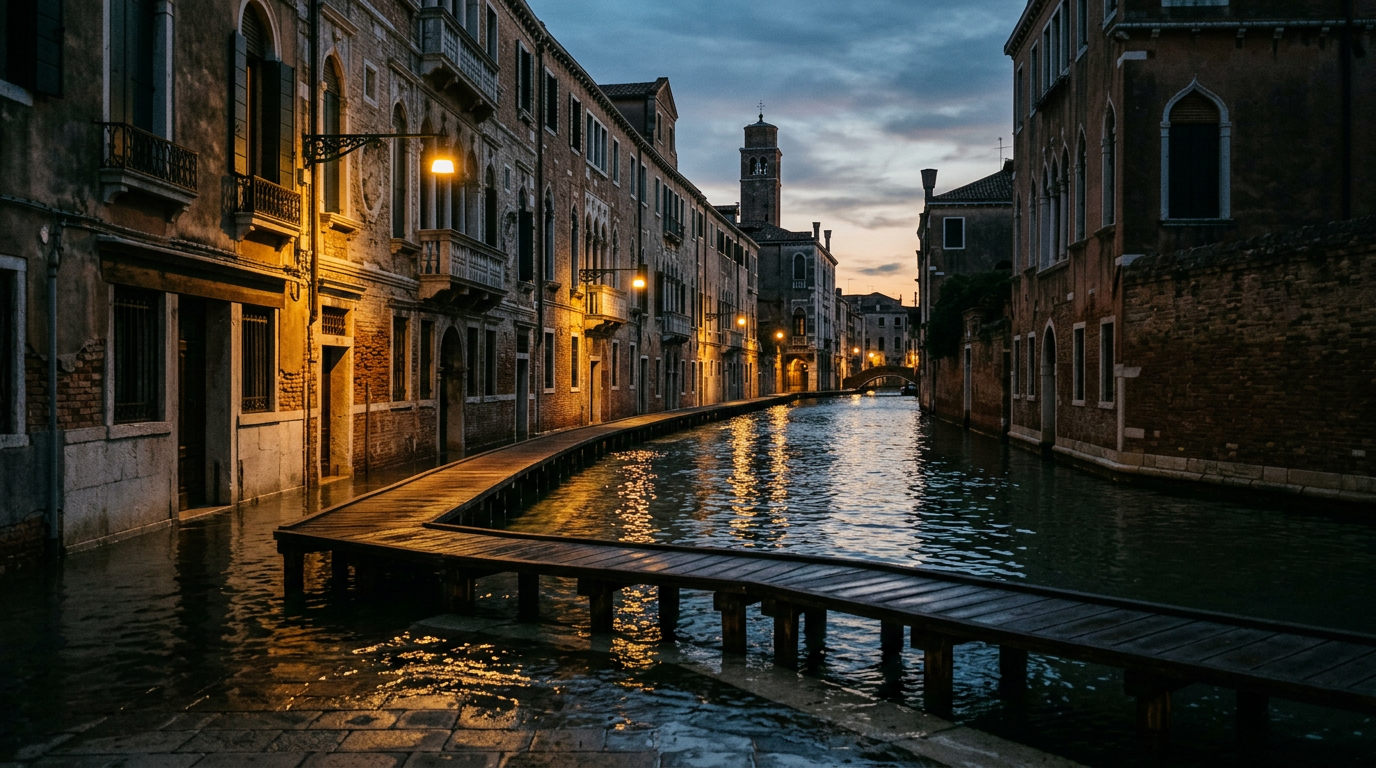
As the evening shadows stretch across the lagoon, the island returns to its quiet, monastic rhythm. It is the perfect moment to cross back toward the city's heart and find refuge in the humbler, quieter corners of our own sestiere.