When you stand at the edge of the Grand Canal today, it is easy to forget that beneath your feet lies an invisible forest. Venice is not a city built on land, but a city held aloft by millions of ancient trees. We often tell our guests that to understand Venice, one must look downward, past the marble facades and into the silt of the lagoon. In the 5th and 6th centuries, as the Roman Empire crumbled and mainland cities fell to the Huns and Longobards, our ancestors fled to these salt marshes. They chose a place so inhospitable that no army cared to follow. What began as a desperate refuge for mainlanders from Aquileia and Altino became the most unlikely maritime power in history. We live on a miracle of engineering that has survived for over fifteen hundred years.
The Invisible Forest Beneath the Sestieri
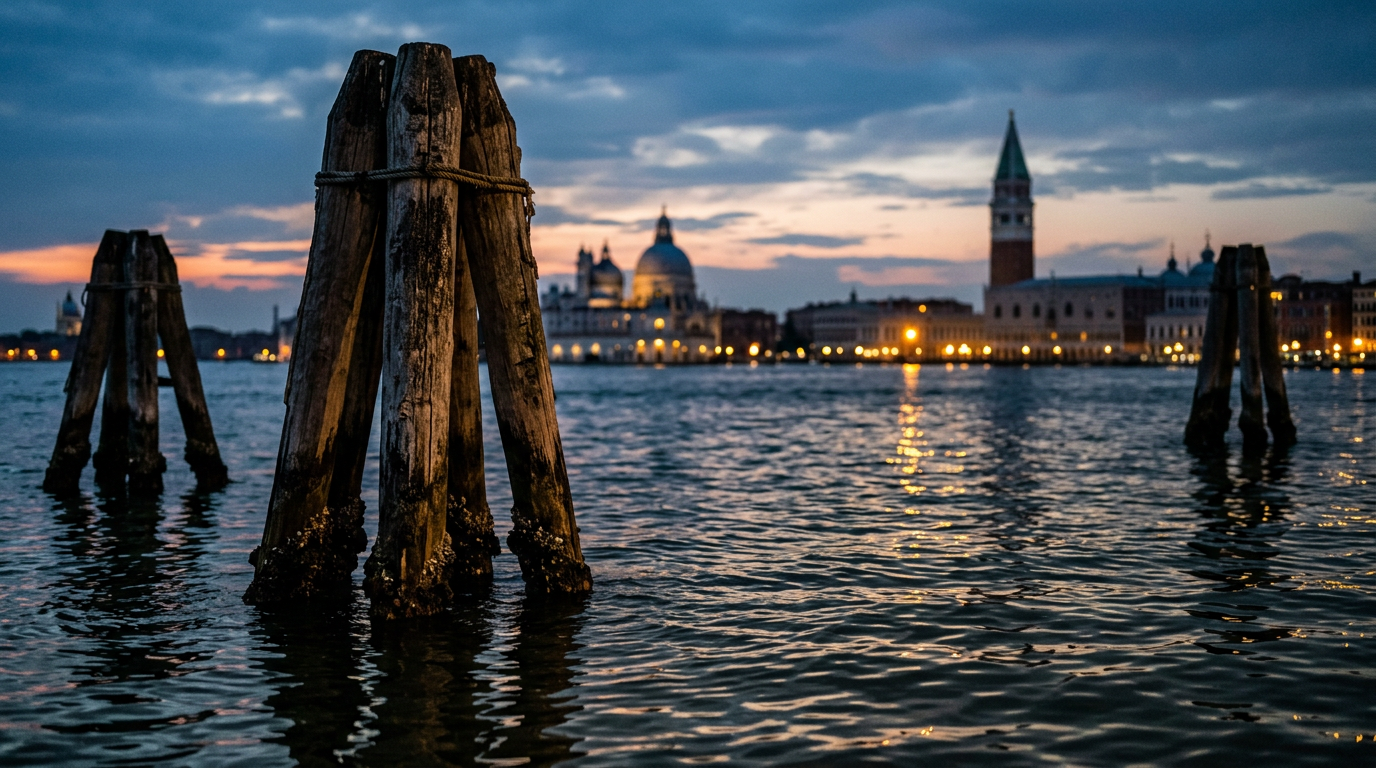
The foundation of every palazzo and church you see in Venice relies on a technique that seems impossible: driving millions of wooden stakes into the soft mud. These are primarily oak and larch, sourced centuries ago from the forests of Slovenia and the Italian mainland. Driven deep enough to reach a layer of harder clay known as 'caranto', these pilings remain preserved because they are submerged in anaerobic mud, preventing rot.
Consider the Basilica di Santa Maria della Salute at the mouth of the Grand Canal; records suggest it rests upon no fewer than 1,156,627 timber piles. This subterranean labyrinth is the only reason the stone city does not sink into the Adriatic. It is a testament to the sheer labor required to claim this space from the tides, a feat managed long before the advent of modern machinery.
From Mudflats to the Serenissima
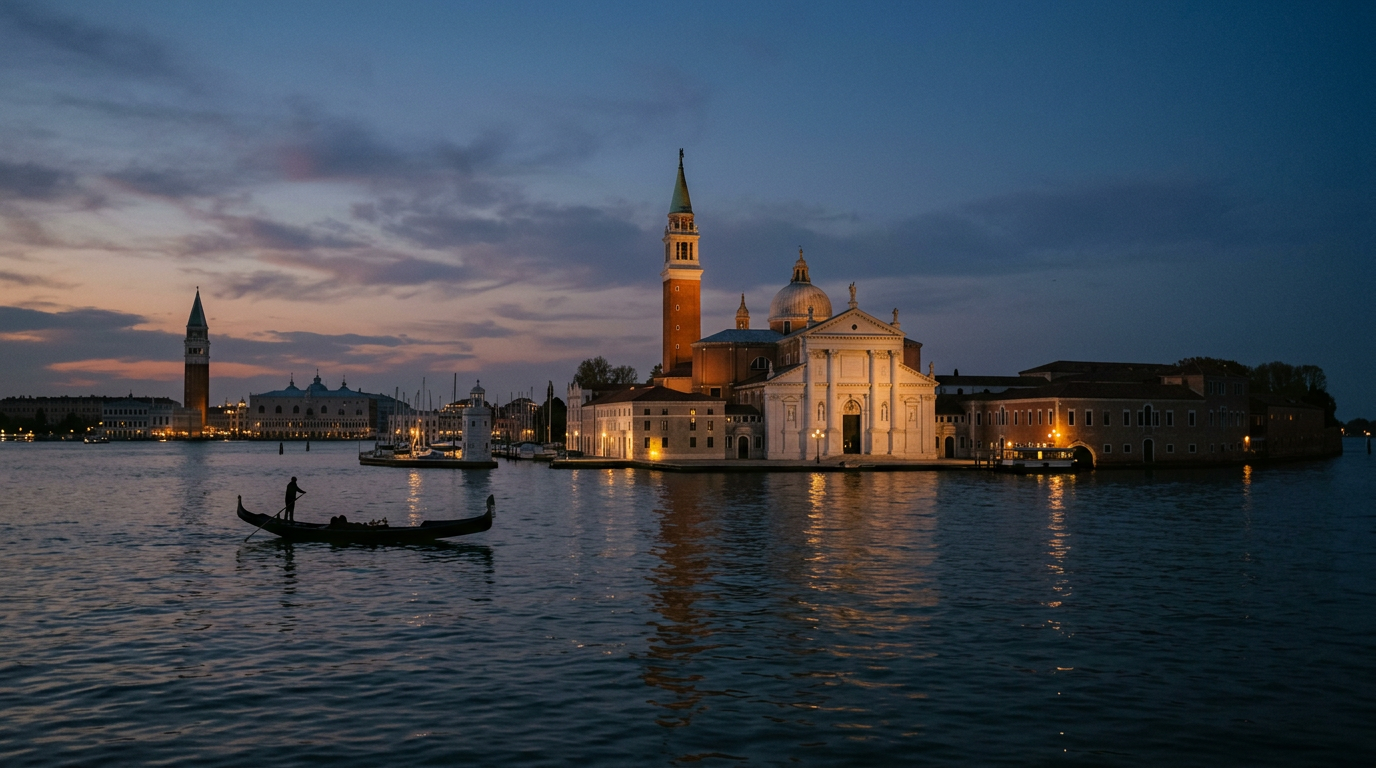
Originally, the lagoon was a scattered archipelago of small fishing communities. Places like Torcello were the first to thrive, serving as the commercial heart of the lagoon before the rise of the Rialto islands. The shift toward a unified maritime republic was driven by the need for protection and a shared identity. By the 9th century, the seat of power moved to the middle of the lagoon—what we now know as the central islands of Venice—providing better defense against both the Frankish empire and the sea itself.
The transformation from a collection of mudflats into a global trade hub required a radical reimagining of geography. Canals were deepened, islands were reinforced with stone 'rive', and the very flow of the lagoon was managed to prevent siltation. It was a centuries-long dialogue between the Venetians and the water, a relationship that defined our laws, our architecture, and our spirit.
Finding Quiet in the Entryway of Venice
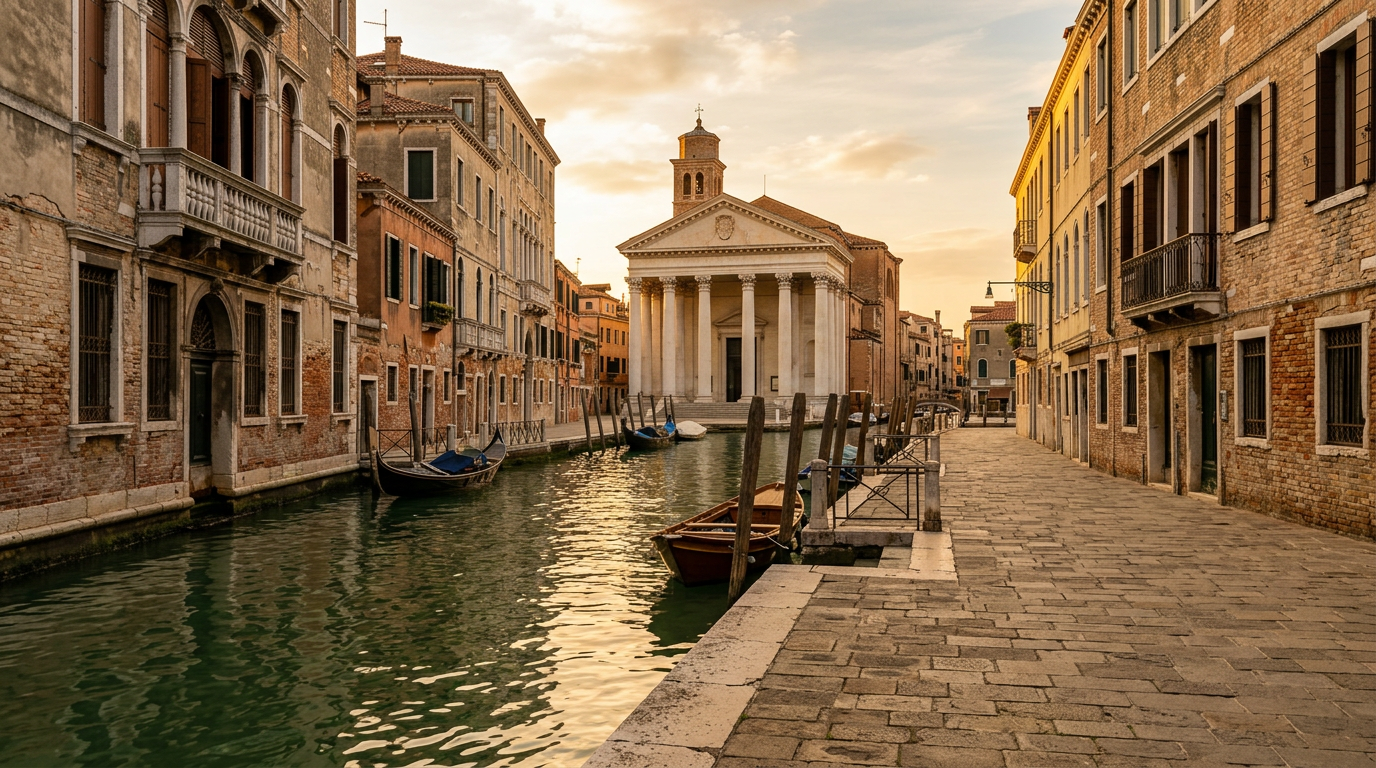
Today, most travelers begin their journey in Santa Croce, the sestiere where the mainland finally meets the water at Piazzale Roma. It is the physical entry point to our world, yet strangely, it remains one of the most tranquil corners of the city. While the crowds rush toward the Rialto Bridge, the calli of Santa Croce retain the quiet rhythm of a neighborhood that remembers its roots.
After exploring the history of the lagoon, we suggest wandering through the shaded squares near San Giacomo dell'Orio. As the sun dips low and the shadows lengthen against the brickwork of our osteria, Leone Alato, you will find the perfect place to reflect on the improbable city that rose from the mud. It is here, away from the clamor, that the true character of Venice is most felt.
The lagoon remains a living witness to this audacity, a place where the boundary between land and sea is a matter of human will and ancient timber. It is a story written in every stone and every shadow across our islands.