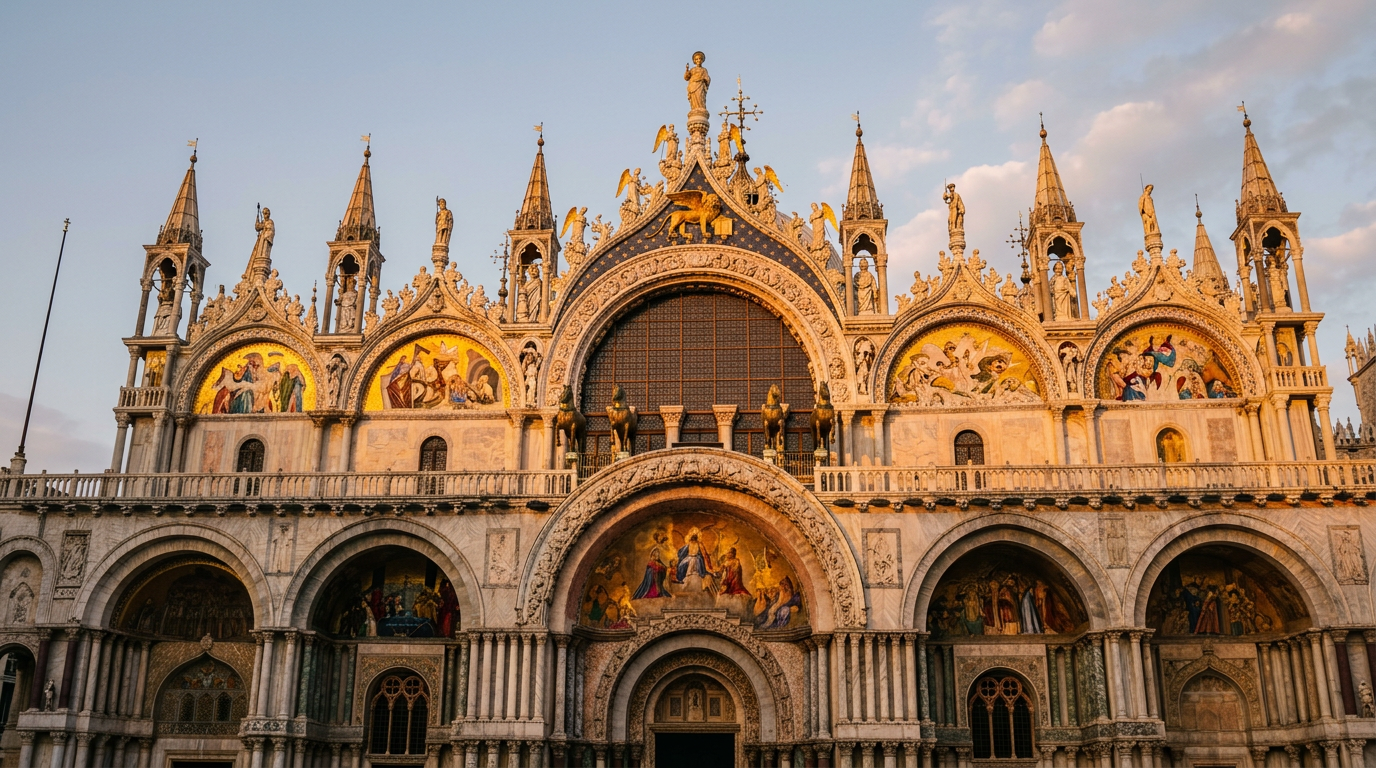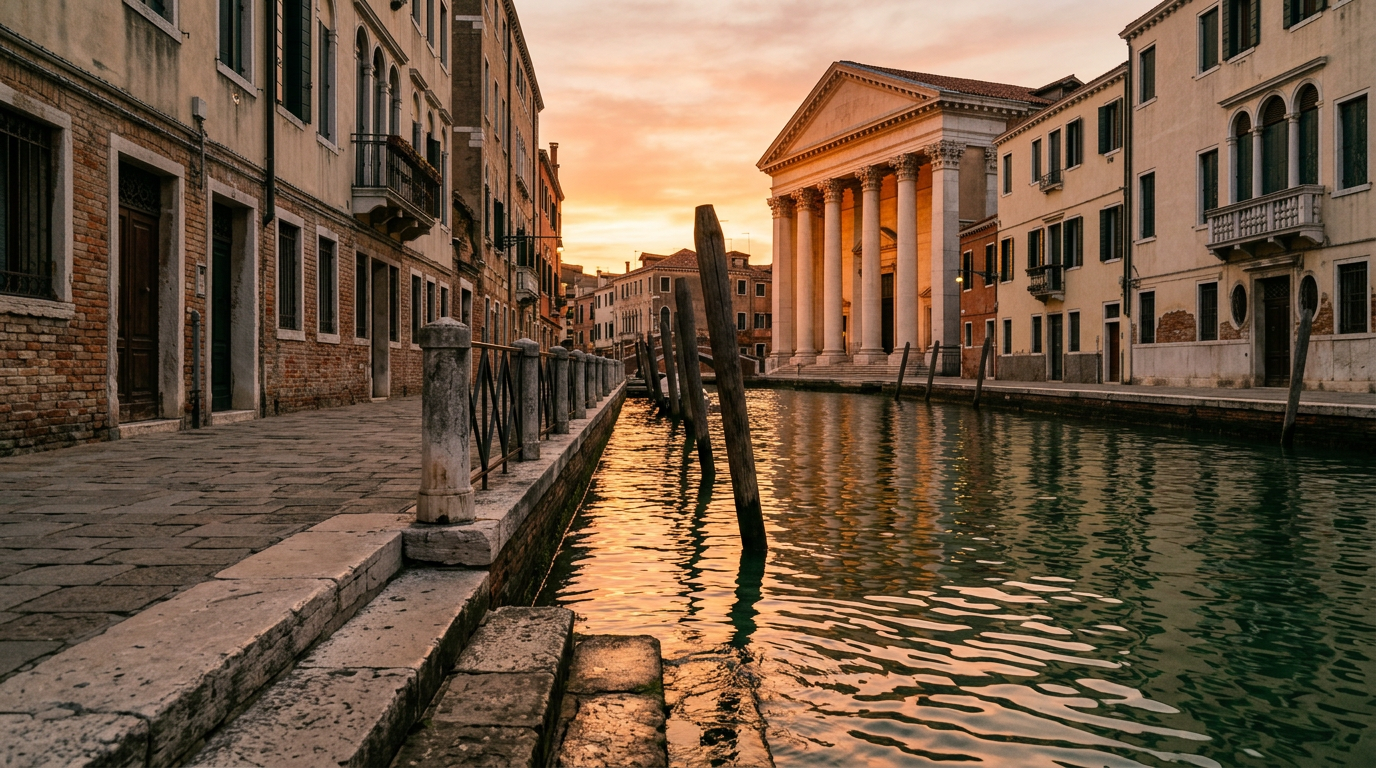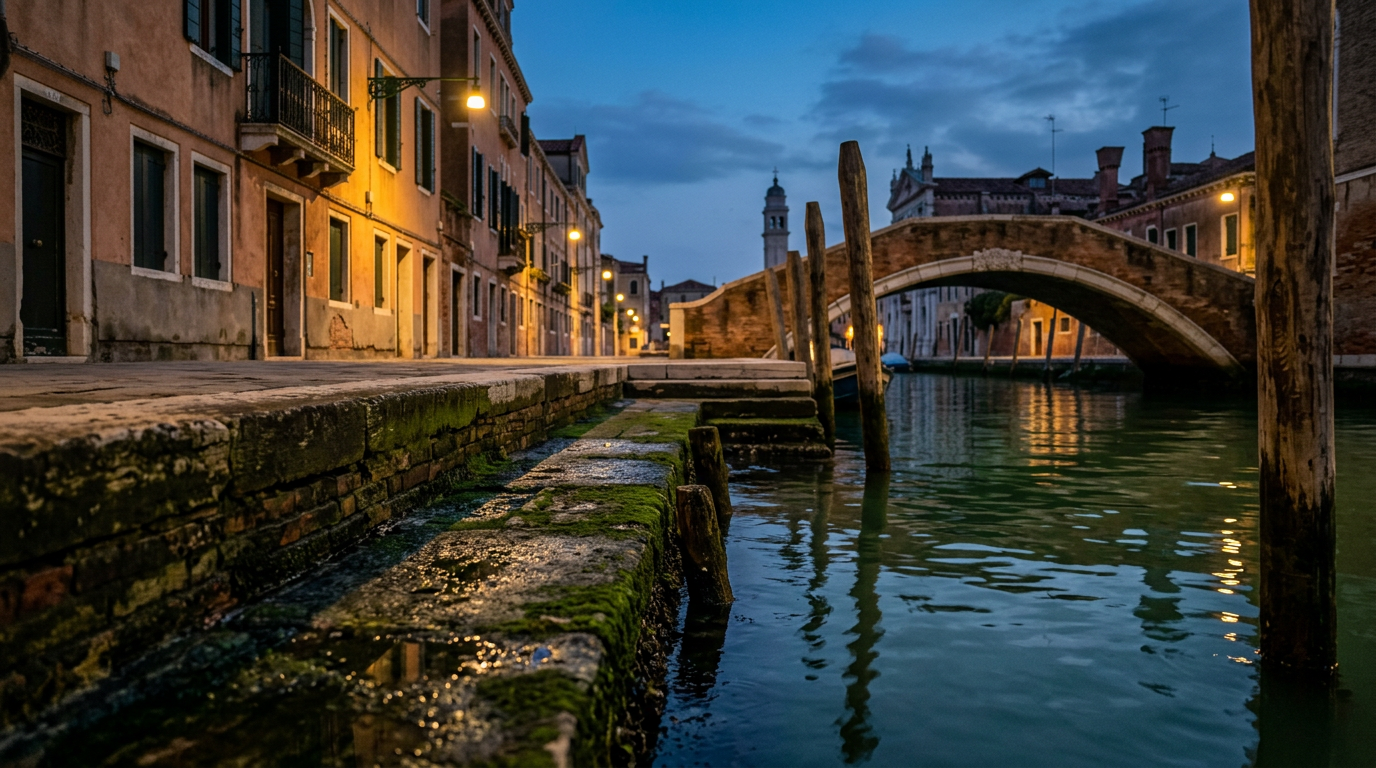
Whenever we look out across the Grand Canal, it is easy to forget that what we see is a defiant miracle. We Venetians often say that our city is a forest turned upside down. Beneath the Istrian stone and the Byzantine mosaics lies a subterranean world of oak and larch, driven deep into the caranto—the hard clay of the lagoon bed. This was not a city built for convenience; it was a city built for survival. In the 5th and 6th centuries, when the foundations of what would become the Republic were first laid, the lagoon was a place of refuge for those fleeing the collapse of the Roman Empire. They chose this impossible swamp because the water was their only wall. Today, as you walk through the calli, you are walking on a thousand-year-old engineering feat that still breathes with the tide.
The Forest Beneath the Stone
The secret to Venice's longevity lies in the mud. To build churches like Santa Maria della Salute or the great palaces of the Canal Grande, millions of wooden piles—mostly oak and larch from the forests of Slovenia and Croatia—were driven into the silt. Because these pilings are submerged in an anaerobic environment, they do not rot; instead, they have mineralized over centuries, becoming as hard as stone.
In Santa Croce, where our daily life unfolds, you can still feel the proximity to the water's edge. This engineering allowed for the density that defines our sestieri. It is a logic of pressure and placement, where every building supports its neighbor, anchored by a wooden skeleton that has remained hidden for over a millennium.
Refugees of the Mainland
The story of Venice begins with fear and the search for safety. As the Visigoths and Huns descended upon mainland Roman cities like Aquileia and Altinum, the local populations fled toward the marshes. To the invaders, the lagoon was a treacherous, mosquito-infested wasteland. To the refugees, it was a sanctuary. By the time the Lombards arrived in the late 6th century, these temporary fishing settlements had begun to crystallize into permanent communities.
Torcello was the first great center, a vibrant hub of trade and religion long before San Marco was even a thought. These early Venetians were not yet masters of the sea; they were people of the salt pans and the mudflats, learning to navigate the intricate channels that only a local could master. This isolation was the crucible in which the Venetian identity was forged—a culture defined by its separation from the mainland.
From Swamp to Sovereign Republic
By the 9th century, the seat of power shifted to the islands of the Rivoalto (the 'high bank'), which we now know as Rialto. The legendary arrival of Saint Mark’s relics in 828 AD gave the city a spiritual gravity that matched its growing maritime ambition. No longer just a collection of lagoon dwellers, Venice began to look eastward toward Byzantium, eventually becoming the dominant naval power of the Mediterranean.
As you cross the bridges into Santa Croce today, you are entering the quietest part of this historic landscape. It is the perfect place to reflect on the city's origins. After a day spent exploring the ancient stones of the city, we invite you to settle into the warm, candle-lit atmosphere of Osteria Leone Alato on the Fondamenta dei Tolentini for a peaceful dinner.
To understand the Serenissima is to understand that beneath every marble facade lies a forest of ancient timber, standing firm against the tides of the lagoon. It is a testament to the stubborn human will to transform a swamp into a masterpiece.