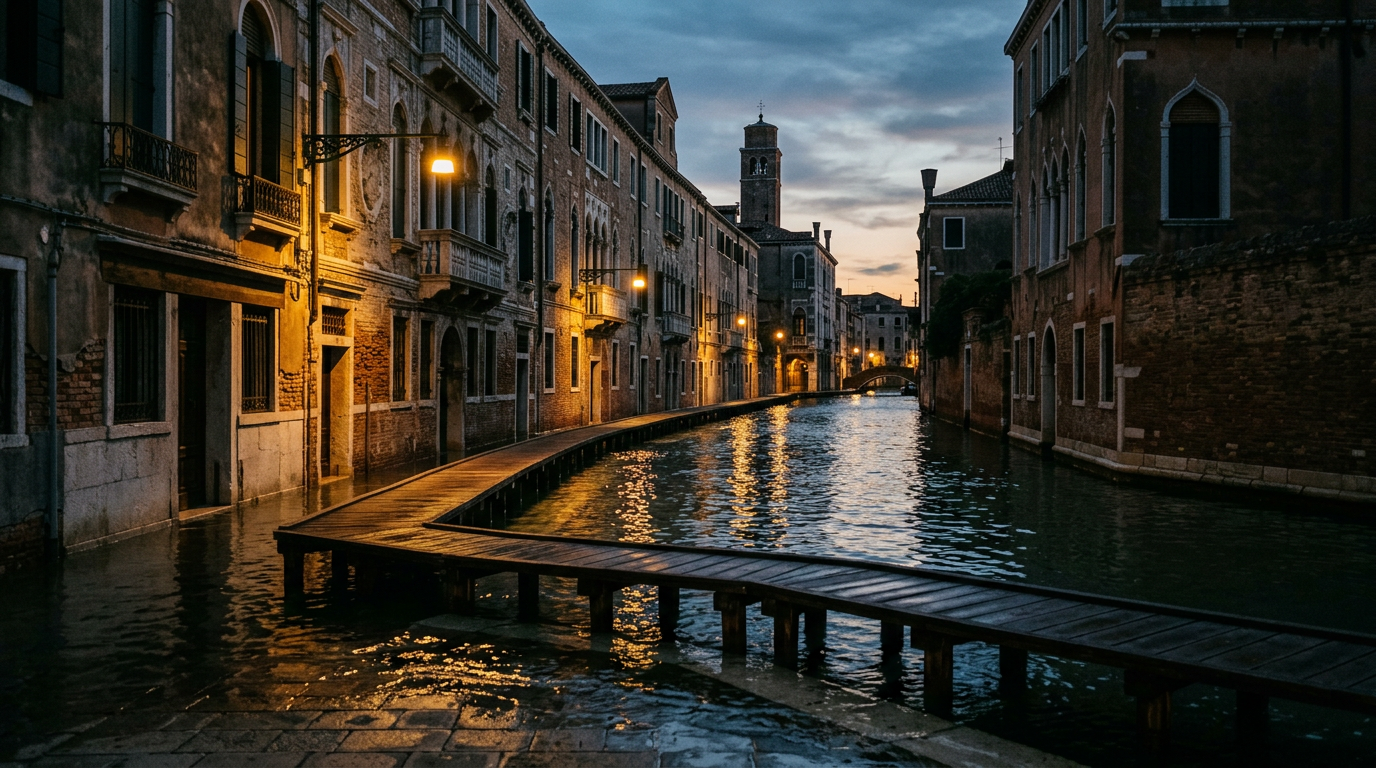
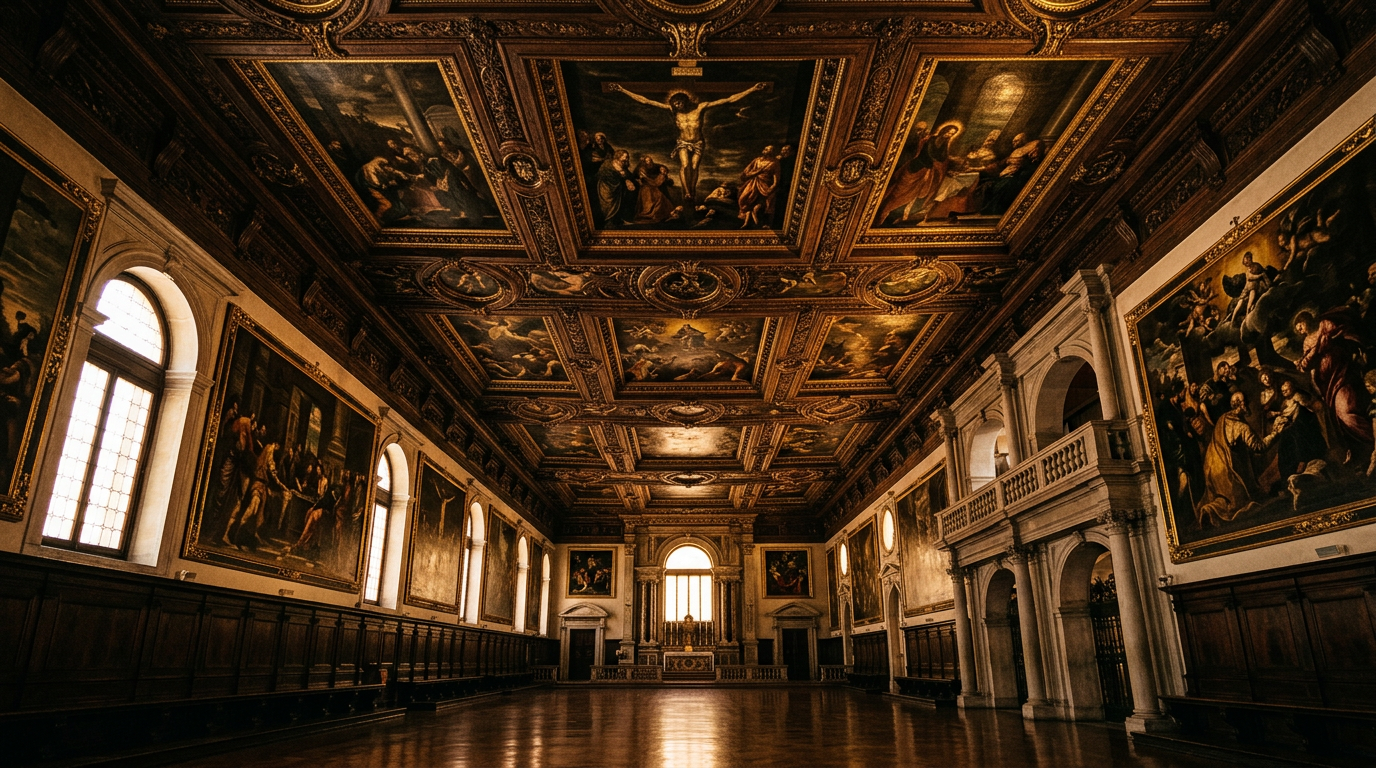
We often tell our guests that to understand Venice, you must first look down, past the reflection of the palaces in the green water, into the mud of the lagoon itself. Venice was never meant to be a city of marble and gold; it began as a collection of muddy mounds where mainlanders fled to escape the collapse of the Roman Empire and the arrival of the Huns and Longobards. In those early centuries, between the 5th and 7th, these islands were nothing more than a desperate choice—a swampy sanctuary where the tides offered the only protection against the chaos of the mainland. It was an impossible site for a city, yet it was precisely this impossibility that allowed the Venetian spirit to take root. We look at our home today and see a miracle of engineering, but it started with a few families, some fishing nets, and a terrifying amount of mud.
The Forest Beneath the Stone
To build on the silt of the lagoon, the early Venetians had to invent a new kind of ground. They drove millions of sharpened wooden stakes—mostly oak and larch brought from the forests of Slovenia and Croatia—deep into the caranto, a thick layer of clay beneath the mud. These piles were driven so closely together that they touched, creating a solid platform. Because they were submerged in the oxygen-poor silt of the lagoon, the wood did not rot; instead, it mineralized, becoming as hard as stone over the centuries.
When you stand before the Basilica di Santa Maria della Salute or the Doge’s Palace, you are actually standing on top of a petrified forest. It is estimated that over a million wooden piles support the Salute alone. This invisible architecture is what keeps the city from sliding into the Adriatic, a silent testament to the ingenuity of the refugees who first staked their claim in these waters.
The Strategic Choice of the Lagoon
The choice to inhabit the lagoon was purely defensive. The shallow, treacherous waters were a labyrinth that only those who lived here could navigate. While the great cities of the Roman mainland were being sacked, the islands of Torcello, Malamocco, and eventually Rivoalto (Rialto) remained unreachable. The lagoon was a natural fortress, its tides sweeping away waste and its channels providing a barrier that no cavalry could cross.
By the time the Carolingian Empire tried to assert control in the 9th century, the Venetians had already mastered the art of living between the land and the sea. They had transformed from displaced farmers into a seafaring people who saw the water not as a barrier, but as a highway to the East. The lagoon was no longer a cage; it was the foundation of an empire.
Santa Croce: The Gateway to the Story
For many who visit us, the journey begins in Santa Croce. As the sestiere closest to the mainland, it is the threshold where the modern world meets the ancient stones of the lagoon. It remains one of the quietest corners of the city, a place where the residential heart of Venice still beats away from the heavy footfalls of San Marco. After a day spent tracing the history of the lagoon's founding, we welcome you to find a quiet table at Osteria Leone Alato along the Fondamenta dei Tolentini, where the evening air settles softly over the canal.
Walking through these calli, you can still feel the scale of the original islands. The transition from the bustling arrival point of Piazzale Roma to the silent, narrow paths leading toward San Giacomo dell'Orio reminds us that Venice is, at its heart, a collection of refuges. It is a city that taught the world how to build greatness out of nothing but mud and determination.
The stones of Venice are a miracle of human stubbornness, a city that refused to sink because it was held up by millions of petrified trees and an unbreakable will. It is a story written in the mud and the salt, waiting to be read in every leaning campanile.