To understand Venice, one must eventually walk toward the edges, away from the heavy footfalls of the Piazza. In the northernmost reaches of Cannaregio, where the lagoon air feels sharper and the tourists thinner on the ground, stands the Chiesa della Madonna dell'Orto. For us, this is more than just a brick Gothic masterpiece; it is the sanctuary of Jacopo Robusti, known to the world as Tintoretto. He lived just a few doors away, he prayed here, and ultimately, he was laid to rest within these walls. Walking these quiet fondamente, one feels the weight of a local history that hasn't been polished away for the sake of a postcard. It is a place of stark light and profound silence, a necessary pilgrimage for anyone seeking the soul of Venetian painting.
The Master’s Parish Church
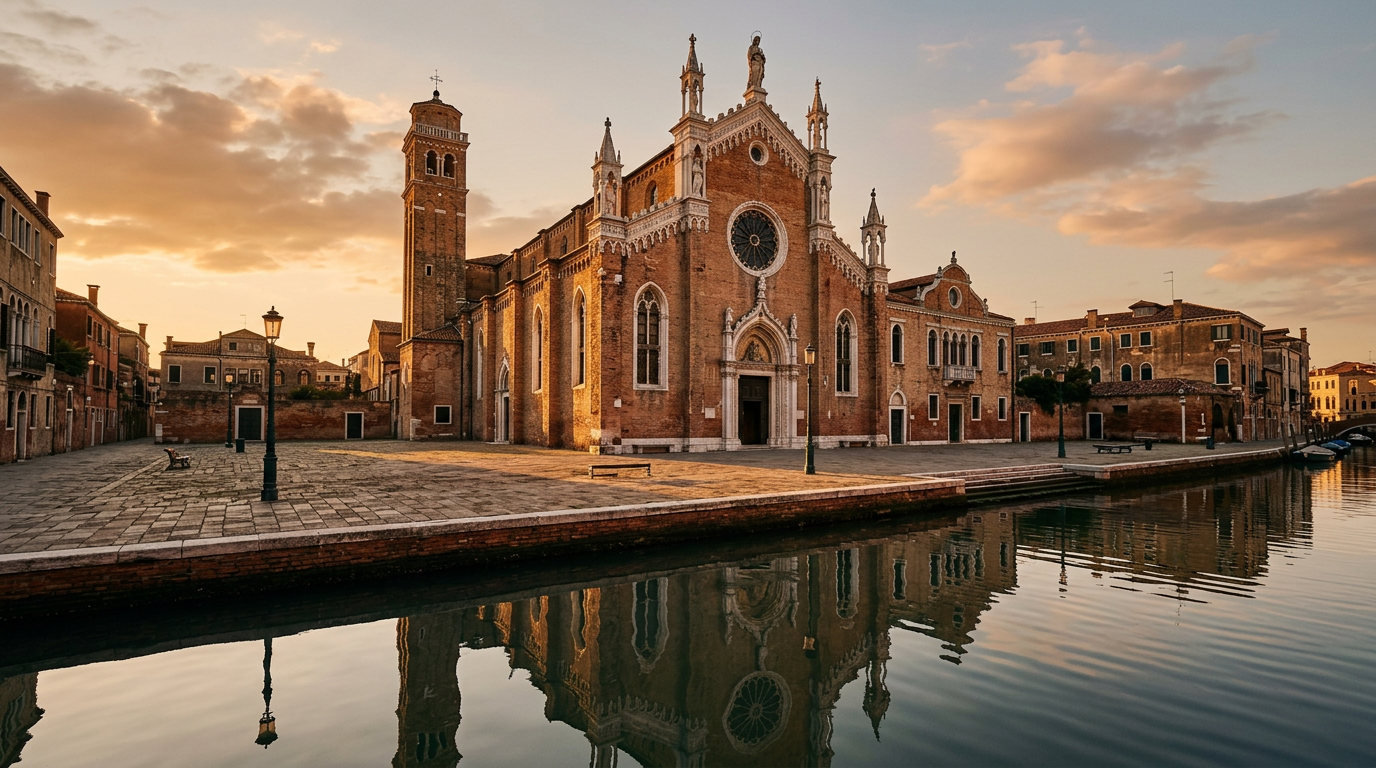
The Chiesa della Madonna dell'Orto is one of the most striking examples of Venetian Gothic architecture. Its distinctive facade, adorned with statues of the twelve apostles, looks out over a quiet campo that feels a world away from the bustle of Rialto. This was Tintoretto’s neighbourhood; his family home still stands nearby on the Fondamenta dei Mori, marked by the stone figure of a moor.
Inside, the church serves as a shrine to his 'furious' genius. Unlike the grand institutional commissions of the Palazzo Ducale, the work here feels intimate and personal. Tintoretto spent much of his life decorating this space, and today, his remains lie in a simple chapel to the right of the high altar, marked by a plaque that draws art historians and quiet wanderers alike.
The Giants of the Presbytery
One cannot enter the presbytery without feeling a physical shift in the room. Dominating the sides of the altar are two of the largest canvases ever painted: 'The Last Judgement' and 'The Making of the Golden Calf'. These are not mere decorations; they are cataclysmic events rendered in oil. Standing nearly 15 metres high, they showcase Tintoretto’s mastery of light and his daring, almost modern sense of perspective.
The sheer scale of these works requires you to stand back and let your eyes climb the canvas. In 'The Last Judgement', the swirling vortex of bodies is both terrifying and beautiful, a testament to why his contemporaries called him 'Il Furioso'. It is a rare experience in Venice to be able to stand so close to such monumental history without the barrier of velvet ropes or crowds.
A Quiet Walk Through Cannaregio
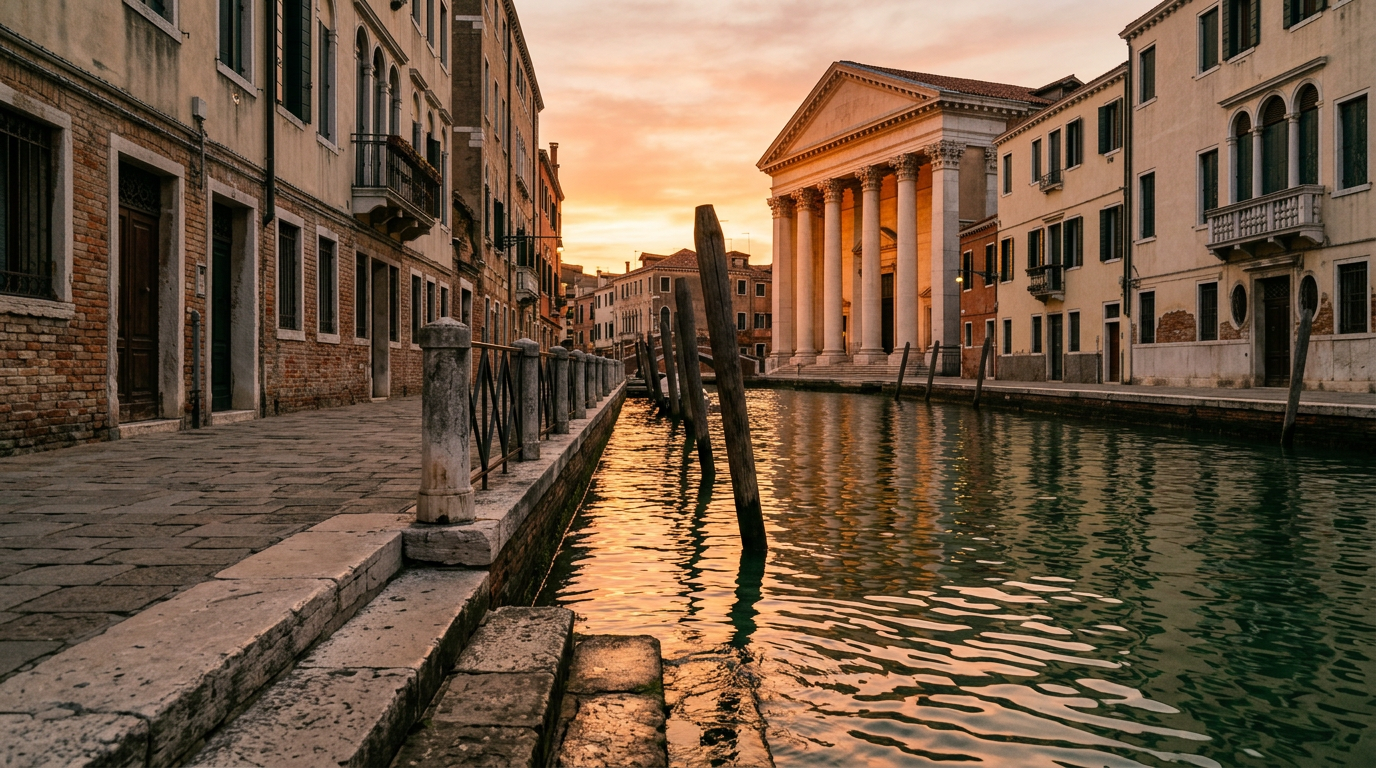
The journey to Madonna dell'Orto is as important as the destination. We recommend walking from the Fondamente Nove, tracing the northern edge of the city where the water opens up toward the island of San Michele. The route takes you past the Palazzo Mastelli, with its curious stone camels, and through the Ghetto, offering a glimpse into the layered social fabric of Venice.
As you loop back toward Santa Croce, the atmosphere shifts again. While Santa Croce serves as the city's busy entry point for those arriving from the mainland, its interior calles remain remarkably tranquil. It is a long walk, but a rewarding one, leading you through the heart of the city's most authentic residential quarters. It is here, near the Tolentini, that we find our own quiet rhythm at Osteria Leone Alato.
The walk back through the city’s heart as the sun dips behind the brick facades is the perfect time to process Tintoretto’s intensity. By the time you reach our side of the canal, the silence of the north will have stayed with you.