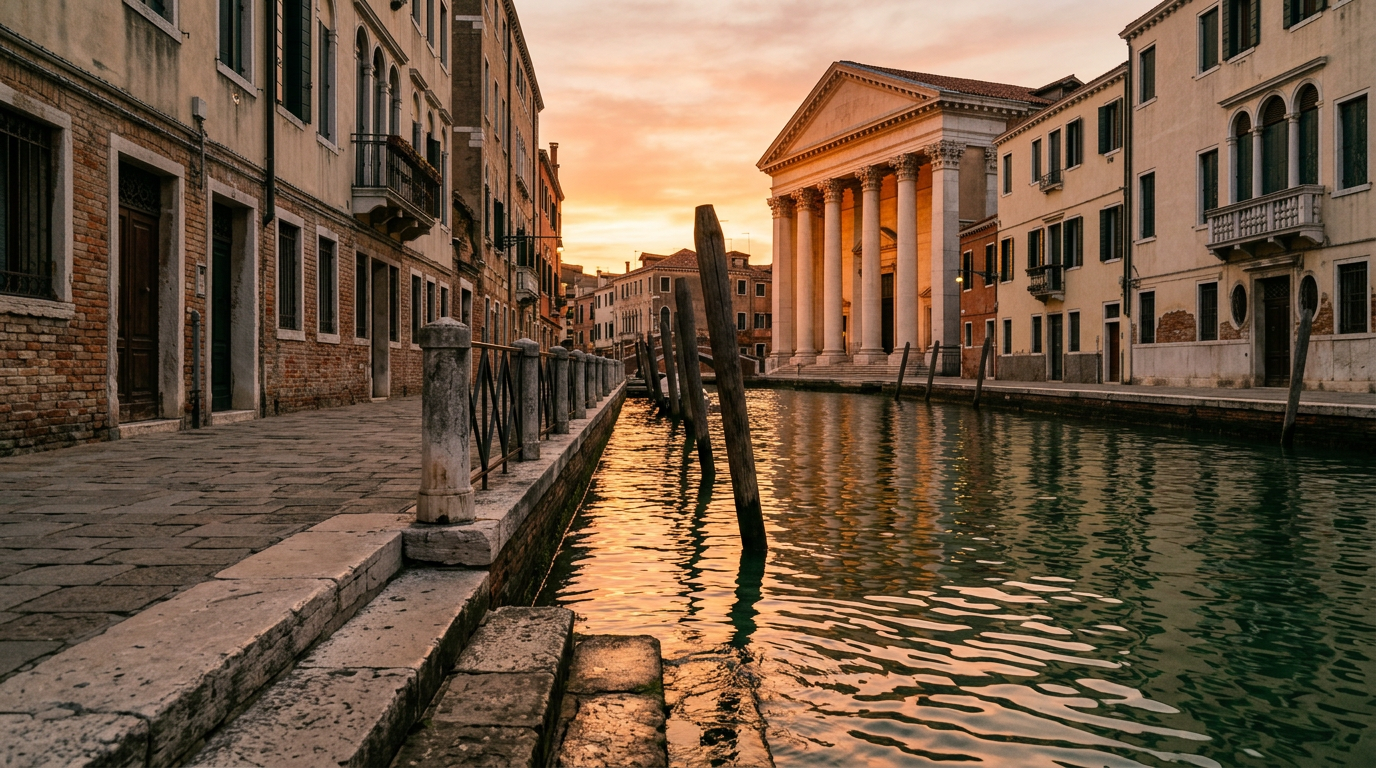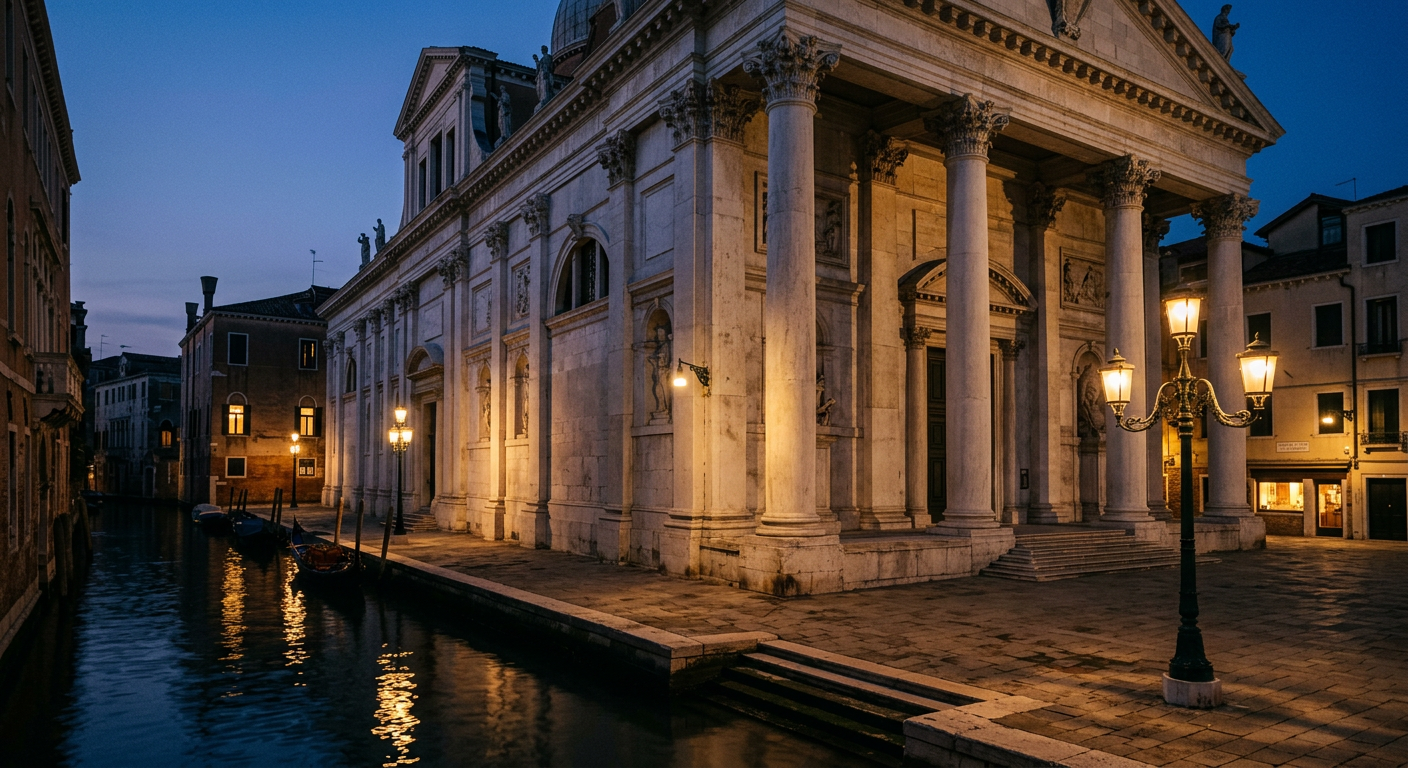
When you step out of the Santa Lucia train station and cross the Ponte della Costituzione, you are immediately thrust into the functional heart of Venice. Most visitors, eyes fixed on their maps or following the tide toward San Marco, rush past a monumental facade that anchors our neighborhood of Santa Croce. This is San Nicolò da Tolentino, known simply to us as the Tolentini. It stands as a silent witness to the thousands who arrive in our city daily, yet it remains one of the most overlooked masterpieces of the late Renaissance and Baroque periods. For those of us who live and work along the Fondamenta dei Tolentini, this church is more than a landmark; it is a grand, unfinished introduction to the Venetian spirit.
The Grand Corinthian Portico
The first thing that strikes you is the portico. Designed by Andrea Tirali and completed in the early 18th century, it is one of the few examples of a true Roman-style temple front in Venice. The six massive Corinthian columns support a pediment that remains strangely blank, lacking the sculptures originally intended to crown it.
This unfinished state is quintessentially Venetian. It reflects a time when the Republic's wealth was beginning to wane, yet the desire for Roman grandeur remained undiminished. Standing beneath these columns, one feels the sheer scale of the Theatine Order's ambition, a stark contrast to the low-lying bridges and narrow calli that surround it.
A Baroque Sanctuary in Santa Croce
Inside, the atmosphere shifts from the austere classicism of the porch to a riot of Venetian Baroque. The church was originally designed by Vincenzo Scamozzi, the protégé of Palladio, in the late 16th century. While the exterior screams of ancient Rome, the interior is a deep dive into the theatricality of the 17th century.
Look for the works by Palma il Giovane and the dramatic 'Annunciation' by Luca Giordano. The light here is different than in the cavernous Frari; it filters through the high windows, illuminating the intricate stucco work and the tombs of Doges like Francesco Morosini, whose presence reminds us of Santa Croce’s historic importance.
The Modern Pulse: IUAV and the Cloisters翻
Directly adjacent to the church lies the entrance to the IUAV University of Architecture. The juxtaposition is deliberate. The great Carlo Scarpa designed the entrance to the university, creating a dialogue between the historic stones of the Tolentini and modern Venetian design.
It is here that the church breathes with modern life. Students sprawl on the steps of the portico, sketching the very columns Tirali raised centuries ago. It anchors the Tolentini not just as a relic of the past, but as a living part of the city's intellectual fabric, right where the Fondamenta begins its quiet stretch toward Osteria Leone Alato.
The Tolentini is a lesson in looking up. In a city where every stone tells a story, this unfinished facade speaks loudest of the persistence of Venetian ambition, even when the funds ran dry.