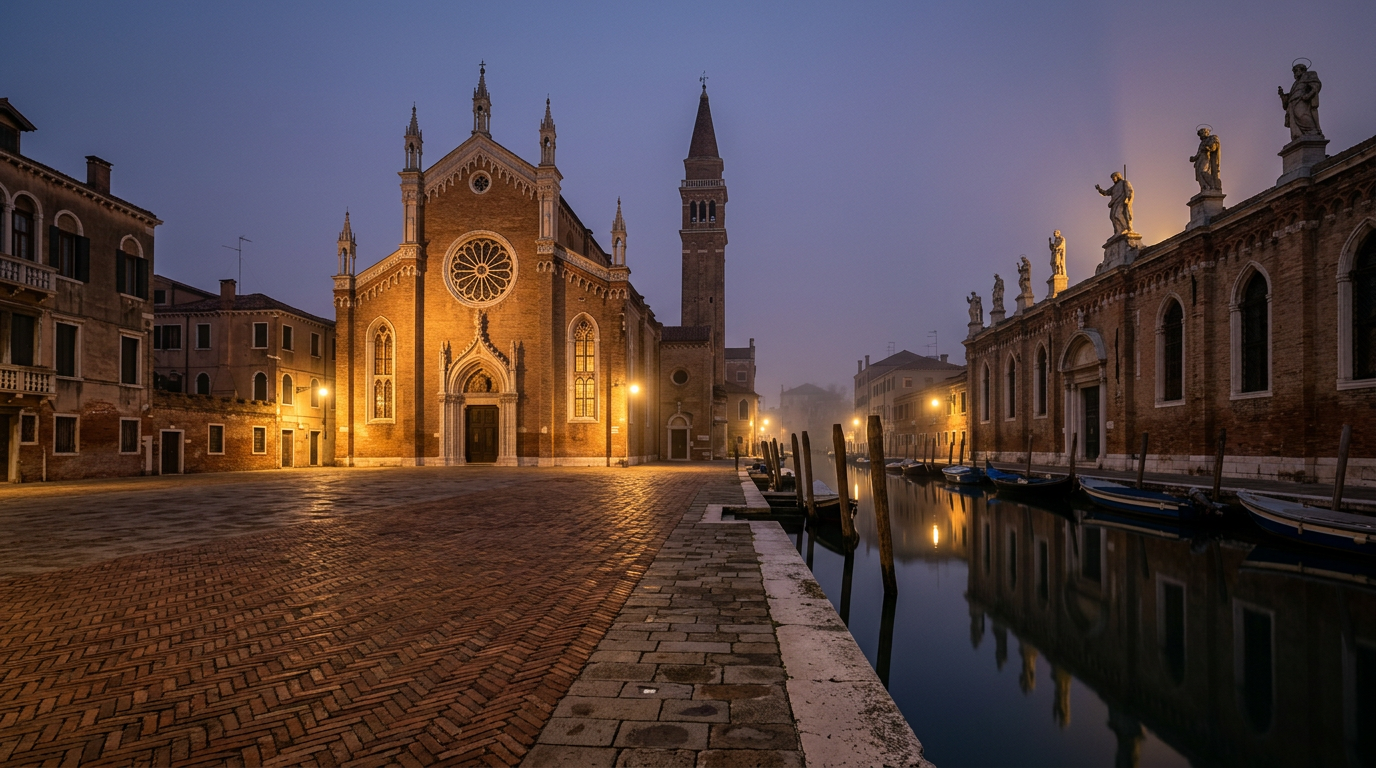
In Venice, we often say that to find the soul of the city, you must walk until the pavement ends and the lagoon begins. Far from the midday rush of the Riva degli Schiavoni, the northern reaches of Cannaregio hold a silence that feels like a shared secret among those of us who live here. This is the realm of the Madonna dell'Orto, a gothic masterpiece of brick and Istrian stone that stands as a sentinel over the northern lagoon. It was the neighborhood church of Jacopo Robusti—the man the world knows as Tintoretto. He lived just a few steps away, and today, his presence remains so tangible within these walls that one half-expects to find him still standing on a wooden scaffold, charcoal in hand, chasing the shifting Venetian light.
The Master’s Canvas: Tintoretto in Situ
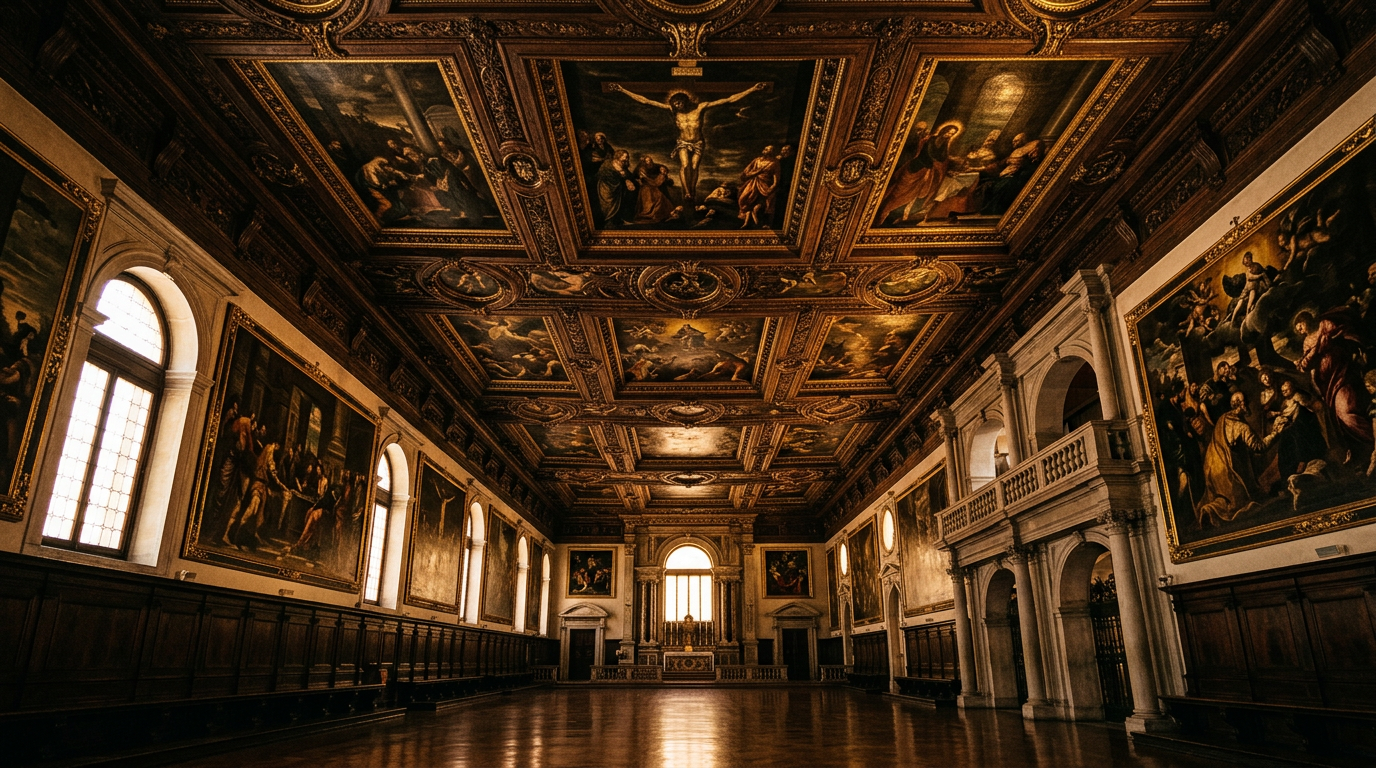
The Madonna dell'Orto is not merely a gallery; it is a profound dialogue between architecture and art. Unlike the paintings stripped from altars and moved to museums, Tintoretto’s massive canvases here—standing nearly fifteen meters tall—were designed specifically for the choir of this church. 'The Last Judgement' and 'The Making of the Golden Calf' flank the altar with an intensity that can feel overwhelming in the quiet of a Tuesday morning.
Looking at these works, you see the Furioso at his most daring. The swirling bodies, the dramatic use of chiaroscuro, and the sheer scale of his ambition are all preserved here. It is a rare privilege in Venice to see art exactly where the artist intended it to be seen, illuminated by the same northern light that Tintoretto himself would have watched crawling across the floor five centuries ago.
A Journey Through Secret Cannaregio
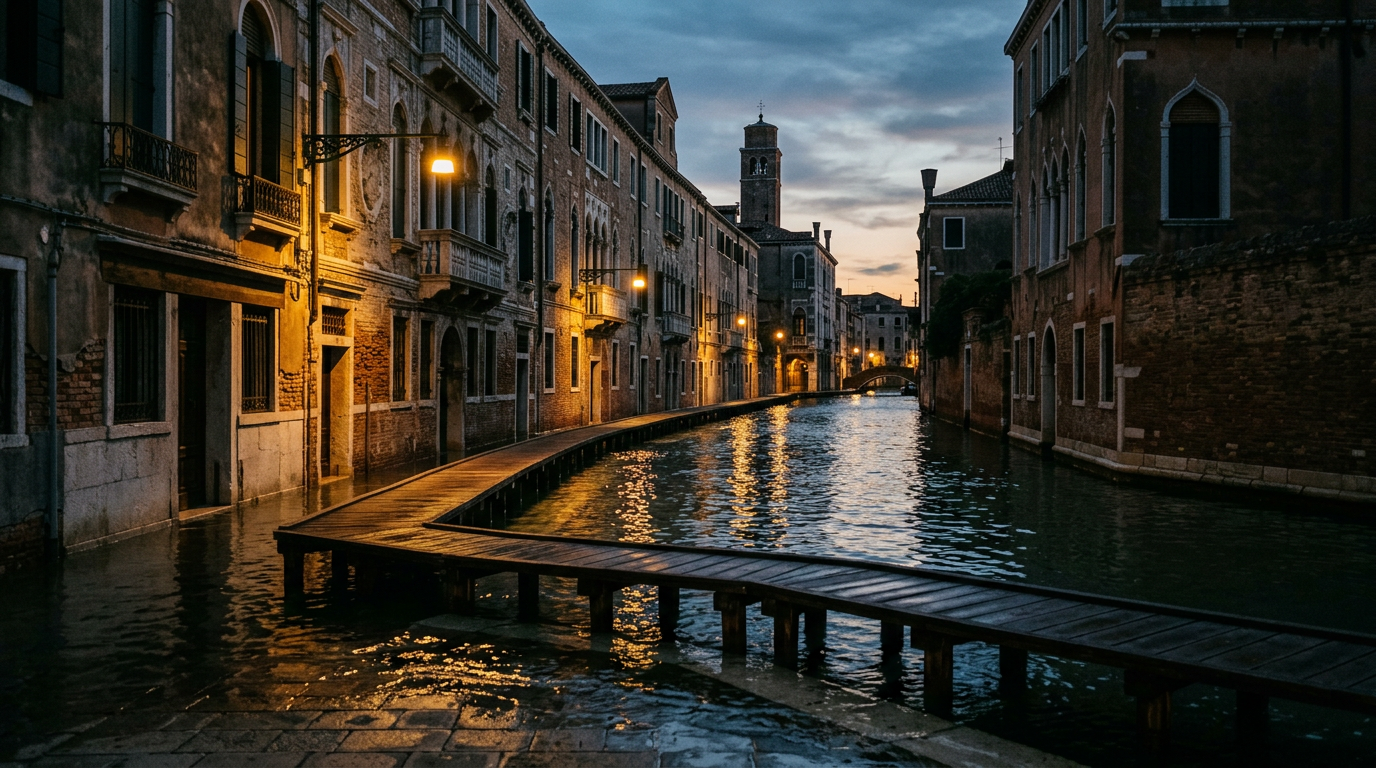
Reaching the church is part of the experience. We suggest starting from the Fondamenta Nove and walking westward along the Rio della Misericordia. This is a path of long vistas and high bridges where the laundry still hangs across the narrow calli. You will pass the Palazzo Mastelli with its curious stone camel, a reminder of the Levantine merchants who once traded here.
As you turn north toward the Fondamenta Gasparo Contarini, the city opens up. The Campo della Madonna dell'Orto is one of the few remaining paved in the traditional herringbone brick pattern. Here, the tourists are few, replaced by the occasional rowing boat and the sound of the water lapping against the fondamenta. It is a place to breathe and remember that Venice is still a living city of neighborhoods.
The Return to Santa Croce
When the church doors close and the shadows lengthen across the lagoon, the walk back toward the center takes on a maritime grace. Many locals follow the route back through the quieter lanes of San Polo, crossing the deep canals that lead toward our own neighborhood of Santa Croce. This sestiere, being the gateway for those arriving by land, often feels like a transit point, yet it hides some of the most peaceful corners in the city.
For those ending their day after the long trek to Tintoretto's parish, a stop at our Osteria Leone Alato on the Fondamenta dei Tolentini offers the perfect transition. Nestled in the quiet reaches of Santa Croce, it serves as a candle-lit sanctuary where you can reflect on the master’s brushstrokes before the night fully settles over the stones.
As the northern light fades over the lagoon, the return walk through the city's quiet heart reminds us why Tintoretto never left. His Venice is still here, if you know which canal to follow.