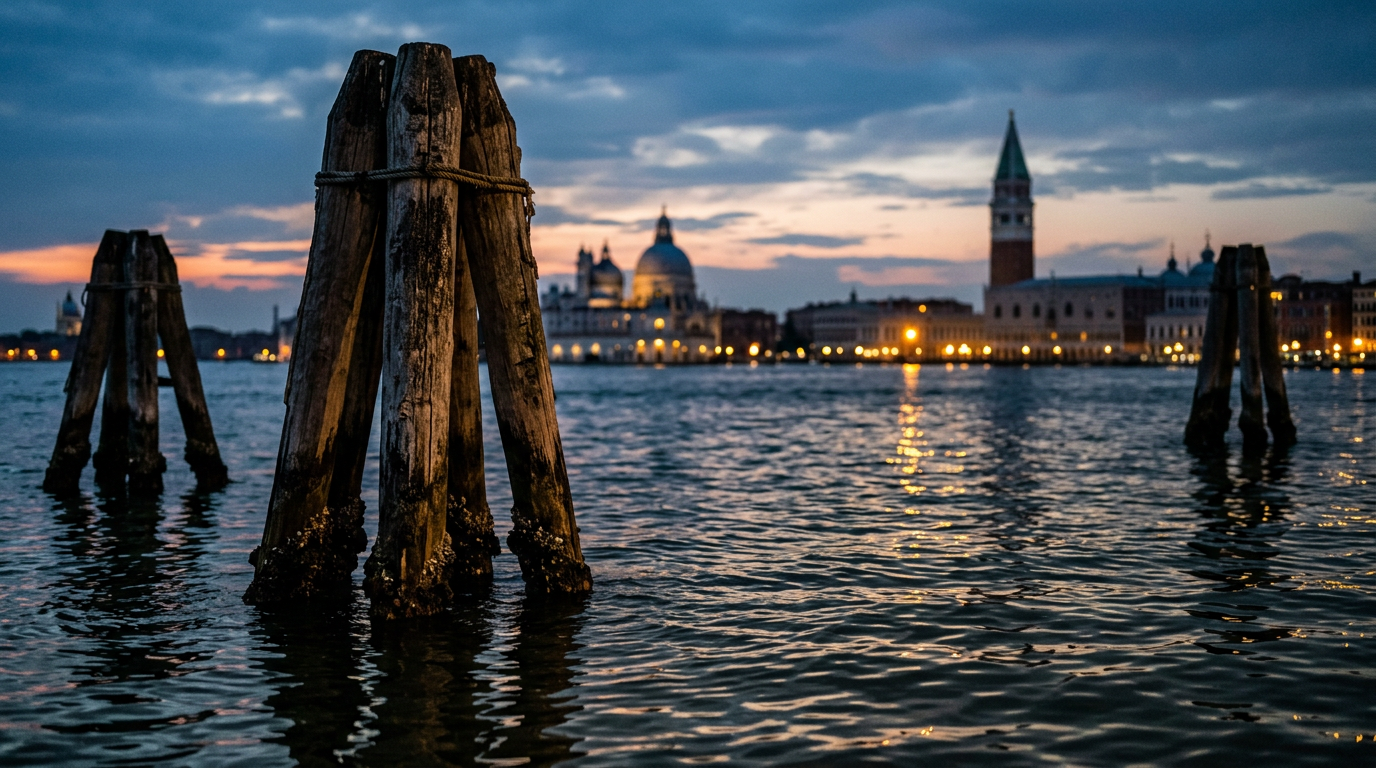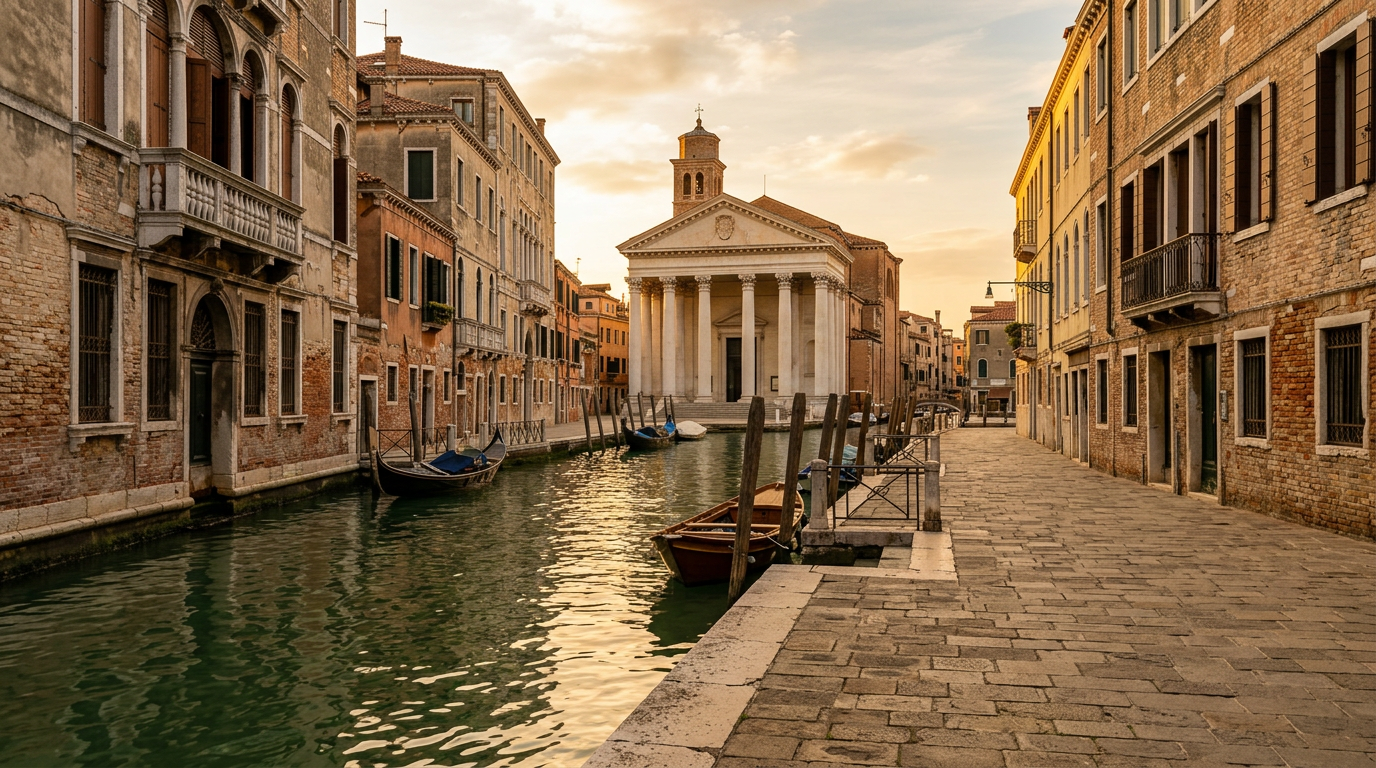
To walk through Venice is to walk through the ghost of Byzantium. For centuries, our city did not look toward the Italian mainland; we looked East, across the Adriatic, toward the glittering spires of Constantinople. We were the westernmost outpost of the Byzantine Empire, and that heritage is not merely a memory—it is the very stone under our feet. When you stand in the Piazza San Marco, you are standing in a space designed to mirror the majesty of the East. The relationship was complex, born of deep trade ties and, later, the brutal conquest of the Fourth Crusade in 1204. Today, we invite you to look closer at the facades and the icons, to see the Levant hidden in plain sight within our Venetian calli.
The Golden Spoils of 1204
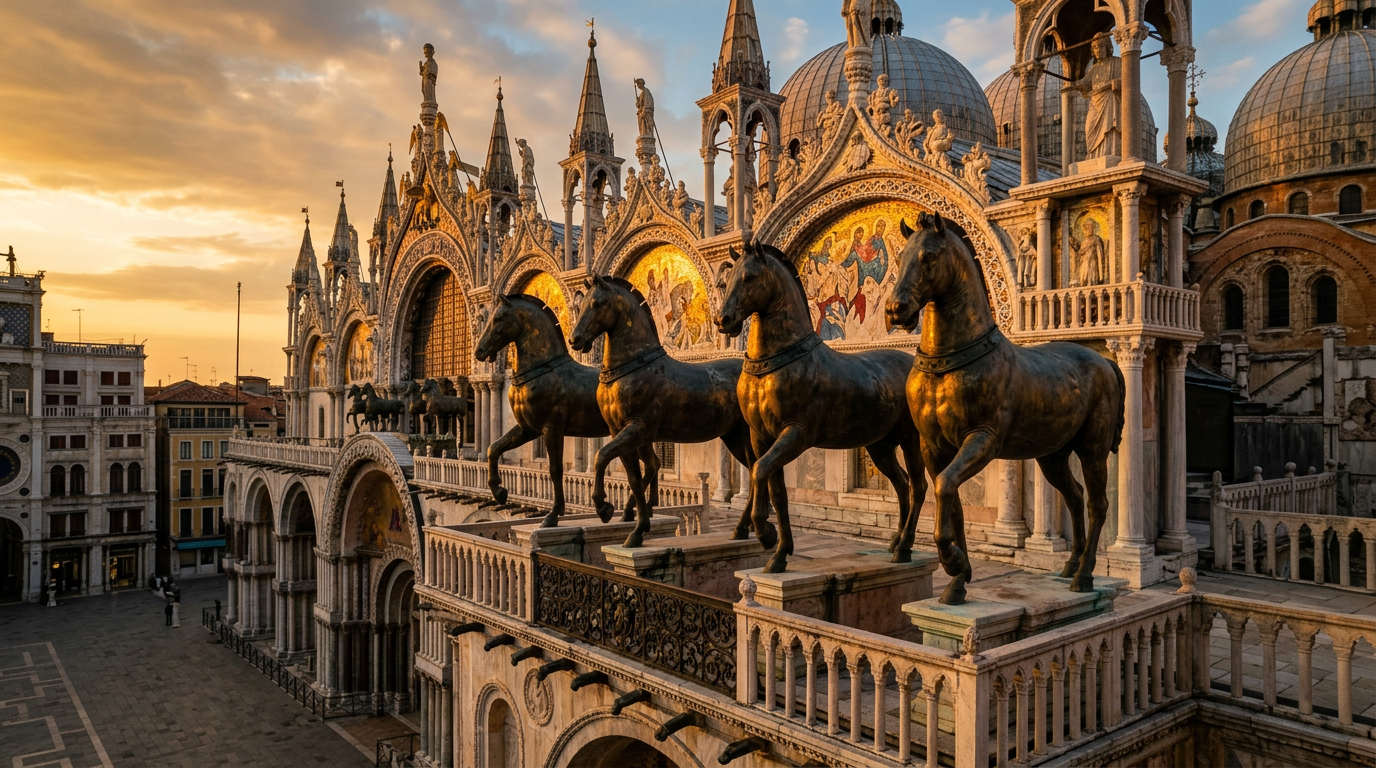
The Fourth Crusade changed the face of Venice forever. What was meant to be a holy expedition to Jerusalem ended with the sack of Constantinople, and Enrico Dandolo, the blind Doge, ensured that the finest treasures of the Byzantine capital were brought back to the Lagoon. The most famous of these are the Triumphal Quadriga—the four bronze horses that now watch over the Piazza.
These statues were not cast here; they are ancient Greek or Roman works that once stood in the Hippodrome of Constantinople. They represent the ultimate symbol of Venice’s victory over its former masters, turning our main square into a gallery of looted grandeur. To see the originals today, one must climb to the upper floors of the Basilica di San Marco, where they are protected from the salty air.
The Architecture of the Levant
The Basilica di San Marco itself is a Byzantine heart beating in a Latin body. Its five-domed plan is modeled directly after the Church of the Holy Apostles in Constantinople, a structure that no longer exists. When you look at the intricate marble cladding on the exterior, you are looking at fragments of the East—slabs of porphyry and verd antique stripped from Byzantine palaces.
It is not just the grand churches that carry this DNA. As you walk through the sestieri, look for the 'patere'—small, circular stone reliefs embedded in the walls of private houses. These often feature stylized animals or floral motifs, designs that traveled along trade routes from the East, reminding every Venetian citizen of their connection to the Levant.
Retreating to Santa Croce
While the grandest Byzantine echoes are found in the busy corridors of San Marco and Castello, the quietude of the East feels most present in the less-trodden corners of the city. Santa Croce, being the final sestiere before the mainland, offers a necessary reprieve from the intensity of the tourist center.
After a day spent deciphering the Greek inscriptions and golden mosaics of the Basilica, a walk toward the Fondamenta dei Tolentini brings you back to a more intimate Venice. Here, at Osteria Leone Alato, the flickering candlelight provides a peaceful end to a journey through history, away from the clamour of the crowds.
Walking through Venice is a constant negotiation between the Latin present and a Greek past. It is a city that looked East for a thousand years before it ever looked toward Rome.