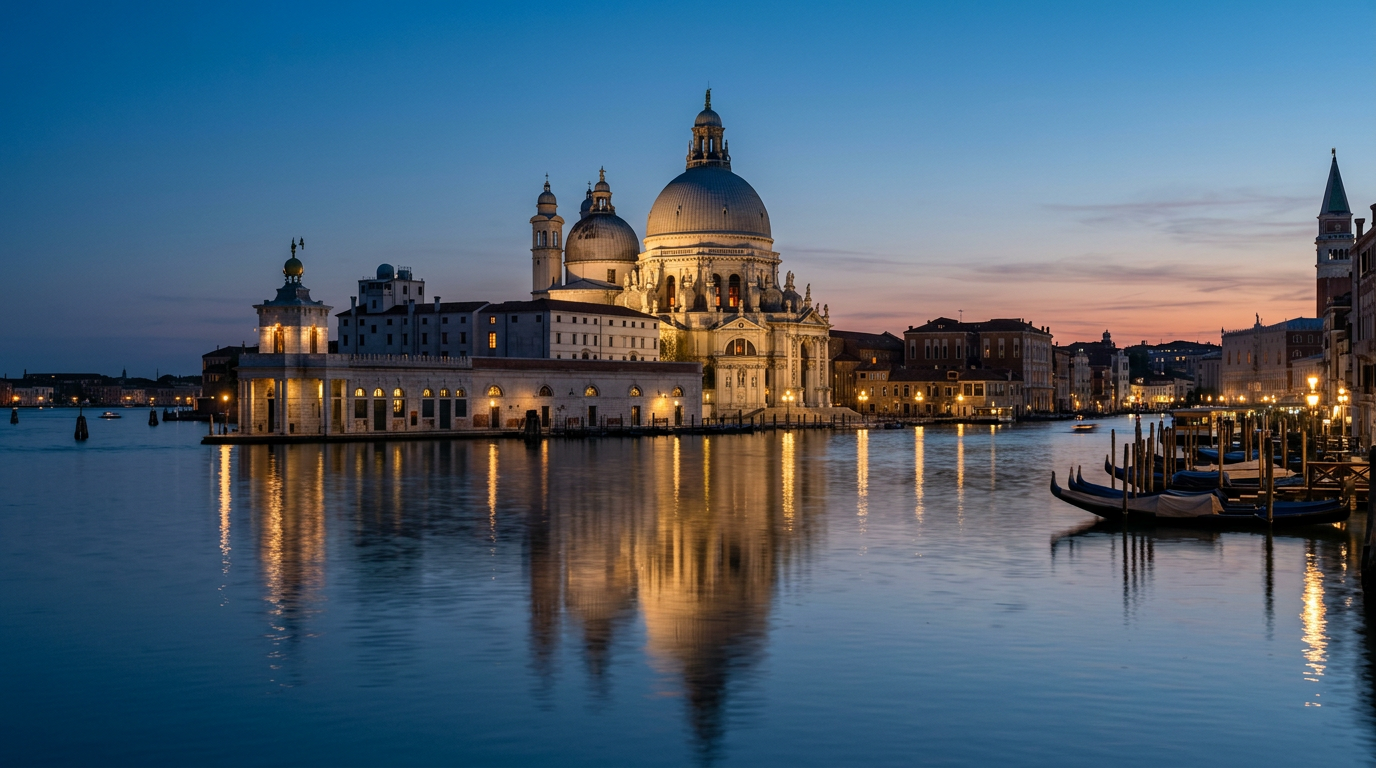
In Venice, memory is often carved into Istrian stone. When we look across the mouth of the Grand Canal, the massive white domes of Santa Maria della Salute seem to float upon the water, but they are anchored by over a million wooden piles. This church was not built for vanity; it was a desperate promise made in 1630, when the Black Death claimed nearly a third of our population. As Venetians, we do not see the Salute merely as a masterpiece of Baroque architecture, but as a standing ex-voto—a collective 'thank you' for survival that we still honor every autumn. It is a structure that defines the entrance to our city, greeting every boat that arrives from the Adriatic with its dramatic, scrolling spirals.
Baldassare Longhena’s Geometric Vow
The Senate held a competition for the church's design, eventually choosing a young architect named Baldassare Longhena. His vision was radical: an octagonal floor plan that broke away from the traditional cruciform churches of the time. Longhena described his creation as being in the shape of a crown, a tribute to the Virgin Mary, to whom the city turned for deliverance from the plague.
Walking inside, the space feels circular and infinite. The light descends from the high lantern of the dome, illuminating the marble floors and the central altar. The iconography is clear: the Virgin stands as the Protectress of Venice, driving away the skeletal figure of the plague. It took over fifty years to complete, and Longhena lived just long enough to see his masterpiece consecrated in 1687.
The Floating Bridge of November 21st
While the church is a year-round landmark, its soul truly awakens on the 21st of November during the Festa della Salute. This is one of the few days when Venice feels entirely our own. A temporary pontoon bridge is constructed across the Grand Canal, stretching from Santa Maria del Giglio to the steps of the Salute. It is a bridge built for a single purpose: pilgrimage.
We walk across the water, joined by thousands of others, to light a long white candle for the health of our families. The atmosphere is solemn yet communal. The smell of melting wax fills the enormous nave, and the sound of footsteps on the floating bridge echoes against the palazzi. It is a tradition that has remained unchanged for centuries, a physical connection between the two banks of the canal.
Returning to the Quiet of Santa Croce
After the crowds of the Salute and the intensity of the pilgrimage, the long walk back toward the western end of the city offers a necessary reprieve. While the area around San Marco and the Salute remains the ceremonial heart of Venice, our home in Santa Croce provides a different kind of sanctuary.
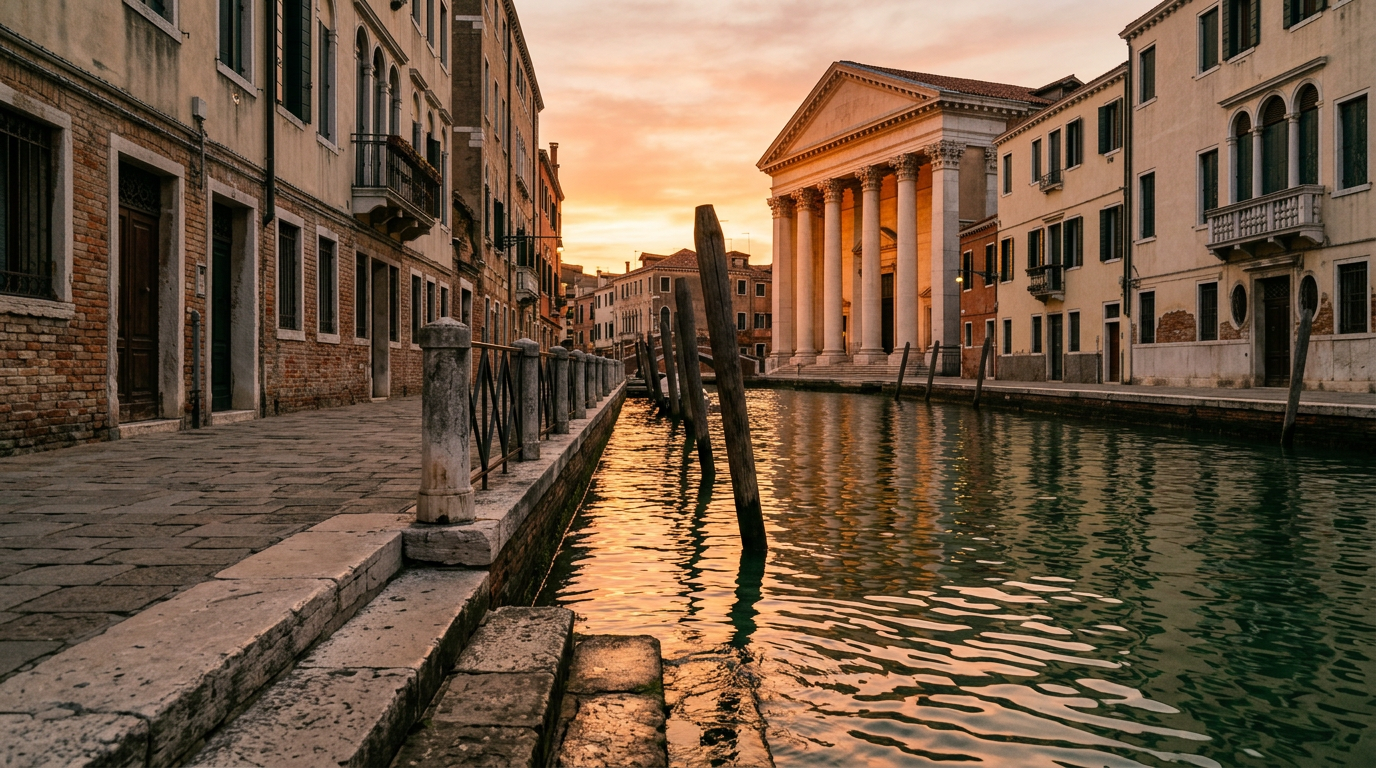
As you cross the bridge back from the station or the parking hubs at Piazzale Roma, the noise of the city fades. We invite you to find your way to the Fondamenta dei Tolentini, where Osteria Leone Alato sits in the shadows of the church of San Nicola da Tolentini, offering a warm and candle-lit space to reflect on the day's journey.
Every November, the Salute reminds us that Venice is a city built on both wood and faith. It remains the most powerful silhouette on our skyline, a testament to a city that refused to vanish.