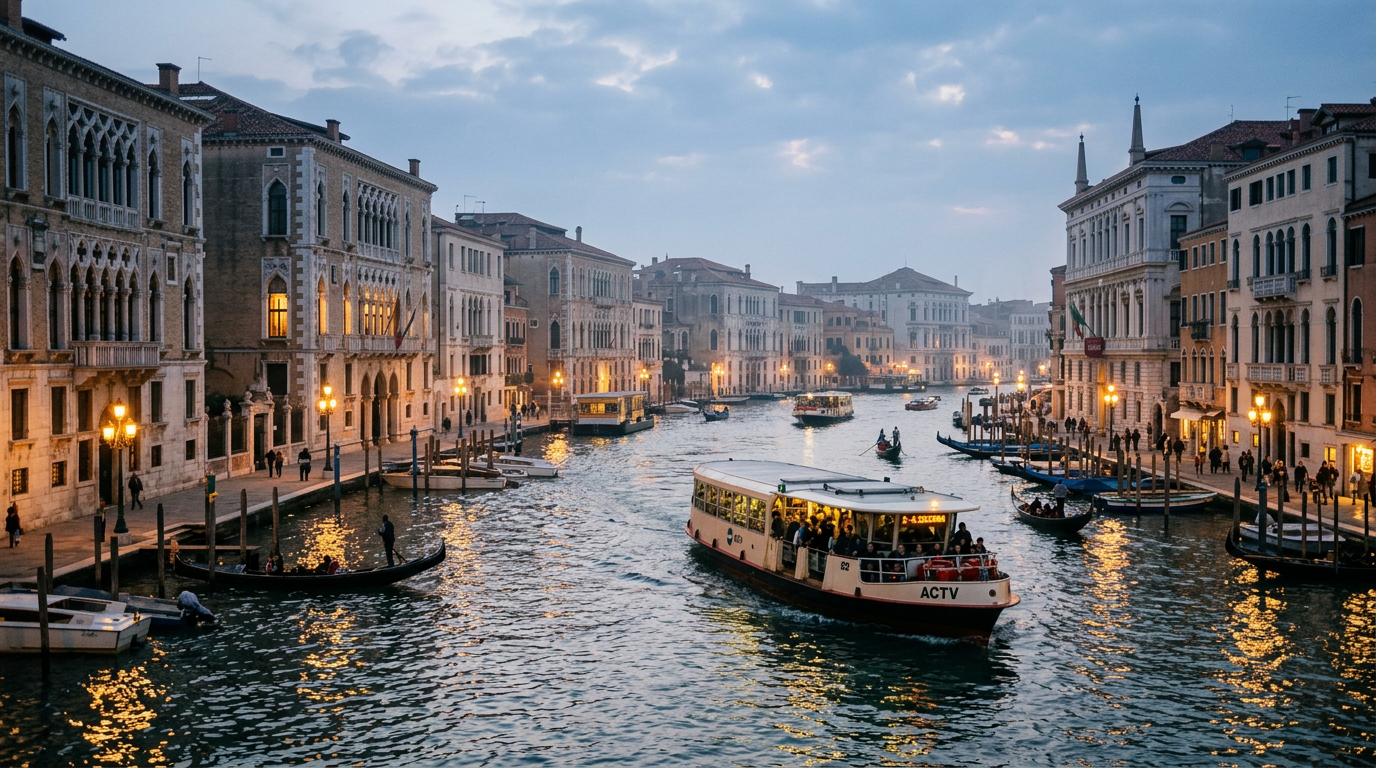
We often watch from our fondamenta as visitors arrive at the Santa Lucia station, looking slightly overwhelmed by the shimmering chaos of the Grand Canal. In Venice, the water is our road, and the vaporetto is our heartbeat. It is not just a bus; it is a moving balcony overlooking the most beautiful architecture in the world. Whether you are arriving for the first time or returning to the lagoon, understanding how to navigate these ACTV lines is the difference between feeling like a lost tourist and moving with the grace of a Venetian. In Santa Croce, we live at the gateway of the city, where the vaporetti are most frequent, yet the streets behind the stops remain blissfully quiet.
Choosing the Right Ticket: Avoid the Single Ride Trap
A single vaporetto ticket currently costs 9.50€ and is valid for only 75 minutes. For almost everyone visiting for more than a few hours, this is poor value. Instead, we recommend the time-based Travel Cards (24, 48, or 72 hours). These allow for unlimited transfers and, crucially, allow you to hop on and off whenever a particular facade or church catches your eye.
Remember that you must validate your ticket at the white electronic readers before every single boarding. The fines are steep, and the controllers do not distinguish between a forgetful visitor and a fare-evader. If you are staying for a week, consider the Venezia Unica city pass, which offers significant discounts for longer stays.
The Grand Canal: Line 1 vs. Line 2
Line 1 is the 'accelerato'—a bit of a misnomer as it is actually the local bus that stops at every single station along the Grand Canal. It is the best choice for sightseeing, taking about 45 minutes from Piazzale Roma to San Marco. If you want to see the Ca' d'Oro or the Palazzo Grimani up close, this is your line.
Line 2 is the express route. It skips many stops and is designed to get commuters and travellers between the Ferrovia, Rialto, and San Marco quickly. During the summer months, Line 2 also extends to the Lido. For the best views, try to snag the outdoor seats at the very front or the very back of the boat, though be aware that newer 'motoscafo' models have less outdoor seating.
Beyond the City: Reaching the Islands
To visit the northern lagoon, you will likely head to Fondamente Nove. From here, Line 12 is the 'lagoon express' to the glass-blowing furnaces of Murano, the lace-making houses of Burano, and the ancient cathedral of Torcello. The journey to Burano takes about 40 minutes and offers a stunning perspective of the cemetery island of San Michele.
If you are heading to the Lido for a walk along the Adriatic or to visit the historic Jewish Cemetery, Line 5.1 or 6 provide quick transit from the southern side of the city. During rush hour—roughly 8:00 to 9:00 and 17:00 to 18:30—these boats are packed with Venetians going to work; if you can, plan your island excursions outside these windows to enjoy a bit more elbow room.
Navigating the water is the first step to feeling like a local. Once you step off the boat at Piazzale Roma or Ferrovia, you are home.